


Table of Contents
- Why Distribute Music Independently?
- How Digital Music Distribution Works
- Distributors Compared: DistroKid, TuneCore, CD Baby, and More
- Pricing Models and What You Actually Pay
- Release Strategy: Pre-Save Campaigns and Release Radar
- Playlist Pitching: Getting on Editorial and Algorithmic Playlists
- Metadata Best Practices and ISRC Codes
- Royalty Splits and Collaboration Management
- Maximizing Your Release Day and Beyond
- Key Takeaways
- Frequently Asked Questions
Why Distribute Music Independently?
The ability to distribute music independently has fundamentally changed the music industry. Twenty years ago, getting your songs onto store shelves or radio playlists required a record deal. Today, any artist with a finished recording can place their music on Spotify, Apple Music, Amazon Music, Tidal, and over 150 other streaming platforms and digital stores - all without signing away a single right or giving up a percentage of their ownership.
Independent distribution means you keep full control of your masters (the ownership rights to your recordings) and your publishing (the rights to your compositions). You decide when to release, how to price your music, which platforms to target, and how to market your work. You also keep the vast majority of your royalties - most independent distributors either charge a flat annual fee or take a small commission, leaving you with 91% to 100% of your streaming and sales revenue.
The numbers tell a compelling story. The independent music sector now represents approximately 35% of all recorded music revenue globally and continues to grow year over year. Artists like Chance the Rapper, Macklemore, and Russ built massive careers while maintaining their independence. More recently, artists distributing through services like DistroKid and TuneCore have landed on major Spotify playlists, charted on Billboard, and built sustainable full-time careers without ever signing a traditional record deal.
Learning how to distribute music independently is no longer an alternative path - for many artists, it is the preferred path. The distribution landscape has shifted significantly heading into 2026, with major pricing changes at TuneCore, new ownership at CD Baby, and evolving features across all platforms. This guide covers everything you need to know with current pricing and features as of April 2026.
How Digital Music Distribution Works
Digital distribution is the process of delivering your music files and metadata to streaming platforms and digital stores. You cannot upload music directly to Spotify or Apple Music as an individual artist - you need to go through an authorized distributor that has agreements with these platforms.
The Distribution Pipeline
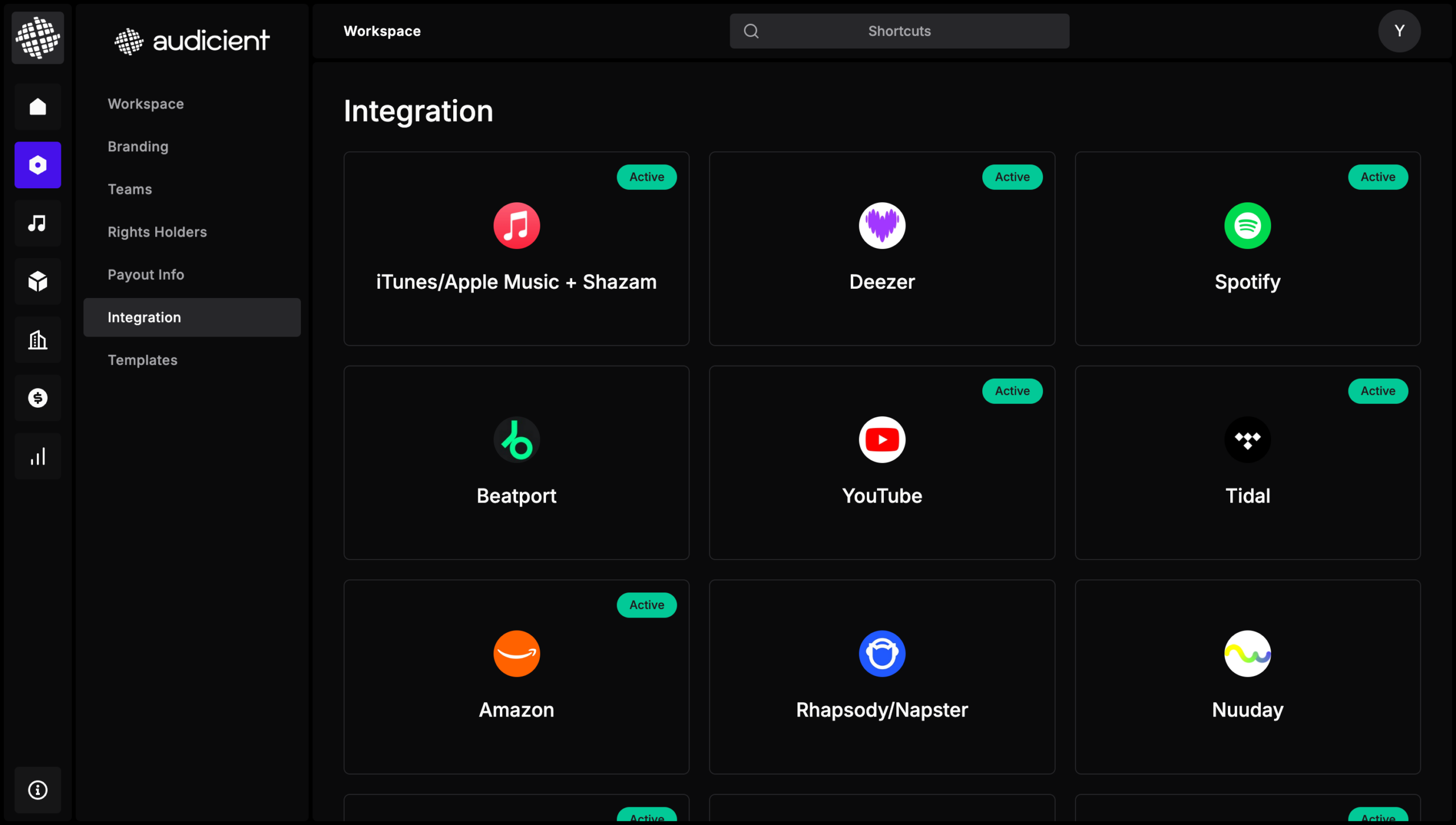
The process works like this: you upload your finished audio files (typically WAV or FLAC format), album artwork (minimum 3000×3000 pixels, JPEG or PNG), and metadata (song title, artist name, genre, credits, release date, etc.) to your chosen distributor’s platform. The distributor encodes your audio into the formats required by each streaming service, delivers your content to the platforms you select, and handles the collection and payment of royalties from those platforms back to you. Most distributors deliver to 50 to 150 or more platforms simultaneously, including Spotify, Apple Music, Amazon Music, YouTube Music, Tidal, Deezer, Pandora, TikTok, Instagram, and dozens of regional services.
Timeline: How Long Does Distribution Take?
From the moment you submit your release, it typically takes 2 to 5 business days for your music to appear on most major platforms. However, this is not a guarantee - some platforms may take up to two weeks, and first-time releases sometimes take longer as platforms verify your artist profile. This is why every distributor recommends scheduling your release date at least 2 to 4 weeks in advance. Early scheduling also enables you to set up pre-save campaigns (more on this later) and submit for editorial playlist consideration, both of which require your music to be in the system well before release day.
Distributors Compared: DistroKid, TuneCore, CD Baby, and More
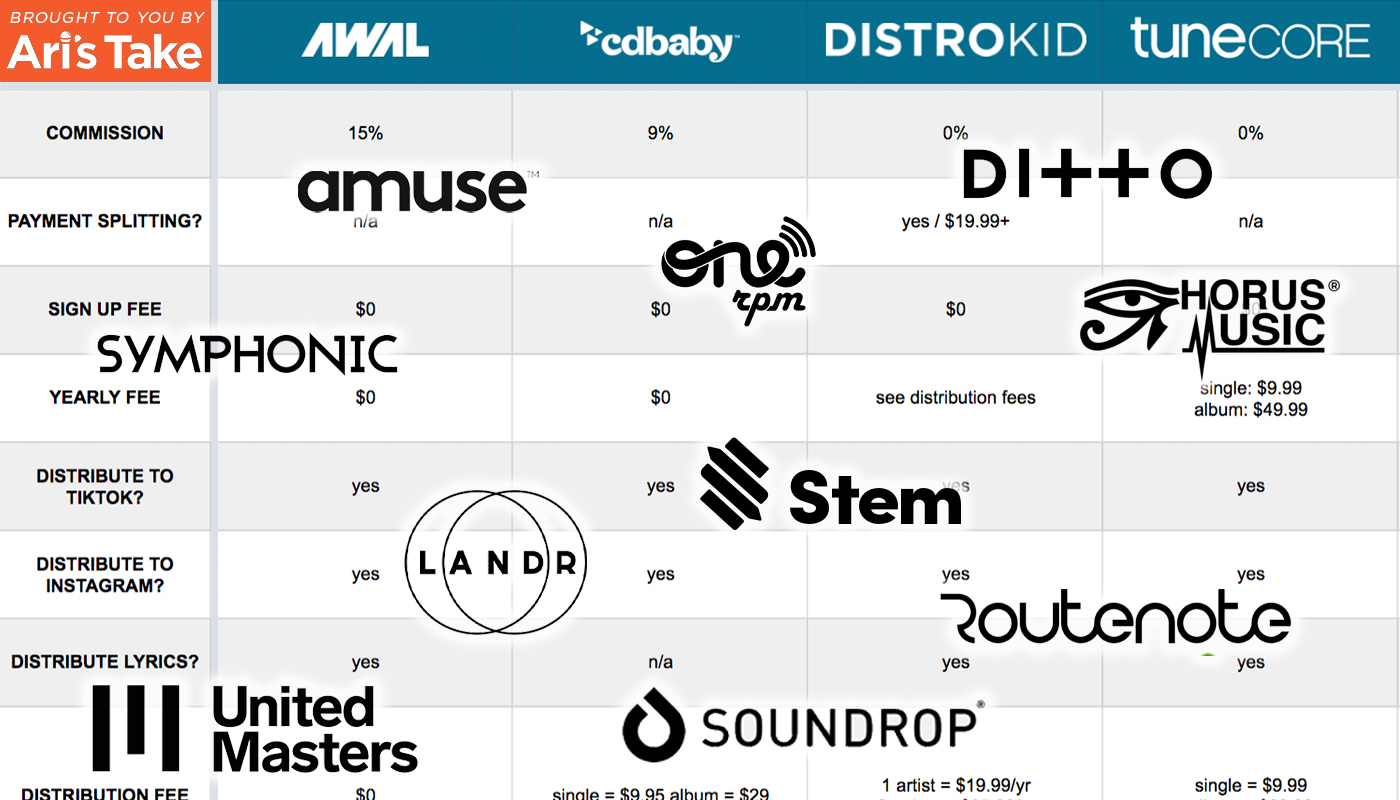
Choosing the right distributor is one of the most important decisions you will make when learning how to distribute music independently. Each platform has distinct strengths, pricing models, and features. The landscape has changed significantly in 2025-2026, with TuneCore overhauling its pricing to offer unlimited releases and CD Baby changing ownership. Here is a detailed breakdown of the major options as of April 2026.
DistroKid
DistroKid remains the most popular independent distributor, used by over 2 million artists. Its core appeal is simplicity and price - for $24.99 per year (Musician plan), you can upload unlimited songs and albums to all major platforms. DistroKid keeps 0% of your royalties and pays out faster than most competitors, with earnings typically available within days of being reported by streaming services. The Musician Plus plan at $44.99 per year adds features like customizable release dates and additional artist profiles. The Ultimate plan at $89.99 per year includes advanced analytics, playlist contact search, and support for up to 100 artist profiles - making it ideal for labels and managers. Optional add-ons include Store Maximizer ($7.95 per year per release) for auto-distribution to new stores, and the critical Leave a Legacy feature ($29 one-time per release) which keeps your music on platforms permanently even if you cancel your subscription. Without Leave a Legacy, your music is removed when you stop paying.
TuneCore
TuneCore underwent a major pricing overhaul in 2025, moving away from its per-release model to offer unlimited distribution tiers. The new structure includes four plans. The Rising Artist plan at $14.99 per year provides unlimited tracks with 100% royalty retention and distribution to over 150 streaming services including Spotify, Apple Music, Amazon Music, Deezer, and Tidal. The Breakout Artist plan at $29.99 per year adds the Automator tool and additional marketing features. The Professional plan at $49.99 per year is designed for labels and managers with premium tools. TuneCore also briefly offered a free New Artist plan for social platform distribution (Facebook, Instagram, TikTok, YouTube) but kept 20% of revenue from those platforms - this free tier was discontinued in June 2025. TuneCore’s partnership with Believe Music gives artists access to additional promotional opportunities and potential label services as they grow.
CD Baby
CD Baby has undergone a significant ownership change - Universal Music Group (UMG) completed its $775 million acquisition of CD Baby’s parent company, Downtown Music Holdings, in February 2026. Despite the new ownership, CD Baby continues to operate with its one-time fee model: $9.99 per single or $14.99 per album, with no annual renewal. Once you pay, your music stays on platforms indefinitely. However, CD Baby takes a 9% commission on all digital distribution revenue - a permanent cut that cannot be reduced or removed. For artists who release infrequently and want a “set it and forget it” approach, this can be more economical than annual subscriptions. The break-even point sits around $300-400 in annual revenue - below that, CD Baby’s per-release model may be cheaper, but above that the 9% commission makes subscription models more economical over time.
Amuse
Amuse has evolved significantly since its freemium days - the free distribution tier is no longer available as of 2026. The platform now offers three paid plans: the Artist plan at $23.99 per year, Artist Plus at $39.99 per year, and Professional at $59.99 per year. All plans deliver to the same 53 outlets including Spotify, Apple Music, YouTube Music, TikTok, and Amazon Music, with 100% royalty retention. The Artist Plus plan adds hi-res audio support and fan email collection, while Professional includes priority support and autosave functionality. Amuse can get music live within 24 hours across plans and recently launched music video distribution at $34.99 per video per year. A key advantage is that your music stays live even if you cancel your subscription.
LANDR
LANDR is primarily known as an AI mastering service, but they also offer competitive music distribution. Their Distribution Basic plan costs $23.99 per year for unlimited releases with 100% royalty retention across 150+ stores. The Distribution Pro plan at $44.99 per year adds social platform monetization and YouTube Content ID, which are no longer included in the Basic tier as of June 2025. Unlimited distribution is also included in all levels of LANDR Studio starting at $8.25 per month. A significant advantage over DistroKid is that LANDR keeps your music live even if you cancel your subscription. If you already use LANDR for mastering, adding distribution creates a streamlined workflow from production to release.
Pricing Models and What You Actually Pay
Understanding the true cost of distribution requires looking beyond the headline price. Here is a practical comparison of what you actually pay over time with 2026 pricing.
Annual Subscription vs Per-Release vs One-Time Fee
DistroKid’s $24.99 per year Musician plan is the cheapest option for prolific artists. If you release 10 singles and 2 albums in a year, your per-release cost is roughly $2.08. TuneCore’s Rising Artist plan at $14.99 per year is even cheaper for unlimited releases, making it the new budget leader for basic distribution. CD Baby would charge a one-time fee of $129.80 for the same catalog (10 singles at $9.99 plus 2 albums at $14.99) with no renewal, but would take 9% of all future royalties permanently.
The Hidden Cost of Commissions
CD Baby’s 9% commission may seem small, but it compounds over time. If your catalog generates $10,000 in royalties over five years, CD Baby keeps $900. Compare that to DistroKid at $124.95 total (five years of the Musician plan) with $0 commission, or TuneCore at $74.95 total (five years of Rising Artist) with $0 commission. The break-even calculation is straightforward: if you earn more than $300-400 per year from streaming, subscription models save you money.
The Music Stays Live Problem
A critical factor many artists overlook is what happens to your music when you stop paying. With DistroKid, your music is removed from platforms if you cancel your subscription - unless you purchased the Leave a Legacy add-on at $29 per release. With TuneCore, your music stays on stores as long as you maintain your subscription. With CD Baby, Amuse, and LANDR, your music stays live indefinitely regardless of subscription status. This difference matters enormously for your long-term catalog. An artist who uploads 50 songs over several years and then takes a break from music could lose their entire streaming catalog on DistroKid without Leave a Legacy.
What Distribution Fees Do NOT Cover
Regardless of which distributor you choose, your distribution fee only covers getting your recordings onto platforms and collecting recording royalties. It does not cover publishing administration (collecting mechanical and performance royalties as a songwriter), playlist pitching services, marketing and promotion, mastering or mixing, or artwork design. You still need to register with a PRO (like ASCAP, BMI, or SESAC) and the MLC (Mechanical Licensing Collective) separately to capture your full earnings as a songwriter.
Release Strategy: Pre-Save Campaigns and Release Radar
How you release your music matters almost as much as the music itself. A strategic release plan maximizes your first-week numbers and sets your track up for long-term algorithmic success.
The Power of Pre-Save Campaigns
A pre-save campaign allows fans to “save” your upcoming release before it drops. When the song goes live, it is automatically added to their library and counts as a save on Spotify - a signal that tells the algorithm this song has engaged listeners. Pre-saves can be set up through your distributor (most offer this feature) or through third-party tools like Feature.fm, Hypeddit, or ToneDen. Share your pre-save link everywhere: social media, email newsletters, your website, and in direct messages to your most engaged fans. Even 200 to 500 pre-saves can make a meaningful difference for an independent artist, because they generate a concentrated burst of activity on release day that triggers algorithmic recommendations.
Release Radar and Discover Weekly
Spotify’s Release Radar is a personalized playlist updated every Friday that includes new music from artists each listener follows. When you release a new track, it automatically appears in the Release Radar of your followers. This is one of the most valuable algorithmic playlists because it targets people who have already shown interest in your music. To maximize Release Radar impact, release on Fridays (when the playlist updates), build your follower count consistently between releases, and maintain a regular release schedule so the algorithm continues to prioritize your new music.
Single-Focused Release Strategy
The modern release strategy for independent artists favors singles over albums. Rather than spending a year recording 12 tracks and releasing them all at once, consider releasing a new single every 4 to 6 weeks. This approach keeps you in your followers’ Release Radar consistently, gives each song individual attention and promotion, generates more total streams over time than a single album drop, provides multiple opportunities for playlist placement, and builds sustained momentum with the algorithms. When you have enough singles, you can compile them into an EP or album for a separate release event, effectively monetizing the same recordings twice.
Playlist Pitching: Getting on Editorial and Algorithmic Playlists
Playlists are the primary discovery mechanism on streaming platforms. Getting your music onto the right playlists can transform your streaming numbers overnight.