Somewhere in the first half of 2016, a song built on a buoyant Nigerian rhythm landed on American pop radio and refused to leave. The track was “One Dance,” credited to Drake but carrying the unmistakable cadence of Wizkid, a Lagos-born singer who had been a continental superstar for years without quite cracking the American consciousness. By May of that year it sat at number one on the Billboard Hot 100, where it would spend ten non-consecutive weeks, and by December it had become the first song to pass one billion streams on Spotify. Pop music had quietly tipped on its axis, and most American listeners had no idea why the chorus felt so different from everything else on the radio.
A decade later, the genre that powered that beat is no longer a secret. Afrobeats, the loose umbrella term covering the polyrhythmic dance music coming out of Nigeria, Ghana and the broader West African pop ecosystem, has stitched itself into the DNA of mainstream American hits. Grammy categories have been rewritten to accommodate it. Major label A&Rs now fly to Lagos the way they once flew to Atlanta. What follows is a decade-long chronicle of the collaborations that did most of the stitching. It is a selective record rather than an exhaustive one, built around the releases whose credits can be checked, and it tracks the moments when a continental sound stopped being exotic and started being inevitable.
2016: One Dance and the Wizkid Inflection Point
The “One Dance” credit list reads like a small treaty. The British singer Kyla appears alongside Drake and Wizkid, her vocal and writing credit carried over from the 2008 UK funky record “Do You Mind” that the song leans on. Production was handled by a team that included Nineteen85, Noah “40” Shebib, Wizkid, Sarz and DJ Maphorisa, which means two of the producers on the biggest pop song of the year were African. Released in April 2016 as the lead single from Drake’s “Views,” it spent ten non-consecutive weeks at the top of the Billboard Hot 100 and became, that December, the first track in Spotify’s history to cross a billion plays.
What “One Dance” did, structurally, was give American radio programmers permission to play a rhythm pattern they had previously treated as a regional curiosity. The loose syncopation, the springy kick pattern, the call-and-response vocal interplay between Drake and Wizkid, all of it came out of the template Wizkid had been refining on tracks like “Ojuelegba,” which Drake and Skepta remixed in February 2015. That remix is arguably where the timeline really begins. It was a relatively low-key release, but it announced that Drake, then the most commercially dominant artist in the world, was paying attention to Lagos.
2017: A Continent Gets a Second Hit
Drake and Wizkid reconvened on “Come Closer,” released on 31 March 2017 as a single from Wizkid’s “Sounds From the Other Side” and produced by Sarz. The song never entered the Billboard Hot 100, peaking instead at number 38 on Billboard’s Rhythmic airplay chart, although the RIAA eventually certified it platinum in the United States. “Come Closer” mattered less for its chart performance than for its optics. This was no longer Wizkid as a featured guest on a Drake-led record. This was Drake appearing as a guest on a Wizkid record, with the Nigerian artist’s name leading the credit. The hierarchy had reversed, even if briefly.
The same year, Mr Eazi, the Nigerian artist raised partly in Ghana who built his sound around what he calls “Banku music,” linked with Major Lazer for the “Leg Over” remix, which also featured French Montana and Ty Dolla Sign. Diplo had been quietly evangelising African dance music for years, and the remix gave Mr Eazi a foothold on the festival circuit that would eventually help fund his Empawa Africa talent incubator. Mr Eazi was always less a chart presence than an infrastructure builder, and the Major Lazer partnership signalled that the crossover would not be limited to the obvious vocal stars.
2019: Beyonce’s The Gift Opens the Door
The single most consequential moment in the Afrobeats to America pipeline arrived in July 2019 with “The Lion King: The Gift,” the companion album Beyonce curated alongside the live-action remake of the Disney film. Released on 19 July 2019, it featured Mr Eazi, Tekno, Yemi Alade, Wizkid, Burna Boy, Tiwa Savage and Shatta Wale. Tekno, Yemi Alade and Mr Eazi all appear on “Don’t Jealous Me.” Yemi Alade also sings on “My Power,” and Mr Eazi turns up on “Keys to the Kingdom.” The album was framed as a love letter to the African continent, and it functioned as a global press release. For millions of American listeners it was the first time they had heard these artists by name. For the artists themselves it was an unusually complete form of validation, because the most famous singer on the planet had not just borrowed their sound, she had credited them on the record.
2019: Brown Skin Girl and a Grammy
Tucked into The Gift was “Brown Skin Girl,” credited to Beyonce, Wizkid, SAINt JHN and a then seven-year-old Blue Ivy Carter. Released as a single in August 2019, it became a slow-burning cultural moment, winning the BET HER Award in 2020 and the Grammy for Best Music Video at the ceremony in March 2021. Blue Ivy became the youngest BET Award winner, and coverage at the time described her as the second-youngest Grammy winner on record. “Brown Skin Girl” did something the chart positions of “One Dance” could not quite do. It turned an Afrobeats artist into a Grammy-recognised collaborator on a song explicitly about Black diasporic identity. Wizkid was no longer just the guy who made Drake sound interesting. He was a peer.
2020: Essence Becomes the Song of the Summer
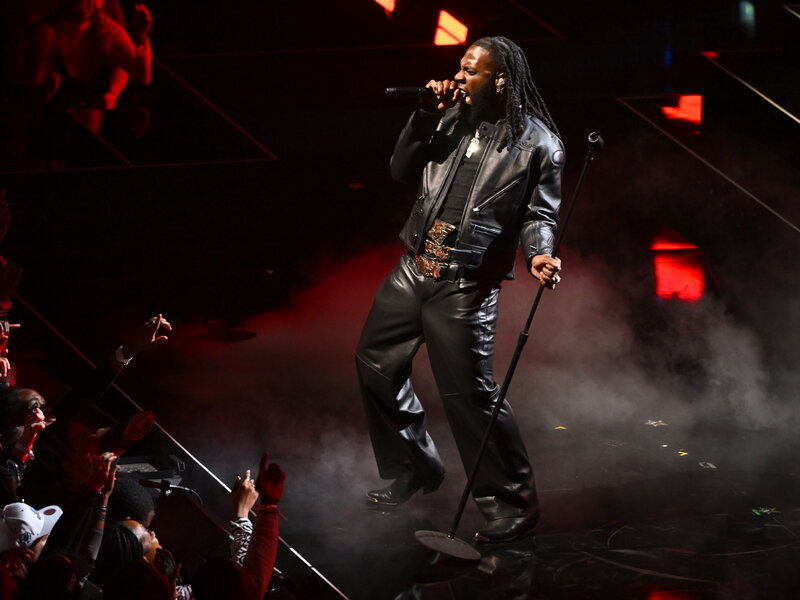
Wizkid’s “Made in Lagos” album dropped on 30 October 2020. Buried in the tracklist was “Essence,” a duet with Tems, a then-rising Nigerian singer whose smoky alto had been circulating on Lagos blogs. “Essence” was not initially released as a single. It became one through pure momentum, climbing TikTok and Twitter through the spring and summer of 2021 until Justin Bieber joined a remix released in August 2021. The Bieber version pushed the song to number nine on the Billboard Hot 100, and it was widely reported as the first Nigerian song to chart there at all. Barack Obama put it on his summer playlist. At the 2022 Grammys it was nominated for Best Global Music Performance, the only category it competed in. For Tems, who at the time had a handful of singles to her name, “Essence” was a launchpad of nearly unprecedented velocity, and the production team behind it, led by P2J and Legendury Beatz, became names American A&Rs started asking for by request.
2021: CKay, TikTok and a Crossover Without a Feature
While “Essence” was climbing American radio, a second route into the mainstream opened with no American guest attached to it at all. CKay’s “Love Nwantiti,” originally released in August 2019, caught fire on TikTok in September 2021 through an unauthorised slowed-down remix. Rolling Stone counted more than three million TikTok videos built on the song that month, and it charted in roughly 160 countries. By Apple’s Shazam figures it was the longest-running global number one of 2021. The lesson was not lost on anyone in Lagos or Los Angeles. A Nigerian record could now reach American listeners without a Drake verse or a Bieber remix to carry it, which quietly changed the terms on which American artists came asking.
2022: The Floodgates Year
If 2016 was the inflection point, 2022 was the year the dam broke. The collaborations stopped being events and started being a weekly occurrence, which is the point at which a trend becomes an industry. Three releases from that year are worth separating out, because each one solved a different problem. Ed Sheeran showed that an Afrobeats record could absorb a stadium songwriter without losing its shape. Rema showed that an African artist could lead the credit on a sustained American hit. Future and Drake showed that a Nigerian voice could anchor a number one without its owner being in the building.