
Walk into any Lekki studio at 2am and you will find a young Afrobeats artist signing off on a wire transfer they personally funded. The session musician needs paying. The mix engineer in Atlanta wants a deposit. The director shooting next week’s video wants half upfront. Nobody at Universal, Sony, or Warner is signing those invoices. The artist is, and the money comes from somewhere most fans never think about.
The self-funded path through Afrobeats has quietly become the dominant model for the genre’s middle tier and a surprising number of its biggest names. The economics changed when streaming distribution opened up, TikTok flattened the marketing playing field, and distributors stopped demanding ownership in exchange for global reach. What used to require a major label advance can now be financed through personal savings, brand partnerships, distribution-only deals, and a willingness to operate like a small business rather than a starving artist.
The distribution-only revolution
Before getting into who funds what, the structural shift matters. A traditional major label deal hands the artist an advance, then recoups that advance from royalties at a rate that often leaves the artist owing money even after a hit. The label owns the masters, controls release timing, and takes the largest slice of revenue forever.
A distribution-only deal flips that arrangement. Companies like Empire Distribution, The Orchard, Africori, and a handful of smaller boutique distributors will push an artist’s music to Spotify, Apple Music, Audiomack, Boomplay, YouTube Music, and every other digital service provider in exchange for a flat percentage of streaming revenue. The cut most commonly described sits somewhere between 10 and 15 percent, though the number moves with an artist’s leverage and the territories involved. The artist keeps the masters, controls the release, and pays for everything upstream of distribution out of pocket.
Empire’s Lagos office became a key node in this shift. The company built its African business by offering credible global distribution without the ownership grab of a traditional label, and a long list of Afrobeats acts have used Empire as the rails for self-funded releases. Africori, based out of South Africa with Lagos and Nairobi presence, runs a similar playbook with deeper roots in African DSP relationships.
The math becomes obvious quickly. Take an illustrative case: an artist who funds an album herself and keeps the overwhelming majority of streaming revenue forever ends up in a vastly better long-term position than an artist who took an advance five times the size and now owes the label most of every stream until that advance recoups. The catch is that the self-funded artist has to find the production money somewhere before a single stream exists, and streaming income lands roughly a quarter after the listening actually happens.
What it actually costs to release music at a professional level
Numbers vary wildly by ambition and connections, and nobody in this part of the industry publishes a budget. What follows is the shape of a rollout as independent artists, managers and line producers describe it, and every band should be read as a working estimate rather than a quote. A single rollout with any real chance of competing in the modern Afrobeats market is generally put somewhere in the low-to-mid six figures of dollars. An album-scale project, meaning a body of work with a proper rollout behind it, is described as running several times higher again when the artist is funding it independently and treating it seriously.
| Line item | Range described by independent artists and producers |
|---|---|
| Recording and production, per song | $5,000 to $50,000 |
| Mixing and mastering, per song | $2,000 to $10,000 |
| Lead music video | $20,000 to $200,000 |
| Cover art and secondary visuals | $5,000 to $25,000 |
| PR, per market | $5,000 to $50,000 |
| Flat-fee distribution | around $5,000 |
| Full album rollout, all in | $50,000 to $500,000 |
Recording and production
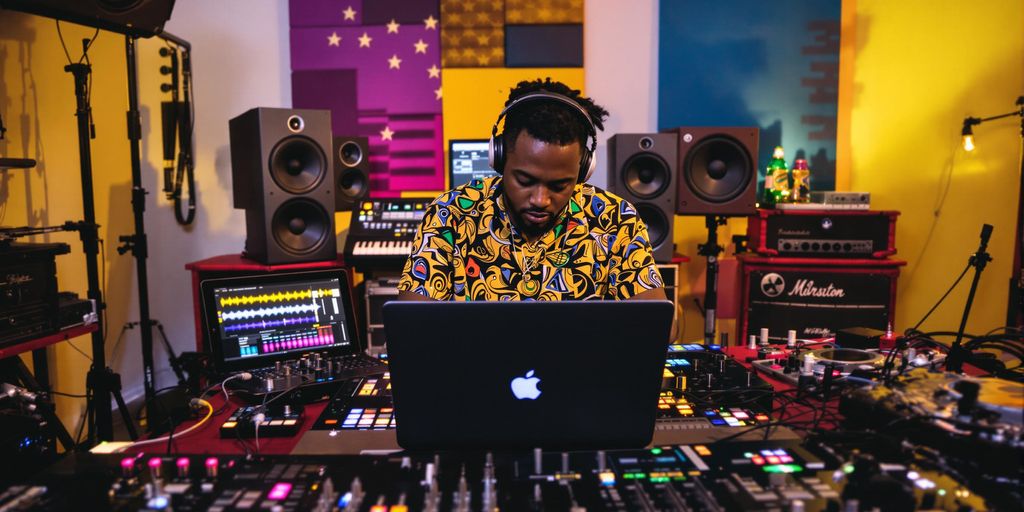
A top-tier recording session in Lagos, with a respected producer, session musicians, and proper studio time, spans an order of magnitude on its own. The lower end covers an artist who already has the beat, comes in prepared, and tracks a vocal in one session at a mid-range facility. The upper end covers full live instrumentation, multiple producer credits, vocal coaching, and a fee for a producer whose name moves the needle.
Mixing and mastering swings just as widely, and the variable is almost entirely the engineer’s resume rather than the hours involved. The Afrobeats sound that dominates global playlists leans heavily on a specific kind of vocal processing and low-end discipline, and the short list of engineers who deliver that sound consistently price themselves accordingly. Artists who try to save money here tend to spend it twice, because a mix that sounds fine on studio monitors and thin on a phone speaker will not survive a playlist placement. The engineers know this, which is why their rates have held firm even as almost every other cost in the chain has been squeezed.
Visuals
Music video budgets remain the single biggest line item for most independent rollouts. A serious music video in the current Afrobeats aesthetic spans the widest range of any line item on the sheet. Director fees, location permits, wardrobe, dancers, drone shots, color grading, and post-production VFX add up faster than anyone expects. The videos that look like they cost nothing are the most misleading of all, because the casual aesthetic usually sits on a mid five-figure invoice once everything is tallied honestly.
Cover art, promo trailers, lyric videos, and the smaller visual assets a modern campaign requires add a further layer on top of the main video, and they are the costs most often forgotten at budgeting stage. A rollout needs artwork that works as a square thumbnail and as a billboard, vertical cuts for every platform, and enough short-form material to keep an account active for the eight weeks around release. Artists who commission all of it from the same team at the same time pay considerably less than artists who come back three separate times because they did not plan the campaign before they planned the song.
Press, PR, and marketing
Hiring a PR firm to push an album rollout across Nigeria, the UK, and the US is priced per market rather than per campaign, which is how the line item quietly triples. Add a digital marketing agency for paid social, influencer seeding, and TikTok activations, and the marketing budget alone can match or exceed the recording budget. Independent artists who skip professional PR often find even excellent music struggles to break through without coordinated press support.
Distribution
This is the line item that exposes how much the game has changed. Distribution itself costs nothing upfront when working with Empire, The Orchard, or Africori on a percentage deal. Some boutique distributors offer flat-fee distribution for a low five-figure sum, which makes sense for established artists who project enough streaming revenue to make the percentage model uneconomical.
The Mr Eazi blueprint
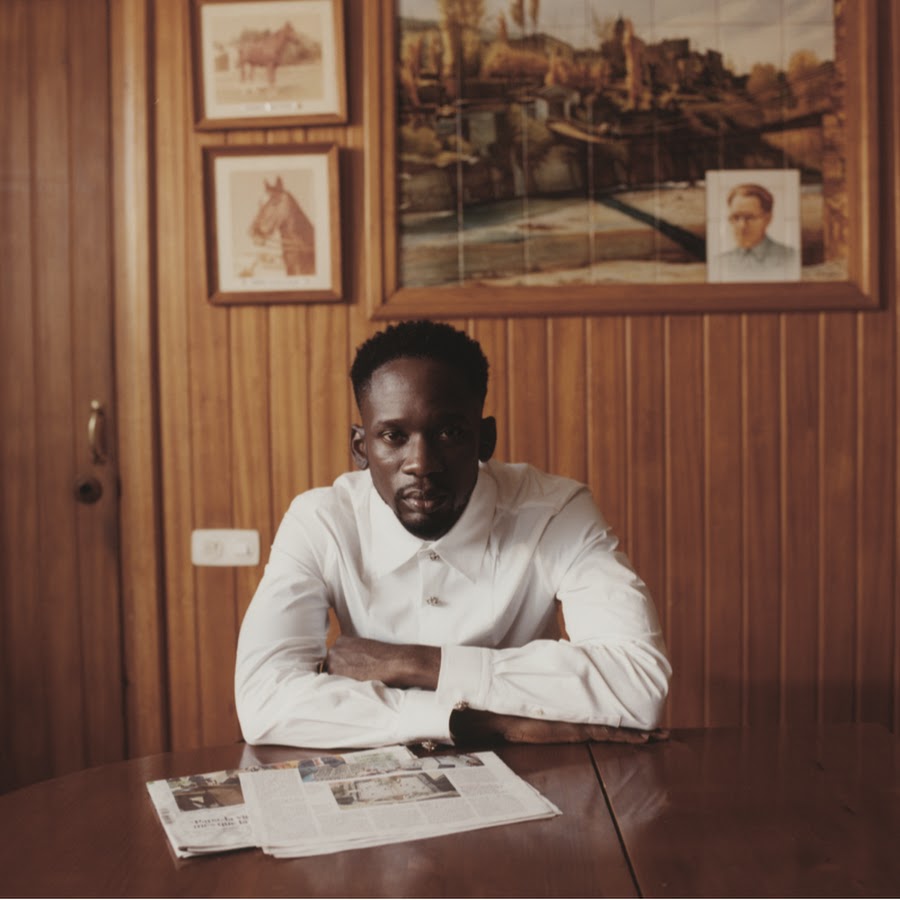
No conversation about self-funded Afrobeats careers happens without Mr Eazi. His 2017 project Lagos to London was a self-released breakthrough that proved the model could work at scale, and the infrastructure he built afterward turned his personal playbook into a system other artists could plug into.
emPawa Africa, the platform Mr Eazi founded, functions as something between a label, an accelerator, and a financing vehicle. Artists who join emPawa get production support, distribution through partnered channels, and crucially, capital. The model is structured to keep artists in ownership of their masters while solving the cash-flow problem that kills most independent careers. Joeboy is the clearest success story to emerge from the emPawa pipeline, with a global hit catalog built on a foundation that never required signing away his catalog.
Mr Eazi’s approach treats music releases as venture-backed projects. He has been open about applying private-equity thinking to his career, raising capital against future cash flows, and structuring each release as a self-contained business with its own budget and return profile. That framing solved a problem that vibes-and-passion management never could: how to fund a polished international rollout without giving up ownership.
The hybrid model that dominates the top tier
Strict self-funding sits at one end of the spectrum. Full traditional label deals sit at the other. Most of the biggest Afrobeats artists operate somewhere in the middle, in arrangements loosely described as hybrid deals or 180 deals.
A 180 deal flips the traditional structure: the artist keeps the masters, the label or distributor provides marketing muscle and capital, and the revenue split favors the artist far more than a traditional deal would. Asake’s arrangement with YBNL and Empire fits this category. He has label backing for marketing, rollout, and A&R support, but the structural terms keep more long-term value with him than a 1990s major label deal would.
BNXN, formerly known as Buju, runs a similar hybrid model. The architecture allows an artist to benefit from a partner’s infrastructure without surrendering the catalog, and it allows the partner to share in upside without carrying the full risk of a traditional advance and recoupment cycle.