The Haim Sisters' Rise to Fame: How Three Siblings Built a Music Empire
Jalen Ross··10 min read
Ad SpaceArticle Top - 728x90
Advertisement
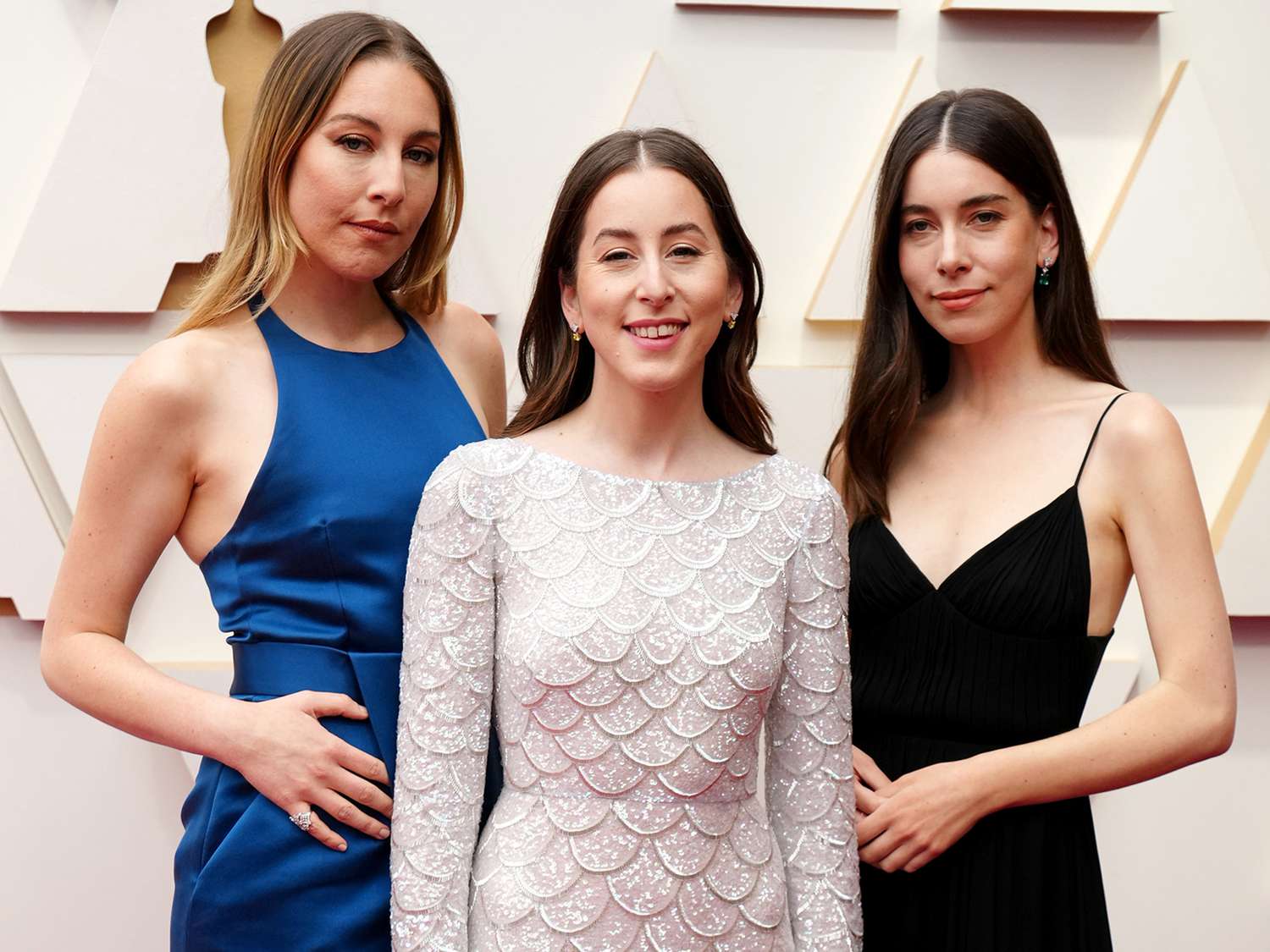
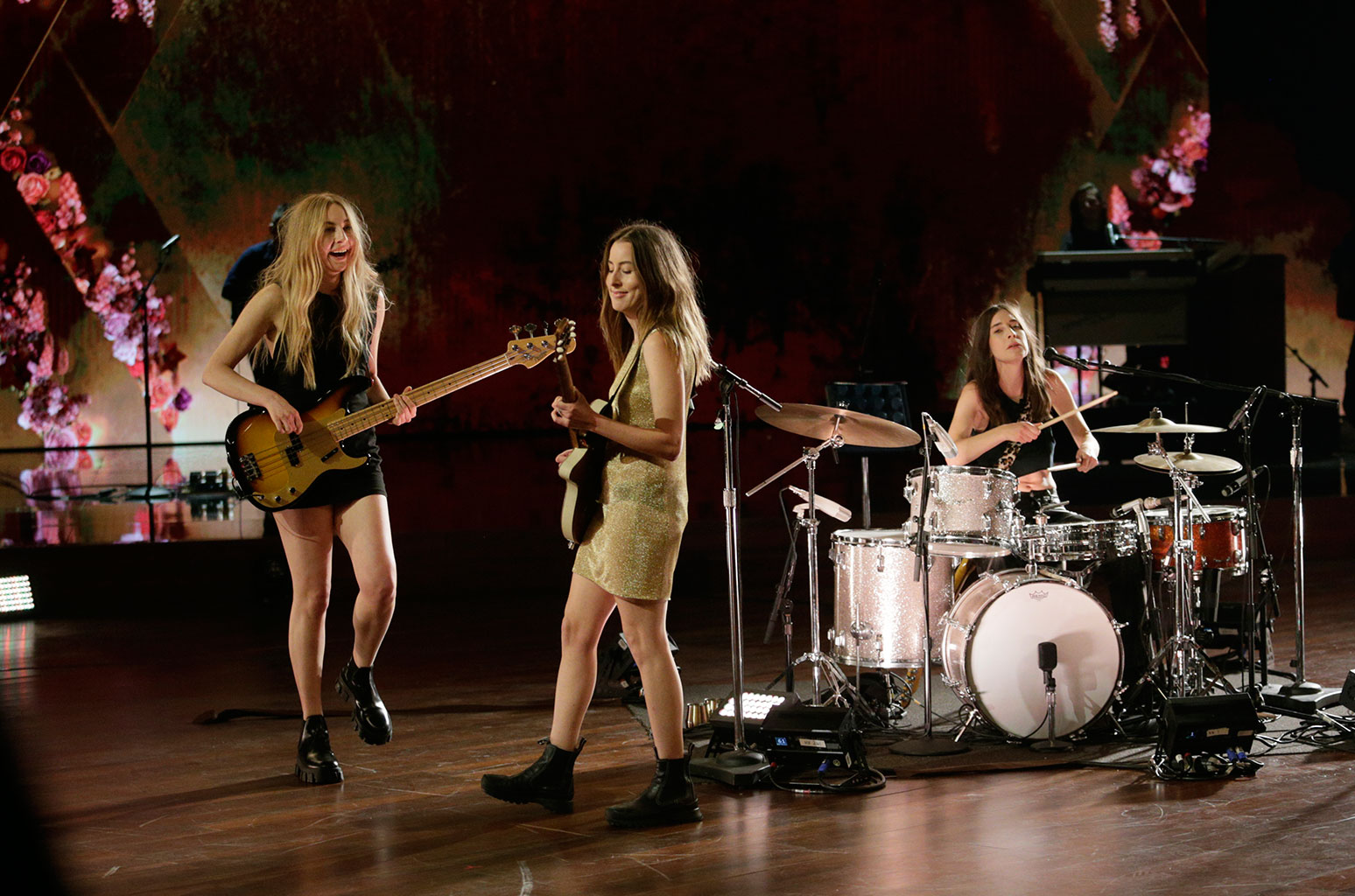
Three women stand in a row at the front of a stage, basses and guitars slung low, hips swinging in near-perfect time. One of them pulls a face that has become its own kind of trademark, a scrunched, blissed-out grimace that arrives every time a guitar lick hits hard. Behind them a drummer keeps the pocket tight, but the eye keeps drifting back to the front line, where the chemistry is so obvious it feels almost private. These are sisters, and you can tell from across an arena. The way they read each other mid-song, the way one finishes a phrase the other started, the way they laugh at a private joke between verses. That tightness did not come from a record deal or a rehearsal contract. It came from a childhood spent making noise together in a living room in the San Fernando Valley.
That band is Haim, pronounced like “time,” and the three women are Este, Danielle and Alana. Over roughly fifteen years they have grown from a family covers act playing charity fairs into a Grammy-nominated rock group with a global following, the rare modern band that critics adore and stadiums of fans sing back word for word. Their story is not one of overnight success. It is a story about apprenticeship, about patience, and about the unusual durability of a group whose members happen to share parents, a last name and a lifetime of muscle memory.
Rockinhaim and the Valley childhood
The Haim sisters were raised in the San Fernando Valley, the sprawl of suburban Los Angeles that the band has long claimed as its spiritual home. Their parents made music part of the furniture. Their father, Mordechai, known as Moti, was an Israeli who had played professional soccer before settling in California, and he played the drums. Their mother, Donna, was a guitarist with a competitive streak. Family lore, repeated in countless interviews, holds that Donna once won a contest on the television variety show “The Gong Show” in the 1970s singing a Bonnie Raitt number, and Raitt’s bluesy, guitar-forward style would later echo through her daughters’ work.
Out of that household came Rockinhaim, the family band the parents formed with their children to play cover versions at local charity fairs and fundraisers. Moti held down the drums, Donna handled guitar and vocals, and the three girls filled out the rest. According to the band’s own accounts and reference biographies, the family played its first proper rock show at Canter’s Deli in Los Angeles around the turn of the millennium and kept performing 1970s and 1980s covers every few months through the following decade, mostly at neighborhood fairs and benefits. They lugged their gear around Southern California in a white minivan the family nicknamed the “Shaggin’ Wagon.”
It is tempting to romanticize this, but the practical effect mattered more than the charm. Before any of the sisters could legally drive, they had logged hundreds of hours playing live in front of strangers, learning how to lock in with one another, how to recover from a flubbed chord, how to read a room. The “guitar-face” that would later become a meme was not an affectation. It was the residue of kids who genuinely loved the feeling of a song landing.
The long apprenticeship before the breakthrough
What separates Haim from many bands that arrive fully formed is how long the sisters worked before the world paid attention. Danielle, the middle sister, born in 1989 and the group’s lead vocalist and lead guitarist, was the first to get pulled into the professional machinery. As a teenager she was invited to a jam session at the home of the singer-songwriter Jenny Lewis, and Lewis later asked her to come on tour as a guitarist. On that tour, Julian Casablancas of The Strokes saw Danielle play and recruited her for his own touring band. So while Este and Alana finished school and held the family band together, Danielle spent her late teens and early twenties as a hired gun, standing stage-left in other people’s projects, absorbing how a real touring operation runs.
That period gave Danielle a craft and a confidence that she brought back to her sisters. Este, the eldest, born in 1986, had studied ethnomusicology at university and anchored the low end on bass. Alana, the youngest, born in 1991, rounded out the trio on guitar and keys. When the three finally committed to Haim as a serious band rather than a family pastime, they were not novices. They were three musicians who had each spent years playing, in the family act and, in Danielle’s case, in the professional trenches.
They released a self-funded EP called “Forever” in 2012, and the buzz built quickly through tastemaker blogs and a clutch of well-received festival slots. The momentum was sharp enough that the British music industry took notice early, and Haim topped influential industry tip lists for the year ahead. The apprenticeship was over. What came next would define them.
Days Are Gone and arrival
Haim’s debut album, “Days Are Gone,” arrived in 2013, produced largely by Ariel Rechtshaid, a Los Angeles studio mind with a knack for blurring the line between glossy pop and guitar music. The record was a clever, confident statement. It fused the breezy harmonies of 1970s Laurel Canyon soft rock with the snap of 1980s radio pop and the rhythmic crispness of contemporary R&B. Singles like “The Wire,” “Falling” and “Forever” announced a band that could write hooks without sacrificing the chemistry that made them special live.
The album was a commercial and critical success, reaching the top of the UK albums chart and landing on a long list of year-end best-of rankings. Suddenly Haim were not a promising act but an arrived one, and the wider music world began offering them the kind of opportunities that confirm a band has crossed over.
One of those opportunities came from the biggest pop star of the era. In 2015, Taylor Swift recruited Haim as special guests for select dates of her 1989 World Tour, bringing the sisters in front of arena and stadium crowds across multiple American cities. The friendship that formed there would prove lasting, and it placed Haim in a rarefied orbit. They were a critics’ band who could also hold a stadium, a combination that is harder to pull off than it sounds.
Ad SpaceIn-Article - 300x250
Advertisement
The critical darling years
If “Days Are Gone” announced Haim, the records that followed deepened them. Their second album, “Something to Tell You,” landed in 2017, again with Rechtshaid at the helm, this time joined by Rostam Batmanglij, the former Vampire Weekend multi-instrumentalist whose production fingerprints are all over a certain strain of modern indie. The four-year gap between albums was partly down to circumstance. Rechtshaid, who is also Danielle’s partner, was treated for cancer during the period, and the band has cited that as a reason for the wait. The album refined the Haim formula, leaning into the harmonies and the meticulous arrangements, even if it did not quite match the cultural splash of the debut.
The real leap came in 2020 with “Women in Music Pt. III,” widely regarded as the band’s finest work. Looser, sadder and more adventurous than its predecessors, the album folded in saxophone, hip-hop-inflected rhythms and a frankness about depression, grief and the experience of being women in the music industry. The title itself was a wry jab at the way the sisters were perpetually asked what it was like to be women who play instruments. Critics responded with some of the warmest reviews of the band’s career, and the album appeared near the top of numerous year-end lists.
The recognition extended to the Recording Academy. Haim earned a nomination for Album of the Year at the 2021 Grammy Awards for “Women in Music Pt. III,” a milestone that made them, by the accounts of multiple outlets at the time, the first all-female rock group to be nominated in that marquee category. They also picked up a nomination for Best Rock Performance for the song “The Steps,” in a year when every nominee in that category was a woman. It was not the band’s first brush with the Grammys. They had been nominated for Best New Artist back in 2015. But the 2021 nominations carried a different weight, marking Haim as a band whose artistry the establishment could no longer treat as a novelty.
The Taylor Swift tours and the wider orbit
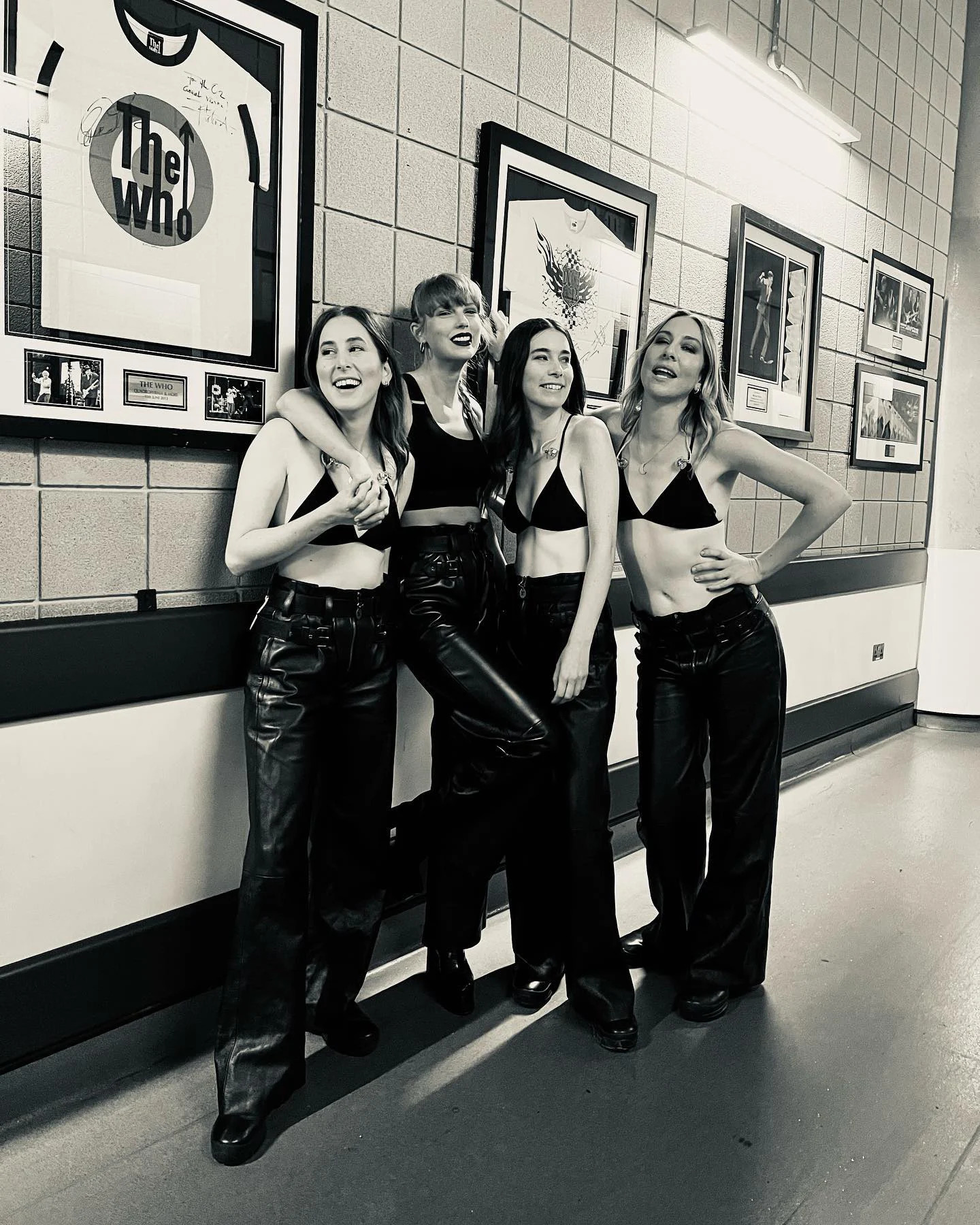
Haim’s connection to Taylor Swift never really cooled after 2015. The two acts have collaborated and shared stages repeatedly over the years, and the sisters have appeared as surprise guests at Swift’s shows, including dates on her record-shattering Eras Tour. Danielle has also worked closely with Swift as a touring and creative collaborator. The relationship is genuine rather than transactional, and it has helped keep Haim visible to a pop audience far larger than a guitar band might ordinarily reach.
The sisters’ creative reach runs in other directions too. Danielle lent featured vocals to several tracks on Vampire Weekend’s 2019 album “Father of the Bride,” extending a longstanding kinship with Rostam Batmanglij and the band’s frontman Ezra Koenig. These collaborations matter because they show Haim operating as more than a self-contained unit. The sisters are woven into a wider community of Los Angeles and indie musicians, trading skills and turning up on one another’s records, the way a working musician’s life actually looks.
Alana goes to the movies
The most surprising swerve in the Haim story belongs to the youngest sister. In 2021, Alana made her acting debut as the lead in “Licorice Pizza,” the coming-of-age film written and directed by Paul Thomas Anderson. Anderson was already part of the Haim world, having directed several of the band’s music videos and being a close friend of the family. He wrote the screenplay with Alana in mind and offered her the role, and in a neat echo of the band’s origins, her real-life family came along for the ride. Her sisters Este and Danielle and her parents Moti and Donna were all cast as members of her character’s on-screen family.
Alana’s performance drew strong reviews and a clutch of awards-season nominations, an unusual reception for a first-time actor with no formal training. It underscored something the band had always projected. The Haim sisters are natural performers, comfortable in front of an audience and an audience’s gaze, whether the medium is a guitar solo or a movie camera. For Alana, the film was not a pivot away from music so much as proof that the family’s instinct for performance traveled.
The 2025 chapter
After a five-year wait, Haim returned with their fourth studio album, “I Quit,” released on June 20, 2025. Produced by Danielle alongside Rostam Batmanglij, with co-production from Buddy Ross, the record arrived as a sprawling fifteen-track statement, the band’s longest album to date. Its themes leaned into independence and the messy aftermath of relationships, the title functioning as both a breakup line and a declaration of self. The sisters paired the release with a tour, taking the new material out to the live audiences where their reputation has always been strongest.
“I Quit” is the work of a band confident enough to stretch out, trusting that the audience built up over more than a decade will follow them through a longer, looser collection. It is also a reminder of how rare Haim’s longevity is. Plenty of buzzy bands flame out after one or two records. Haim have made four across roughly a dozen years without losing the thread that ties them together.
Why the sister band endures
There is a reason Haim have lasted while sharper, flashier trends have come and gone. Part of it is craft. These are serious musicians who can actually play, who built their chops over years of live performance rather than in a studio assembled by committee. Part of it is the songwriting, a magpie sensibility that borrows freely from soft rock, R&B, pop and indie and stitches the pieces into something recognizably their own. And part of it is the simple fact of the live show, where the band’s energy and that famous guitar-face turn every gig into an argument for why guitar music still matters.
But the deepest reason is the one written into their name. Bands break up over money, over egos, over the slow erosion of friendship under the pressure of touring. Sisters who have been playing together since childhood, who learned music from the same parents in the same living room, carry a bond that a band contract cannot manufacture and cannot easily dissolve. The chemistry that strangers notice from the back of an arena is not a stage trick. It is decades of shared history, audible in every harmony. That is the quiet engine behind the empire the Haim sisters have built, one charity-fair gig, one self-funded EP, one acclaimed album at a time, and it is the thing most likely to keep them standing in that row for many years to come.
Ad SpaceIn-Article - 300x250
Advertisement
Share
Get the recap
Loved this story? Get more like it.
Join readers who get our weekly entertainment recap - the stories worth your time, delivered every Friday.
No spam. Unsubscribe anytime. By signing up you agree to our Privacy Policy.