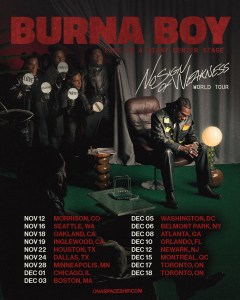
Floodlights swept across a packed bowl in east London on the night of June 3, 2023, and the roar that answered them did not sound like a normal concert crowd. It sounded like a country. Tens of thousands of voices, many of them carrying Nigerian, Ghanaian, British and Caribbean accents in the same breath, sang every word back at the man on the stage. London Stadium, the cavernous arena built for the 2012 Olympics and now home to West Ham United, had been turned into a temporary capital of Afrobeats. No African artist had ever headlined and sold out a venue that size in the United Kingdom on their own name alone. The man making it happen was a Port Harcourt kid who once watched his streams spike by accident because fans were searching for a Kanye West record.
That night was not a fluke. It was the visible peak of a climb that took more than a decade, and it crystallised a title Burna Boy had been chasing and earning in equal measure: the African Giant. To understand how Damini Ebunoluwa Ogulu became one of the artists who carried an entire genre from Lagos studios to the world’s biggest stages, you have to start long before the stadium lights, in a household where the music of Fela Kuti was not nostalgia but family history.
Port Harcourt roots and the Fela lineage
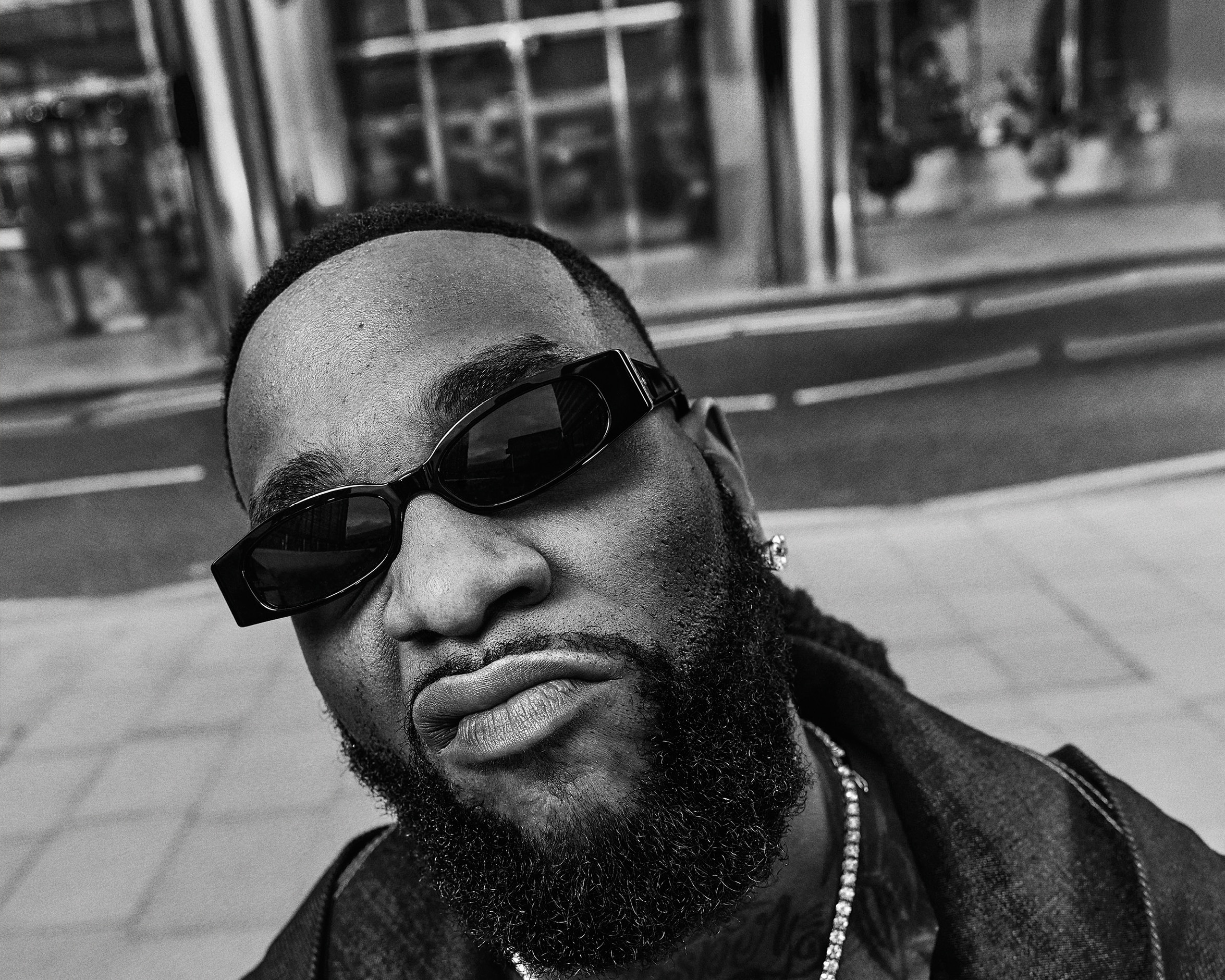
Damini Ogulu was born on July 2, 1991, in Port Harcourt, the oil-rich capital of Rivers State in southern Nigeria. Music ran in the bloodline in a way that reads almost too neat for a biography. His maternal grandfather, Benson Idonije, was a respected broadcaster and music critic who worked closely with Fela Kuti in the 1960s, helping manage Fela’s early band, Koola Lobitos. The architecture of Afrobeat, the politically charged, horn-driven sound Fela built, was effectively part of the furniture in Ogulu’s extended family.
His mother, Bose Ogulu, became the other defining force in his career. A linguist and translator by training, she would go on to manage her son’s professional life and remains the steady hand behind the operation, the figure who has accepted Grammy recognition on his behalf and steered the business through its most turbulent stretches. Growing up between Nigeria and a period of schooling in the United Kingdom, Ogulu absorbed dancehall, hip-hop, reggae and the highlife and Afrobeat records playing at home. That blend, rather than any single tradition, is what would later make his sound so hard to file under one label.
The early grind and the long apprenticeship
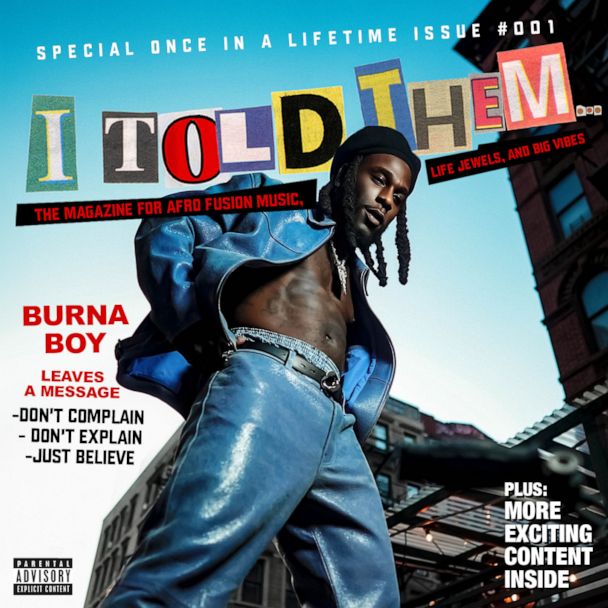
Long before the world knew the name, there were years of unglamorous work. Ogulu adopted the stage name Burna Boy and began releasing music in the early 2010s, building a following in Nigeria with a gritty, reggae-inflected style that stood apart from the glossier pop dominating the airwaves. His 2013 debut album, “L.I.F.E,” announced a distinctive voice, but national stardom did not translate into global recognition overnight.
What followed was a stretch that tested him. There were label disputes, a period of perceived stagnation, and a reputation that ran hot. Plenty of artists who arrive with that much early promise plateau there. Burna Boy did not, largely because he kept refining the actual music rather than chasing trends. By the time he released “Outside” in early 2018, he had sharpened his sound into something both rooted and restless, fluent in Afrobeats but pulling freely from dancehall and global pop. He just needed the world to notice. As it turned out, the world noticed almost by accident.
It helped that his musical vocabulary was unusually wide for an Afrobeats artist of his generation. He could slide from a reggae cadence into an Afro-fusion groove and then drop into a hard-edged rap verse inside the same record, and he did it without sounding like a tourist in any of those styles. That fluency gave his catalogue a depth that rewarded repeat listening, and it meant that when the breakout moment finally arrived, there was a body of work waiting behind the hit single rather than a single fluke holding up an empty house.
“Ye” and the anthem nobody planned
One of the strangest origin stories in modern Afrobeats belongs to a song Burna Boy did not even release as a lead single. “Ye,” tucked into the “Outside” tracklist, was a slow-burning favourite among his fans. Then, in June 2018, Kanye West released an album also titled “Ye.” Listeners around the world searching streaming platforms for the American rapper’s record kept stumbling onto Burna Boy’s track instead.
The mix-up sent his streams soaring, reportedly spiking around 200 percent on the back of the confusion. Rather than complain, Burna Boy leaned into the joke, publicly thanking Kanye for the unexpected boost. The accident did something no marketing budget could have engineered. It pushed “Ye” in front of millions of new ears, and the song held up. It became an anthem, a fixture at parties and a gateway record for listeners who had never knowingly played an Afrobeats track. The lesson stuck: the music was strong enough that even a stroke of luck could only open a door he then walked through on merit.
African Giant and the Grammy chapter
The phrase that came to define him was born out of a slight. Ahead of Coachella 2019, the festival’s promotional poster listed Burna Boy’s name in small print beneath the headliners. He pushed back hard, declaring on Instagram that he was an African Giant who would not be reduced to tiny lettering. The line could have read as wounded ego. Instead it became a mission statement, and he named his next album after it.
“African Giant,” released in July 2019, was the record that turned a rising star into a global contender. Sprawling and confident, it earned a nomination for Best World Music Album at the 62nd Grammy Awards, losing on the night to Beninese legend Angélique Kidjo. The recognition, even without the win, planted Afrobeats firmly in the Grammy conversation for the first time at that level.
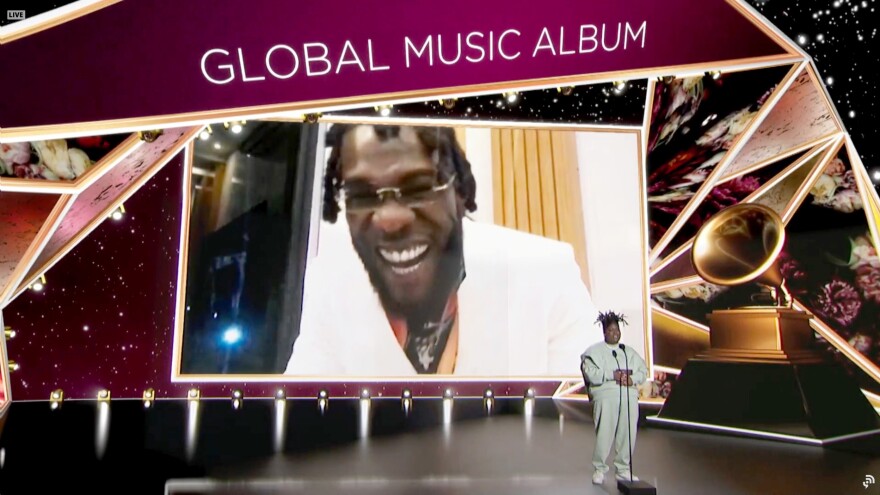
The win came the following cycle. “Twice as Tall,” released in 2020, took home Best Global Music Album at the 63rd Grammy Awards ceremony in March 2021. It made Burna Boy the first Nigerian to win a Grammy as a solo lead artist, a milestone that carried weight far beyond his own catalogue. He has collected multiple Grammy nominations in the years since, a sign of sustained presence rather than a single breakthrough moment.