
Money follows momentum, and few cultural exports have generated as much commercial heat over the past five years as Afrobeats. What began as a regional sound rooted in Lagos studios and Accra dance floors has become a mass-market category on global streaming platforms, with knock-on effects that reach far beyond the recording booth. Venture capital, long allergic to the unpredictable economics of music, has started writing cheques across the African music technology stack. Distribution platforms, royalty administrators, artist accelerators, fan engagement tools, and brand-matching marketplaces are all chasing the same thesis: if Afrobeats is the new global pop, the picks-and-shovels economy around it should be worth building.
The numbers attached to that thesis are still small. Nobody publishes a clean African music tech funding total, because the category sits awkwardly across media, fintech, and consumer software in every database that tracks the continent, and most of the deals that do get done are undisclosed. What the trackers do agree on is the shape rather than the size: African music tech raises a tiny fraction of what Western music tech raises in the same year, and the handful of disclosed rounds cluster in distribution, rights administration, and artist services. The gap looks discouraging on a chart. On the ground, it looks like opportunity, because the underlying audience growth is real and the infrastructure remains thin.
The Mavin Deal That Reset Expectations
Every emerging market needs its watershed transaction, the deal that converts sceptics into believers. For African music, that moment arrived in 2024 when Universal Music Group acquired a majority stake in Mavin Global Holdings, the label and creative house founded by Don Jazzy. The parties did not publish a price. Trade and business outlets reported a figure in the region of two hundred million dollars, and even as an unconfirmed number that was a scale previously unthinkable for an independent African music company.
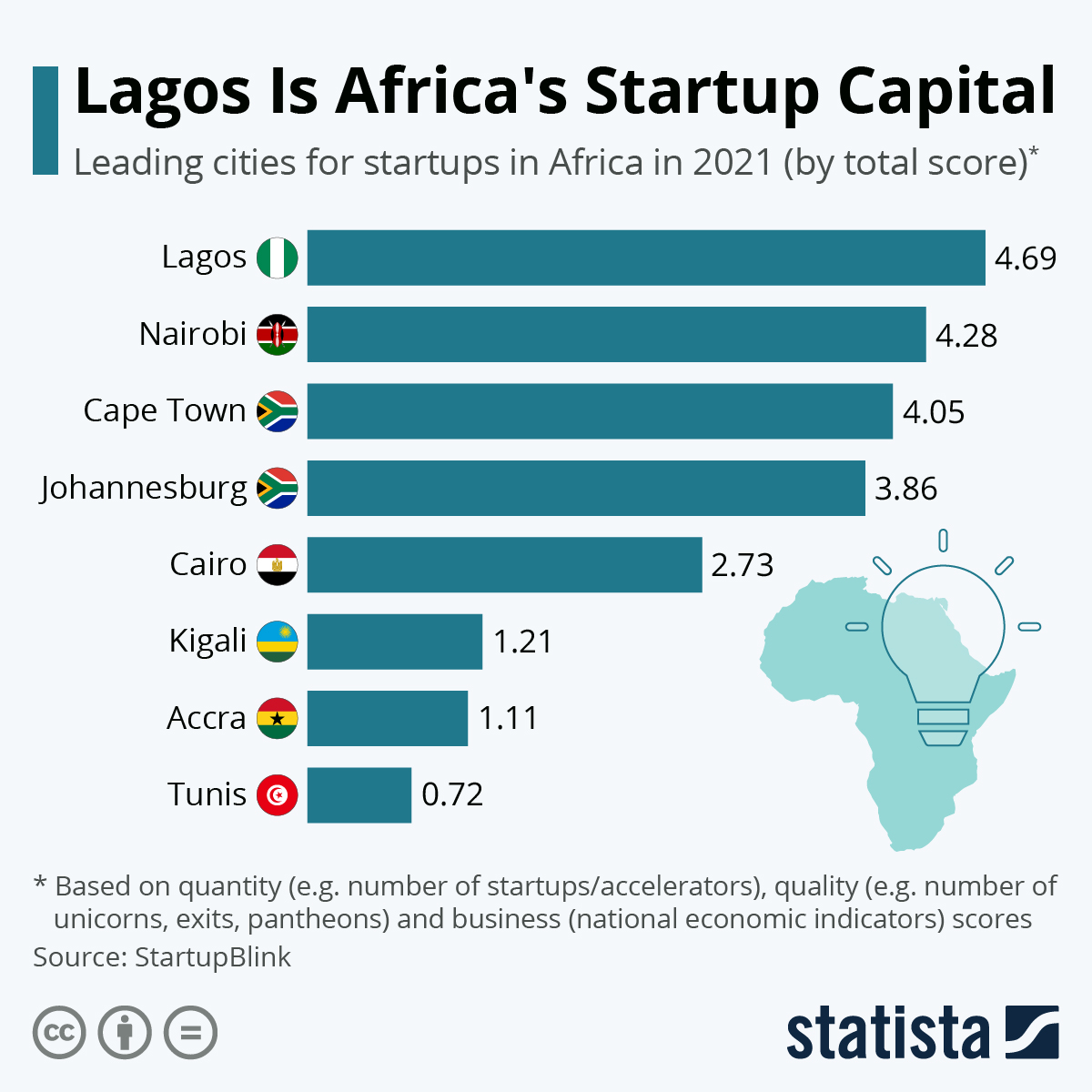
What made the Mavin deal so consequential was not just the dollar figure but what it signaled to the investor class. A major Western rights holder was willing to pay strategic premium prices for African catalogue, artist relationships, and operational know-how. Mavin had already built a roster that included Rema, Ayra Starr, Crayon, and Magixx, and had already taken growth investment from Kupanda Capital, which helped form the Mavin Global holding structure. The amount was not disclosed. The UMG deal validated that earlier bet and gave every fund manager in Lagos, Nairobi, and Cape Town a new comparable to wave around in pitch meetings.
Comparables matter in venture capital because they shape exit expectations. Before Mavin and UMG, the working assumption was that African music companies would top out in the low tens of millions. After it, conversations shifted toward what a nine-figure outcome might look like, and which adjacent businesses, from publishing administration to fan clubs, might benefit from the same strategic appetite.
Why Strategic Buyers Showed Up First
It is worth noting that the first big check came from a strategic acquirer rather than a financial sponsor. Universal, Warner, and Sony have all expanded African operations in recent years, opening offices in Lagos and signing direct deals with artists who used to license through Western majors. Strategic buyers tend to move before pure financial investors in nascent categories because they have operational reasons to act. A label group acquires catalogue to feed its global pipeline. A telco buys a streaming service to reduce churn. Financial investors then follow, looking for businesses that can either grow into acquisition targets themselves or compound independently.
The Streaming Layer: Boomplay, Mdundo, Audiomack

Streaming is the most visible part of the music tech stack, and the African market has settled into a small group of platforms that each play a different role. Boomplay, operated by Transsnet Music, a joint venture between the Chinese handset group Transsion Holdings and the internet company NetEase, claims the largest user base on the continent. The company has put its monthly active users in the tens of millions in its own announcements, and those self-reported figures have never been independently audited. Its bundling relationship with Tecno, Infinix, and Itel phones gives it distribution that pure software competitors struggle to match.
Mdundo, headquartered in Nairobi and listed on Nasdaq First North in Copenhagen, has taken a different path. It went public in 2020 to raise growth capital and has positioned itself as the freemium leader across East and West Africa, with strong adoption in Kenya, Tanzania, Uganda, and Nigeria. Public-market scrutiny has been mixed. The company has shown user growth but has had to defend its monetization model and burn rate, which is the same tension every consumer music service faces in markets where average revenue per user is low. Audiomack, founded in the United States but increasingly oriented toward Nigerian and Ghanaian listeners, has carved out a niche as the hip-hop and Afrobeats discovery platform of choice for younger users. Its model leans on advertising and on artist tools that make it easy to upload, monetize, and promote tracks without a label deal. The platform has been a launchpad for several artists who later signed with majors, and it has attracted brand partnerships from operators that want to reach the under-twenty-five demographic.
The earlier generation of entrants serves as a cautionary anchor. Spinlet, the Nigerian service once held up as the African Spotify in waiting, pitched itself hard at investors and then shrank to irrelevance as licensing costs and infrastructure expense outran its revenue. Several smaller regional players across East and West Africa followed similar arcs without ever reaching the scale where the unit economics turn. The pattern underscores a basic truth about music streaming: the gross margins are thin, the licensing is unforgiving, and scale advantages compound quickly toward whoever gets there first, which is why the surviving platforms are the ones with a hardware or telco relationship behind them rather than the ones with the best app.
Artist Development as a Venture-Backable Category

One of the more interesting shifts in African music tech has been the rise of artist development as a fundable category in its own right. The template here is emPawa Africa, founded by Mr Eazi in 2018 as an accelerator for emerging artists across the continent. emPawa provides funding, distribution, marketing support, and mentorship in exchange for equity-like positions in artist careers, and its best-known alumni are Joeboy out of Nigeria and J.Derobie out of Ghana. The pitch deck logic for an artist accelerator is straightforward. The traditional label model relies on a small number of breakout acts to subsidize a much larger roster, with development costs front-loaded and unrecoverable for most signings. An accelerator that uses data, distribution leverage, and modern marketing techniques to compress development cycles and lower per-artist cost can in theory generate better unit economics, especially if it captures fractional rights rather than full catalogue ownership.
Below the recognisable names sits a long tail of small distribution and development outfits occupying different slices of the same continuum. Some focus narrowly on getting music onto global digital service providers with clean metadata and functioning royalty collection. Others sell marketing and playlisting services to artists who have the music but not the pipework. The category is fragmented, and fragmentation usually signals one of two things: an early market that will consolidate, or a market that resists consolidation because relationships and taste do not scale through software alone. African music tech has not yet settled which of those it is, which is part of why the diligence conversations are hard.
The Brand-Matching Opportunity
A particularly active subcategory is brand technology, the layer that matches artists with sponsors and helps both sides measure performance. The North American comparable is UnitedMasters, the company founded by Steve Stoute that connects independent artists with brand campaigns. Several African operators are building variants of this thesis, betting that the rapid growth of consumer brand spending in markets like Nigeria, Kenya, and South Africa will create demand for measurable artist partnerships beyond the traditional ambassador deal. What makes this attractive to venture investors is the take-rate model. A platform that brokers brand deals can earn a percentage of campaign value without taking on the catalogue and royalty complexity of a label or streaming service, and brokerage take rates are not published, so the margin case rests on the model rather than on any disclosed number. The customer acquisition challenge is real, but the unit economics are cleaner than most music businesses.