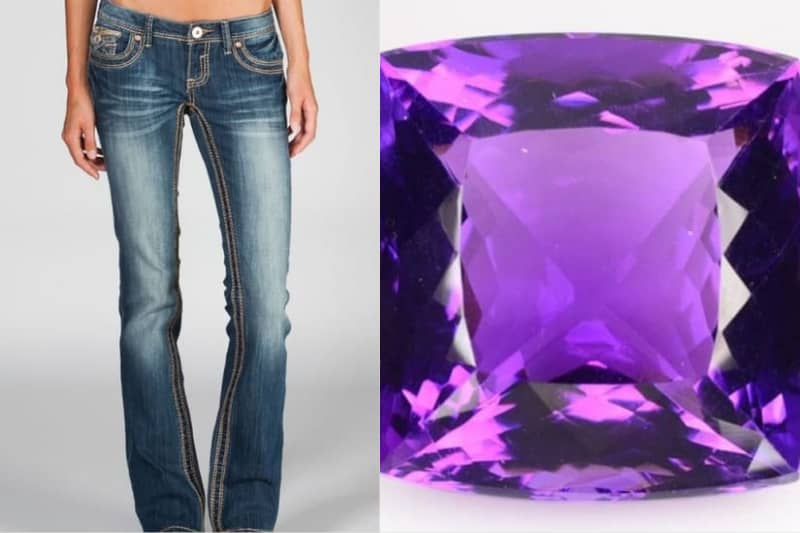
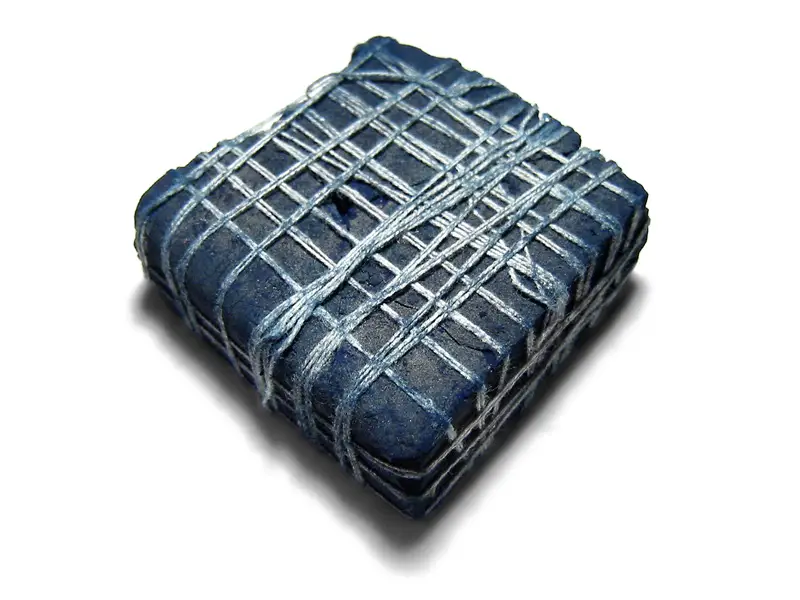
What color is indigo? This is a deep and rich color that is close to the varieties of the color blue and also to the different ultramarine colors. Indigo, as a word, originates from the Latin name for an Indian because a dye of that color was exported to Europe from India.
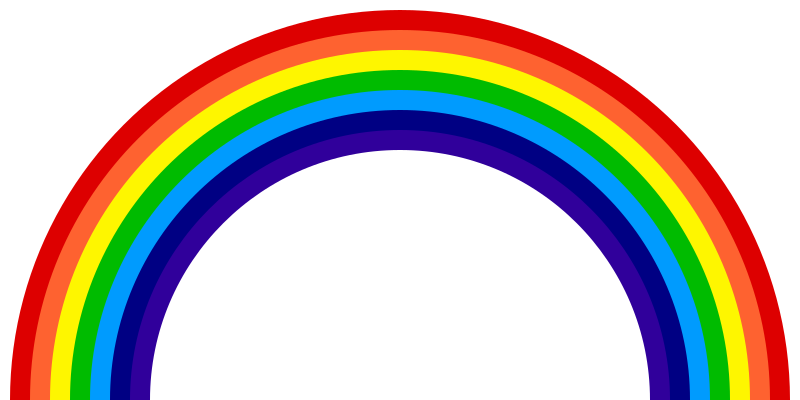
The color itself is included in the visible spectrum and also as part of the seven colors of the rainbow. It is situated between blue and violet. Here we provide key details of the color indigo and explain key differences between it and other colors.
Top ten unknown facts about indigo
- Indigo is generally a deep and rich color that is close to the varieties of the color blue and also to the different ultramarine colors.
- The name ‘indigo’ is actually from the Latin name for an Indian and it was popularised because indigo dyes were exported to Europe from India.
- The indigo color code (also called indigo hex code) is #4B0082 and it means that it contains 29.4% red, 0% green and 51% blue.
- It is very close to violet and it is easy to mistake one for the other because of the fact that in the ROYGBIV color arrangement, they follow each other after blue.
- Meanwhile, violet and purple are also closely related with one unique way of differentiating them being that purple is closer to red and violet is closer to blue.
- Indigo exists in nature and can be found in animals like the blue grosbeak bird, eastern indigo snake and some species of mushroom plants.
- There are seven colors in a rainbow with indigo being the sixth before violet and after blue, when viewed in the visible light spectrum.
- A typical tropical color palette contains colors such as turquoise, tangerine, canary yellow, aqua, fuchsia, coral, and indigo.
- When Isaac Newton introduced it as a color in the mid-1660s, he called it “indico” and named the seven colors as follows: Red, yellow, Green, Blew, a violet purple, Orang, and Indico.
- Purple blue, blue violet, and blue purple are all generally regarded as hues or shades of indigo.
Also read: Everything to know about Aimo Koivunen: pervitin, Finnish army WW2, and methed up
What color is indigo?
Indigo is easily recognisable as the deepest and richest shade or hue of the color blue. While it is a popular color, it is not included in the basic color-naming system which only recognises the following colors; red, rose, orange, magenta, violet, blue, azure, cyan, spring green, green, chartreuse green, and yellow.
However, this has changed with more and more people recognising it as a particular color. In the electromagnetic spectrum, which gives the range of frequencies of electromagnetic radiation and their respective wavelengths and photon energies, indigo is placed between 420 and 450 nanometers wavelength. This puts it in the short-wave side of color wheel (RGB) blue.
Interestingly, this is a source of scientific debate as some researchers list the color as between 445 and 464 nm nanometers wavelength. This will put it more towards the azure color.

Apart from being obtained from mixing two colors, indigo exists in nature and can be found in animals like the blue grosbeak bird, eastern indigo snake and some species of mushroom plants.
Indigo color code
The indigo color code (also called indigo hex code) is #4B0082. Generally, a hex color code is a shorthand for a color’s RBG values. It is usually a six-digit combination of numbers and letters defined by how it contains the mixture of red, green and blue (RGB).

The HEX is short for hexadecimal and color hex codes have been an integral part of HTML for web design, and remain a key way of representing color formats digitally. Using hex codes, two designers or a designer and developer can be on the same page about what exact light blue (or any other color) they are referring to. This way, designers or artists do not have to rely on how others perceive color, which may differ, and can just accurately ‘show’ them the color they mean using its code.
The indigo color code 4B0082 translates to 29.4% red, 0% green and 51% blue. There are also other color code systems available for graphic designers and developers such as HTML color names, CSS colors, and Web-safe colors. They are generally referred to as web colors and are used to describe the colors that web pages use for display on the internet.
The color wheel
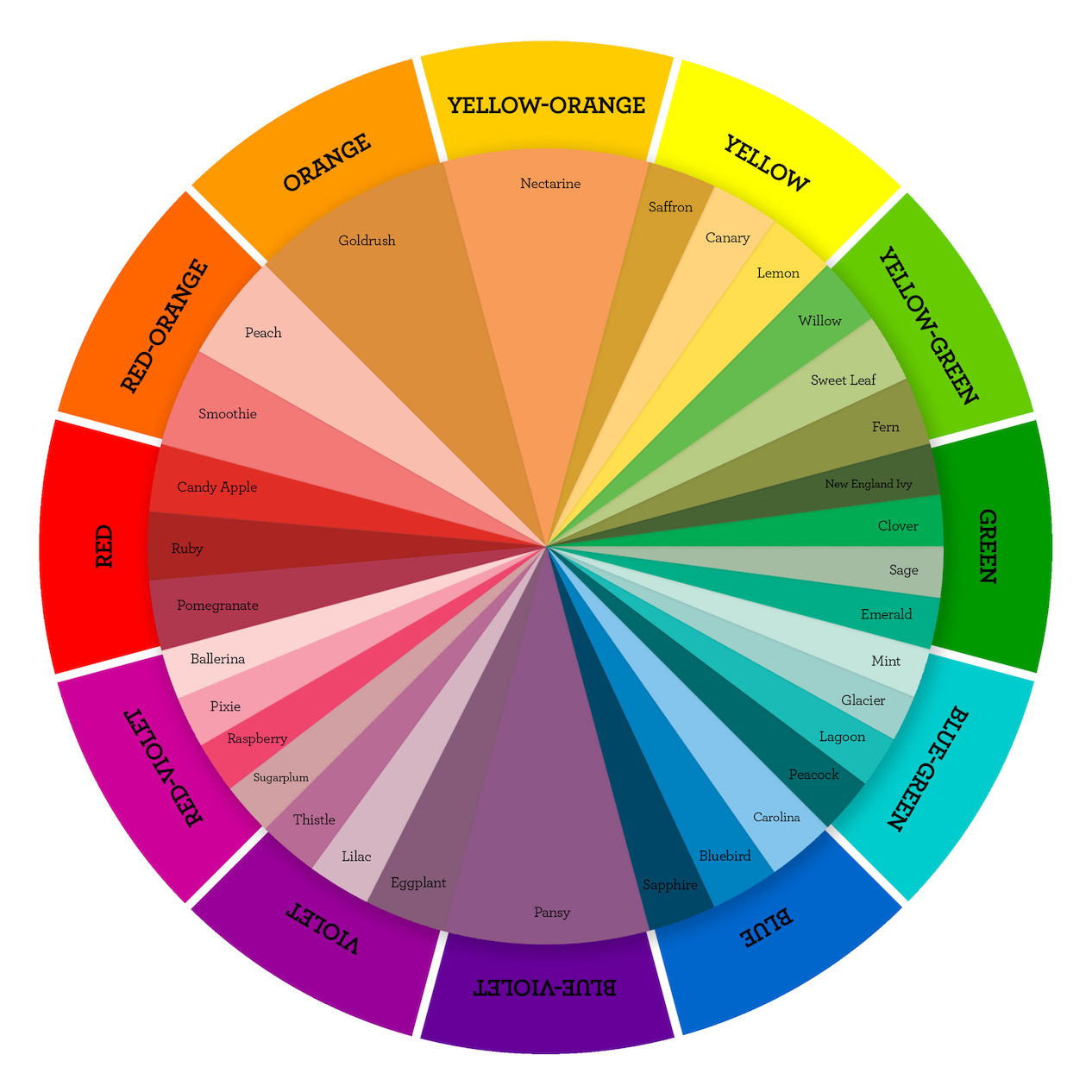
To understand how colors differ and relate with each other, the color wheel (also known as the color circle) was invented. This is an organisation of color hues around a circle in a way that the relationships between primary colors, secondary colors, tertiary colors etc, are clearly visible.
Additionally, most color wheels start with the three primary colors - red, yellow, and blue. Then, they include three secondary colors, and the six intermediates (also called tertiary) which are formed by mixing a primary with a secondary. The color wheel comes in different models for various purposes and fields.
Indigo vs violet
The color indigo and violet are very close to each other and it is easy to mistake one for the other. This arises from the fact that in the ROYGBIV color arrangement, they follow each other after blue. In fact, the deep color indigo that a computer screen can produce, is also called blue violet.
Both colors appear to be inseparable and there are hues of indigo that are closer to violet than they are to indigo. Additionally, the imperial blue color is regarded as indigo as well. Indigo really threads a thin line of existence that has led many in past to call for it to be erased and just be left with blue violet color.
Blue violet color
As is well known, the field of science progresses by disagreements and debates. Nothing is truer than in the case of indigo. When Isaac Newton introduced it as a color in the mid-1660s, he placed it between the blue violet color. Newton had named the seven colors he discovered by shinning a narrow beam of sunlight through a prism as; “Red, yellow, Green, Blew, & a violet purple; together with Orang, Indico, & an indefinite varietie of intermediate gradations.”
This translates as red, yellow, green, blue, violet purple, orange, and indigo. And when he arranged the colors based on how they followed each other, we have Red, Orange, Yellow, Green, Blue, Indigo, and Violet. Thus, putting indigo between the blue violet color.
Also, notice that the arrangement birthed the Roygbiv or Roy G. Biv. acronym for the sequence of hues commonly described as making up a rainbow. There are some that dispute the color indigo being considered as a separate color. Others also opine that Newton’s indigo may have just been what we now call the color blue in modern times.
Blue violet color may seem harder to tell apart with the naked eye. Meanwhile, the violet and purple colors may also be challenging.
Violet vs purple
Armed with analytical tools to obtain such facts like wavelengths, one could easily differentiate between these two colors. In the absence of this, however, the two colors have birthed the violet vs purple rivalry.
The color violet lies between blue and invisible ultraviolet while purple is any of a variety of colors with hue between red and blue. The two colors are ‘closely’ associated and both terms refer to colors that look similar. In the field of optics, purple is formed from mixture of red light and blue or violet light while violets are spectral colors (of single wavelengths of light).
One popular way to settle the violet vs purple debate is that purple is closer to red and violet is closer to blue. Both colors are also historically linked with royalty because the original Tyrian purple dye from Tyre, Lebanon was extremely expensive.