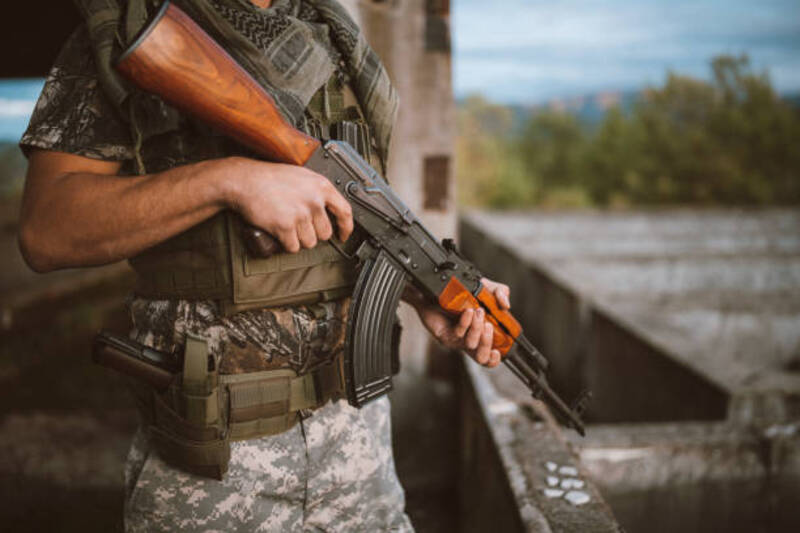
The AK-47 and AK-74 are assault rifles manufactured in Russia and designed by Mikhail Kalashnikov. The letters AK stand for Kalashnikov (K) automatic (A) rifles, and the numbers represent the year they were designed (1947 and 1974). The Soviet Union began replacing its AKM and AK-47 rifles with a newer design, the AK-74, in 1978.
Because ammunition is lighter, soldiers can carry more. The AK-74 has gained a lot of popularity.
If you are intrigued by this unique gear, this article will examine the top five things about assault rifles Aks.
1. Four Countries Bear the Kalashnikov on Their Flag or Coat of Arms
This point is related to the AKs 74 and its predecessor. Still, it deserves to be included on this list because it exemplifies the Kalashnikov brand’s global reach: the Kalashnikov rifle appears on the flags of Mozambique, Zimbabwe, Burkina Faso, and East Timor.
Interestingly, all four countries adopted this symbology around the same time in the mid-1980s; by this time, the AK-47 had established itself as the standard choice of guerillas and insurgents throughout the third world, and the AK-74 was making its debut as an export product.
2. The AK-74 Continues to Be Circulated in Staggering Numbers
The AK-74 and its version, the AK-74M, are currently being phased out by the Kremlin in favor of the updated AK-12 and AK-15 rifles, but an estimated 18 million AK-74s are still in use globally. Part of that comes from official manufacturing licenses that former Soviet governments like Azerbaijan and those with Soviet allegiance like Bulgaria have obtained.
Many more are unauthorized, less reliable reproductions that are still popular in parts of Central Africa and Latin America. Others, such as North Korea’s Type 88 rifle, are merely rebranded copies produced without a license.
3. The AK-74 was the first Kalashnikov variant to use a smaller round
The 7.62x39mm cartridge used by the original AK and its AKM derivative was replaced with the smaller, lighter 5.45x39mm round in the AK-74, the first of several following Kalashnikov models. The change made using less equipment, much less recoil, and better accuracy possible.
The Soviets recognized that switching to a lower-caliber round would reduce penetrating power, but they believed that the AK-74’s bullets would yaw earlier once inside the human body, causing even more catastrophic damage to soft-tissue areas.
4. Russian Schoolchildren Are Taught to Assemble AK-74
Although Russia’s military no longer uses it, the AK-74 serves an unusual purpose in contemporary Russian society: schools. Many Soviet schoolchildren were required to fieldstrip and assemble AK-74s within a certain timeframe. To pay homage to this tradition, schools throughout Russia continue to hold competitions.
5. The AK-74 Was Even Cheaper Than the Original, Dirt-Cheap Kalashnikov
Despite boasting improved handling and accuracy, the AK-74 was even less expensive to mass-manufacture than its predecessor due to minor changes in the 74’s manufacturing process. It also had lower maintenance costs, which saved money in the long run. Nonetheless, by the late 1970s, the AK-47 had become so widely distributed in export markets that the AK-74 arrived too late to replicate its predecessor’s breakaway success.
Advantages Of The AK-74
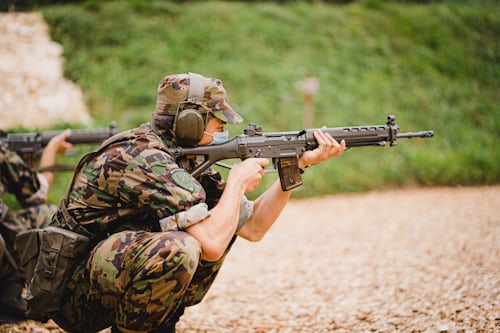
While the old man still packs a punch, the whippersnapper known as the AK-74 can teach the 47 a few things.
When discussing intermediate rifles, keep in mind that size isn’t everything. Ballistics must also be considered in this AK-47 vs. AK-74 shootout. When the lighter and smaller 5.45 cartridge strikes the body, it yaws and fragments, whereas the 7.62 variant punches straight holes.