The genesis of Nollywood
Before the term ‘Nollywood’ was coined in the early 2000s to describe and mean the Nigerian cinema, filmmaking in the country began as early as the late 19th century. In the century that followed, improved motion picture exhibition devices made way for the first-ever feature film in Nigeria in 1926. The movie Palaver, a.k.a Palaver; A Romance of Northern Nigerian, became the first film to feature Nigerian actors in substantial roles. Its simple plot portrayed conflicts between a British District Officer and a local tin miner, escalating into a war. However, the movie has been lauded negatively by critics to be a proudly racist despite being shot in Nigeria. It is among other colonial films which claimed the beneficent influence of the white man in Africa.
A few years later, in 1957, the movie Fincho became the first Nigerian film to be shot in color. Sam Zebba directed it, and the film had the theme of colonization like the previously produced Palaver. Fincho followed the titular character’s story dealing with industrialization brought to Nigeria by European colonialists, the tension between tradition and innovation, and mechanization’s threat to traditional labor. It ran for 76 minutes and was shot with Nigerian non-professional actors and Pidgin dialogue dubbed by Nigerian students at the Los Angeles University of California.
After the country gained independence, there became an increase in Nigerian films, but soon afterward, there was a decrease, which somehow stretched into the late 90s. All this paved the way for the genesis of what would later be known and become Nollywood.
Within this period, there was some significant facet like the emergence of the video film market that saw few movies produced in video format. The 1992 horror-thriller Living in Bondage is highly credited as one of the films that made the video film era successful despite other movies being made in the same format before 1992. Living in Bondage was directed by Chris Obi Rapu and written by Kenneth Nnebue and Okechukwu Ogunjiofor. Actor Kenneth Okonkwo and Nnenna Nwabueze got their breakout roles in the movie.

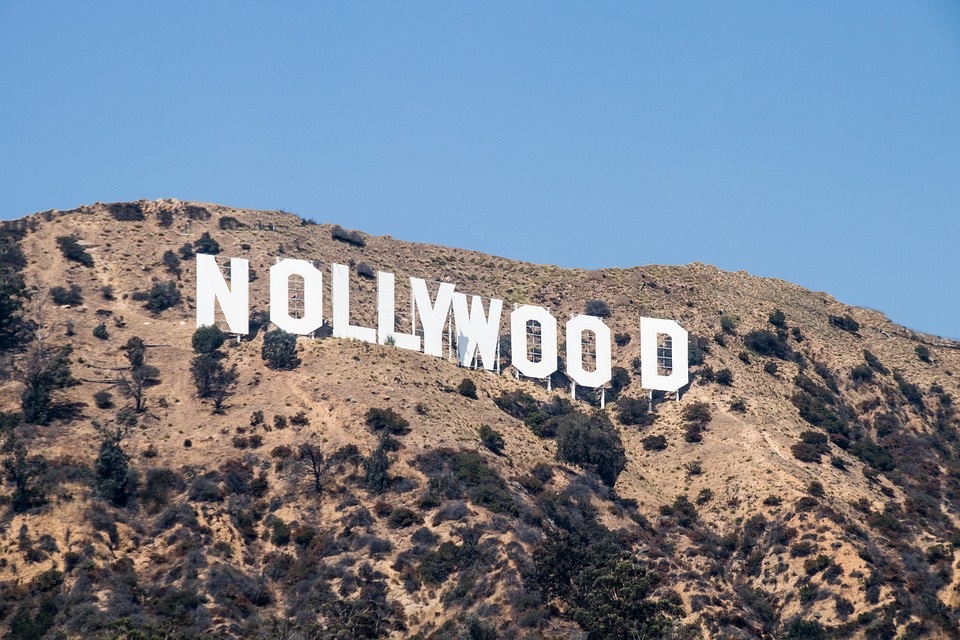
With all these merits, there wasn’t a name attached or customized to the booming industry until 2002, when Canadian-American journalist Norimitsu Onishi coined the word ‘Nollywood’ in his New York Times article. He used this term to describe Nigerian movies and use it to gain popularity outside of the continent. However, the purpose of the term worked and stuck, thereby becoming a tagline for the film made in the country. Like the movie industry in Los Angeles, US, is tagged as Hollywood, and that of Mumbai [Bombay], India, is tagged as Bollywood.
Related articles:
- Five Nollywood actresses starring in lead roles in major 2022 movies
- Top 7 most controversial Oscars moments [watch videos]
- 21 Scariest Asian Horror Movies To Watch.
The inception of new Nigerian cinema
After the video film market era and video format film, the movie industry shifted again. The new era is often tagged as the ‘New Nigerian Cinema’ and can be said to be heavily influenced by modernization and the launch of a series of modern Cinema houses across major cities in Nigeria. The movies produced in this period had high production qualities. The themes explored in these movies shifted away from witchcraft, human rituals, and cannibalism, the usual center of attention in previously produced films.
In 2006, Nigerian filmmaker Kunle Afolayan released the Yoruba-language film Irapada. It became the first production to be screened at the Silverbird Galleria in Lagos- one of the new Nigerian cinemas that launched in the country. Like in the prior video film era, when Living in Bondage was believed to have spearheaded the success of that era, another Kunle Afolayan movie, The Figurine, was considered a; game-changer. It heightened the media attention toward the ‘New Nigerian Cinema.’ While all these development were ongoing, it is also worth mentioning that the stance where the sub-industries under Nollywood was.
The sub-industries of Nollywood
Nollywood in Nigeria is divided mainly into regional and marginally ethnic and religious lines. This allows for the existence of distinct industries. Each of these sub-industry portrays a particular section and ethnicity. Generally, there is the overall English-language film industry where some actors and filmmakers crossover into the sub-industry.
For instance, the Yoruba-language cinema is a sub-industry of Nollywood, with most of its practitioners in the western region of Nigeria. Some of its predecessors are Ola Balogun, Duro Ladipo, Adeyemi Afolayan, Hubert Ogunde, and Moses Olaiya.
The Hausa-Language Cinema is informally referred to as ‘Kannywood.’ it is based in the northern city of Kano and goes as far as way back as the 90s. The Hausa language cinema slowly evolved from the productions of RTV Kaduna and Radio Kaduna in the 1960s. The Hausa cinema has veterans like Dalhatu Bawa and Kasimu Yero, who pioneered drama productions that became popular with the Northern audience. In the ’70s and ’80s, Usman Baba Pategi and Mamman Ladan introduced the Hausa comedy to the Northern audience. However, in the 1990s, the Hausa Cinema saw a dramatic change; this period is usually cited as when the first commercially successful Kannywood film was produced. By 2012, the industry was recorded to have made over 2000 films, including the highly rated Milkmaid movie.
Outside of the country, the term Nollywood became incorporated with other film industries like the Ghanaian English-language cinema. This incorporation helped in introducing a bunch of Ghanaian actors into mainstream Nollywood. Names like Van Vicker, Jackie Appiah, Majid Michel, Yvonne Nelson, John Dumelo, and Nadia Buari became household personas in Nollywood. Currently, the Ghanaian language cinema has somehow ceased to continue.
More cinema success and the popularity of Netflix
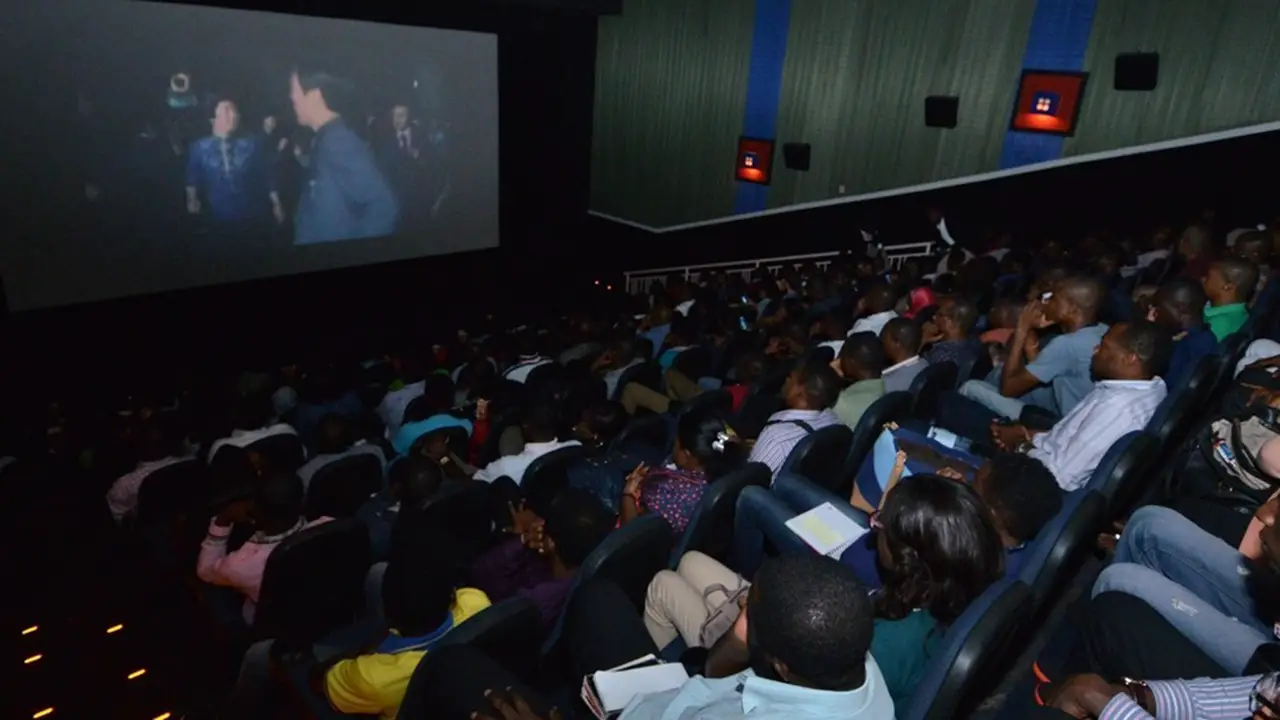
Away from the sub-industries, with the critical responses that The Figurine Nigerian movies started leaning towards producing more commercially appealing films, which made room for a coalition of the term ‘highest-grossing Nigerian film.’ After The Figurine was released in 2009, several films after that took turns surpassing the success of The Figurine. These new films once again shifted in the themes they explored.
Comedies, relationships, marriages, and luxury became the subject matter that most films in the late 2000s became known for. To some extent, there were also more options and avenues for getting funds to produce these films. Some past administrations in the country played vital roles in the country’s film industry; several creative projects were launched, assisted with grants and funding to help most filmmakers meet up to their potential in filmmaking. By 2014, the Nigeria film industry was estimated to be worth 853.9 billion, making it the third most valuable movie industry in the world behind the United States and India. However, in 2016, the industry rose to a new level and became the second-largest film producer in the world. It was further credited as a significant part of the Arts, Entertainment and Recreation Sector contributing 2.3 percent (NGN239billion) to Nigeria’s Gross Domestic Product [GDP]. That same year, filmmaker Kemi Adetiba released the Nigerian romantic comedy-drama The Wedding Party. This movie became the highest-grossing Nigerian film ever. The following year, a record was broken by its sequel, The Wedding Party 2.
Alter Ego, a 2017 Nigerian drama film written by Jude Martins, directed by Moses Inwang and produced by Sidomex Universal, also stole the limelight when it was released. It stars Omotola Jalade, Wale Ojo, Jide Kosoko and Kunle Remi, and its theme was regarded as unique. (It is also avilable on Netflix)
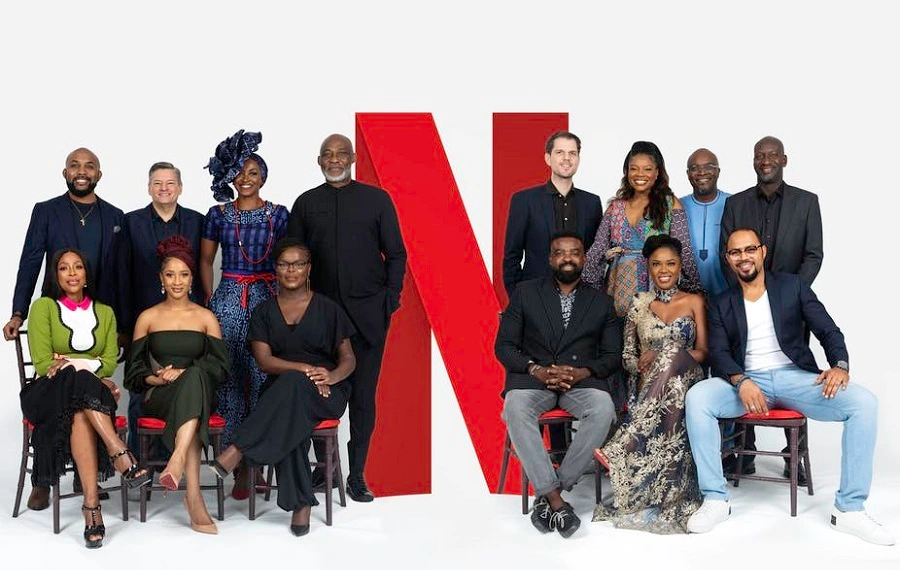
By 2018, the popular streaming service Netflix had become a household name in Nigeria. Several Nigerian movies were being offloaded on the service to be made available for streaming. The 2018 Genevieve Nnaji directed movie Lionheart became the first Netflix original film to be produced in Nigeria. The film also marked the first-ever Nigerian movie to be submitted for the Best International Feature Film at the 2020 Academy Award, although, it later got disqualified.
As Nollywood movies continued to debut in cinemas and, later on, the streaming platform, movies critics became concerned with the patterns these films followed. Over and over, the film were always star-studded, aimed with top-notch cinematography, and failed to divert away from the same type of storyline; only a few out of the many produced films from the late 2000s to date has left a positive impression on audiences and film critics.
Kemi Adetiba struck again in 2018 with the release of the crime political thriller flick King of Boys; the movie was a hit in cinema and explored a different story that became critics’ and movie lovers’ favorite. In King of Boys, a powerful, successful, and philanthropist matriarch with political ambition struggles for power. The movie starred veteran actresses Sola Sobowale in the lead role and it is already being touted as one of the few films that redefined female characters in Nollywood.
Typically early Nollywood films since the video film era adopted a stereotypical portrayal of female characters- women in movies were presented as materialistic, weak, forgiving, and submissive. Though some films showed women as brutal, dominating, and powerful, these films always ended with such characters meeting a fateful end; either she dies or is forced to convert into a modest nature. But with the character of Sola Sobowale, a.k.a Alhaja Eniola Salami, the narrative of women not being able ‘to eat their cake and have it’ is reconstructed. King of Boys portrayed a female character in a new light. At the time of the movie’s debut, it went ahead to have the highest opening week in 2018 for a non-comedy film. The political thriller is also one of the few movies to debut later on Netflix when streaming became mainstream in the country.
Nollywood’s influence on Social Media
View this post on Instagram