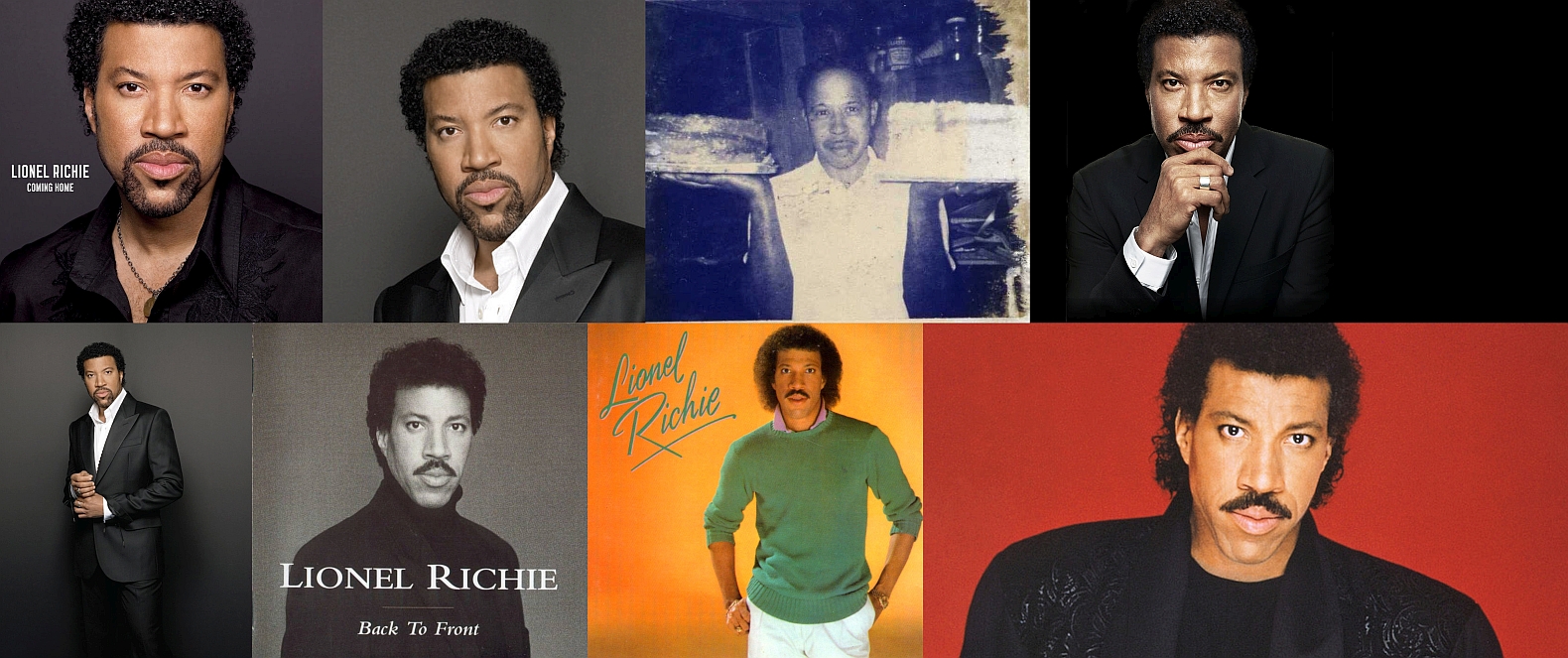
Lionel Richie: Career, Legacy, and Why His Music Still Resonates Across Africa
Arianne Cole··9 min read
Ad SpaceArticle Top - 728x90
Advertisement
Open the speakers at a Lagos wedding reception, a Nairobi family gathering, or a quiet evening in Accra, and there is a strong chance that somewhere in the night, a familiar piano line will drift in and the room will soften. The voice belongs to a man from Tuskegee, Alabama, who turned tenderness into a global currency long before streaming made borders irrelevant. Born on June 20, 1949, Lionel Brockman Richie Jr. is in his mid-seventies as of 2026, and yet his catalogue refuses to age out of relevance. Across the African continent, where music is woven into ceremony and memory, his ballads have settled in as something close to communal property. The question worth asking is not whether his songs still travel, but why they have travelled so far and held on so tightly.
From Tuskegee to the Commodores
The story begins not with a microphone but with a saxophone. Richie grew up on the campus of Tuskegee Institute, where his father worked as a U.S. Army systems analyst and his mother was a teacher and school principal, and he came up in an environment that valued discipline and education. In 1968 he joined the Commodores, the Motown-bound funk and soul group that started out as a support act for the Jackson 5. As a singer and saxophonist, Richie initially shared the spotlight, but his instinct for melody and his gift for the slow, aching ballad gradually pushed him to the front. By the mid-1970s he had become the group’s most reliable songwriter, the one who could write the songs that made people stop dancing and start holding each other.
What set him apart inside the Commodores was a willingness to slow everything down. The group had funk credentials and stage energy, but Richie wrote the ballads that became their signature sales engine. Tracks such as “Easy”, “Three Times a Lady”, “Sail On”, and “Still” carried his fingerprints, and each one leaned on the same combination of plainspoken lyrics and unhurried delivery. These were not complicated songs in the technical sense. They were emotionally direct, built for the listener who wanted to feel understood rather than impressed. That instinct, the choice to prioritise feeling over flash, would define everything he did next.
There is a useful lesson buried in those Commodores years for anyone who wants to understand the artist Richie became. He learned to write inside a band, to serve a collective sound while quietly building his own, and that patience showed. He spent the better part of a decade refining a single idea, that a love song delivered with total honesty could outsell almost anything flashier in the room. By the time he was ready to leave the group at the start of the 1980s, he was not gambling on an untested style. He was simply taking a proven instinct out from under the band name and putting his own on it.
Going Solo and Conquering the 1980s
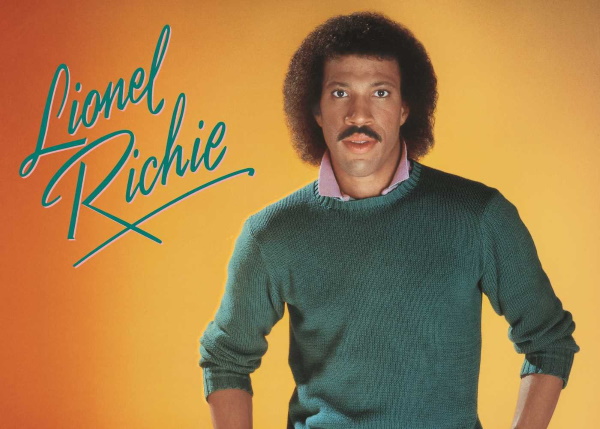
The leap from band member to solo superstar is one most artists never survive, but Richie made it look almost inevitable. His self-titled 1982 debut album produced the U.S. number-one ballad “Truly” alongside the hits “You Are” and “My Love”, establishing him immediately as one of the decade’s premier balladeers. The following year, the album “Can’t Slow Down” turned a strong solo career into a phenomenon. It sold roughly twice as many copies as the debut, won the Grammy Award for Album of the Year, and pushed Richie into the rare tier of artists who define an era rather than simply participate in it.
The singles from that period read like a roll call of 1980s pop. “All Night Long (All Night)”, with its Caribbean-flavoured groove and joyful, celebratory feel, became a number-one hit and an instant party staple. “Hello”, with its yearning piano and unforgettable opening line, topped charts in both the United States and the United Kingdom. “Say You, Say Me” went on to win an Academy Award and a Golden Globe for its use in a feature film, and “Stuck on You” even crossed him over onto the country chart, showing how easily his style slipped past genre lines. Richie also stretched his sound on tracks like “Dancing on the Ceiling”, proving he could lift the tempo without losing his identity. Across the decade he stacked up multiple number-one hits and sold tens of millions of records, but the numbers almost understate the cultural saturation. For a stretch of years, it was difficult to turn on a radio anywhere in the world without hearing him.
The range on display in that run is easy to underrate now. The same songwriter responsible for the swooning piano of “Hello” also delivered the loose, sun-warmed party energy of “All Night Long”, a song that borrowed Caribbean rhythm and a chant-like hook and somehow felt completely at home next to his slow numbers. That flexibility is part of why he never got trapped as a one-mode artist. He could close a stadium with a tearjerker and open it again with something built for dancing, and audiences accepted both as authentically him. Crucially, he wrote much of this material himself rather than relying on outside hitmakers, which is why the catalogue holds together as a single voice rather than a collection of styles stitched on by committee.
We Are the World and the Humanitarian Turn
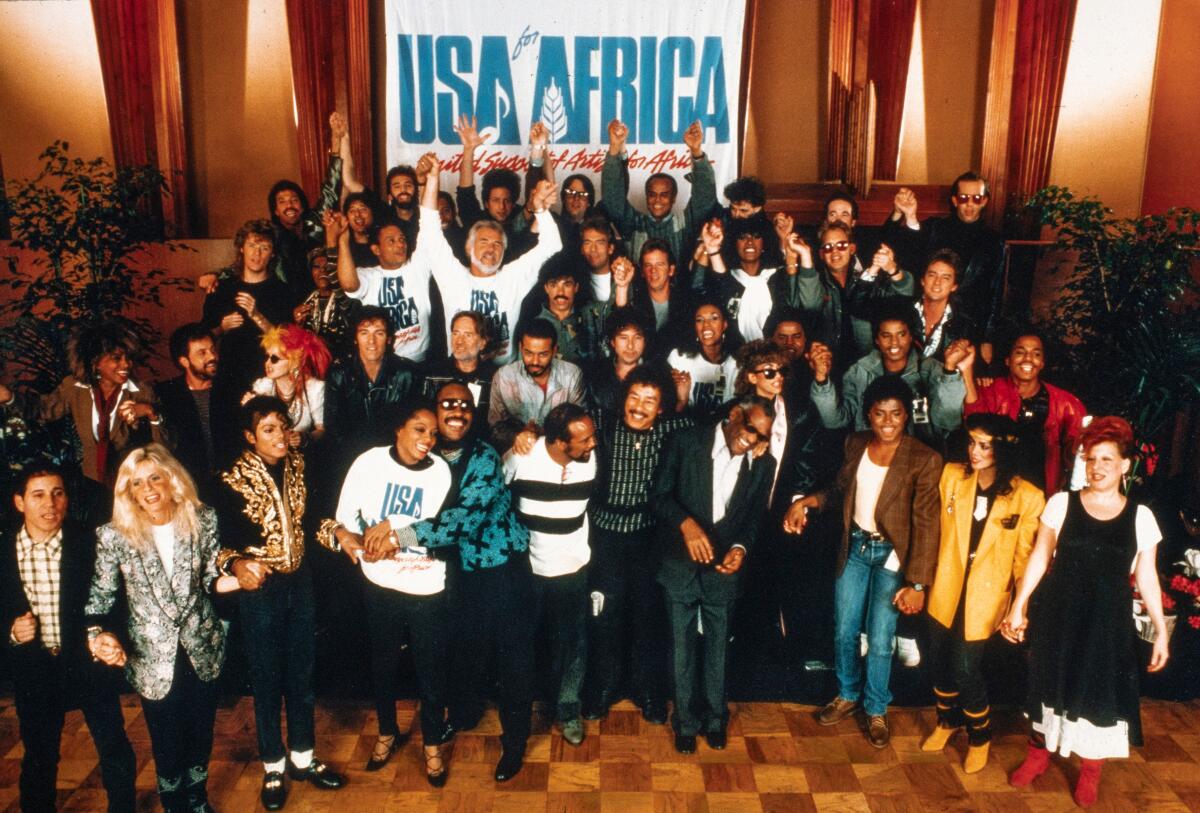
If any single moment cemented Richie as more than a hitmaker, it arrived in 1985 with “We Are the World”. He co-wrote the charity single with Michael Jackson, and the two crafted the song at the Jackson family home in Encino, California, with Jackson writing most of the lyrics. The recording brought together an extraordinary roster of American artists to raise funds for famine relief in Africa, and it became one of the best-selling singles in history. For African listeners, the symbolism cut deep. Here was one of the world’s biggest pop stars lending his pen and his voice to a cause aimed squarely at the continent, at a time when global attention to African hardship was rare and often shallow.
Ad SpaceIn-Article - 300x250
Advertisement
That moment matters to the African chapter of Richie’s story for reasons beyond charity. It signalled a relationship rather than a one-off gesture. The song’s purpose tied his name to the continent in a way that felt personal to millions of people who would never meet him. Decades later, when the recording sessions were revisited in a widely discussed documentary, Richie spoke openly about the chaos and magic of that night, reminding a new generation of how the project came together. The humanitarian turn did not eclipse his music; it deepened the emotional contract between the artist and audiences who already heard sincerity in his ballads. Sincerity, after all, is hard to fake across an ocean, and African listeners have a long history of detecting it instantly.
Why Africa Adopted Him as One of Its Own
Lionel Richie’s resonance across Africa is not an accident of nostalgia. His music maps neatly onto how the continent uses song. At weddings, naming ceremonies, funerals, and anniversaries, music is not background noise but a central part of how people mark the moments that matter, and Richie’s ballads are built for exactly those moments. A song like “Three Times a Lady” or “Hello” carries the kind of unguarded romantic devotion that translates cleanly into Yoruba, Igbo, Swahili, or Twi celebrations without losing a thing. The lyrics are simple enough to sing along to, the melodies are warm enough to feel like memory, and the sentiment is universal enough to survive any cultural border.
There is also a melodic kinship worth noting between Richie’s songwriting and the smoother strains of contemporary African pop. Afrobeats, the West African export that has surged into global prominence over the past decade, is often associated with up-tempo, feel-good energy built for weddings and clubs, the very settings where Richie’s catalogue already lives. While it would be a stretch to claim a direct line of influence on any specific artist, the shared DNA is audible in the genre’s softer, romance-driven records, where melody leads and the vocal sits close to the listener’s ear. Richie’s brand of accessible, emotion-first songwriting helped normalise the kind of polished, radio-ready balladry that African pop has since made its own. His image has long lived inside African cultural memory too, with archival photographs of him alongside Nigerian icons circulating online as small reminders of a presence that predates the streaming era. The affection is mutual and old, not manufactured for the algorithm.
It helps that his catalogue never carried the cultural baggage that dated so much American pop of the same era. There is nothing in “Easy” or “Hello” that ties it to a specific scene, slang, or fashion moment, which means the songs slipped easily into African radio rotations and stayed there. Generations of listeners encountered them not as foreign imports but as part of the local emotional soundtrack, played at the same parties as homegrown highlife and juju records. For many African families, a Lionel Richie ballad is not a memory of America at all. It is a memory of a specific wedding, a specific first dance, a specific voice singing along badly in a crowded living room, and that personal anchoring is exactly what makes the music impossible to dislodge.
Still Touring, Still Judging, Still Selling Out Arenas
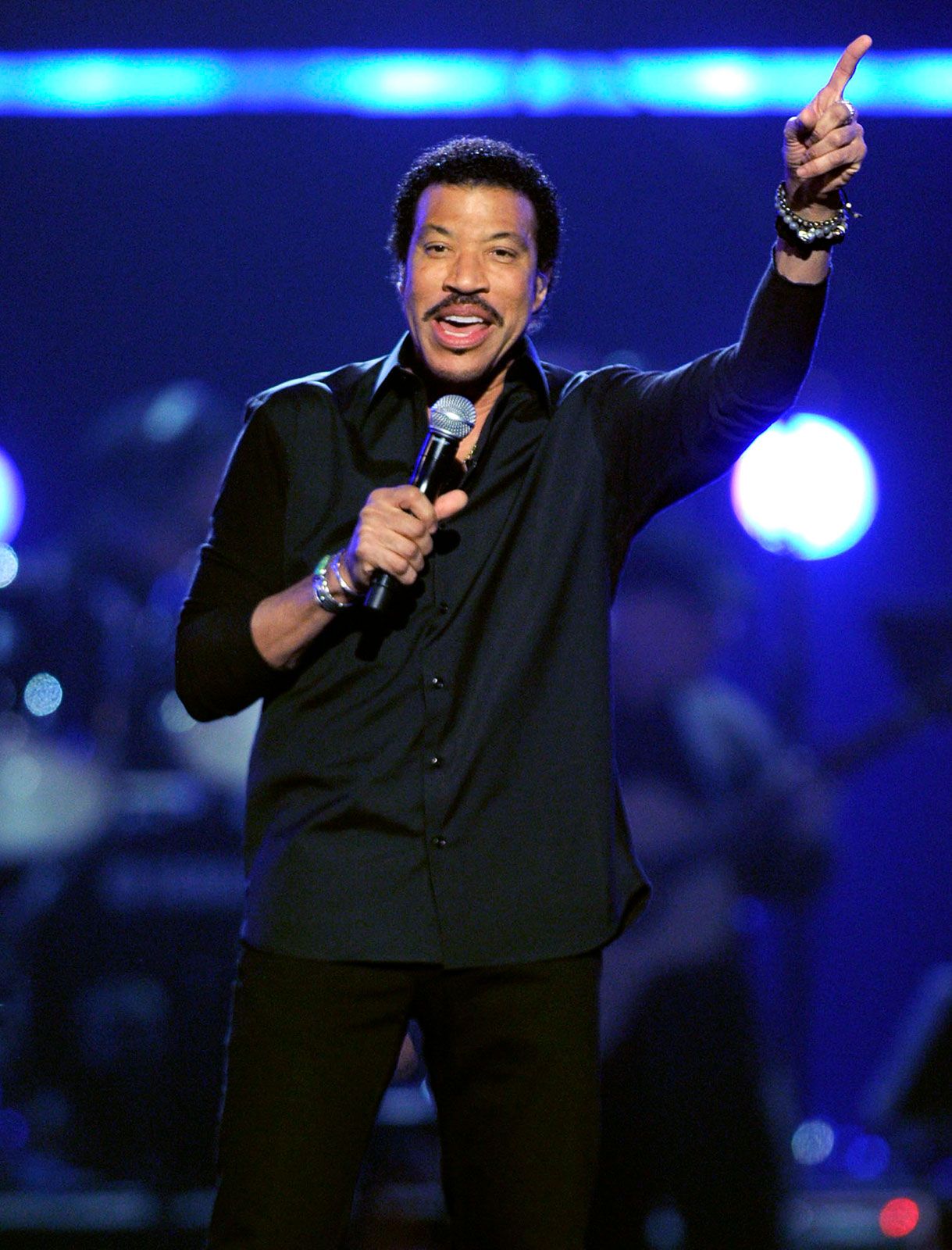
What separates Richie from many peers of his generation is that he never quietly retired into legacy status. Well into his seventies, he remains a working performer, and his 2026 touring schedule has brought him back to major North American arenas, pairing his catalogue with the legendary funk and soul group Earth, Wind & Fire on a number of dates. The pairing is telling. Two pillars of a particular golden age of American Black music, still capable of filling rooms, still trusted to deliver a full night of songs that audiences know by heart. Touring at this scale at this age is rare, and it speaks to a catalogue deep enough that he can leave out beloved tracks and still send everyone home satisfied. The demands of that life are real, and like any veteran performer he has had to manage the physical toll of constant touring, but the appetite to keep going has clearly not faded.
His second act as a television personality has, if anything, widened his reach. Richie has served as a judge on “American Idol” alongside Luke Bryan and Carrie Underwood, and the trio is set to return for the show’s twenty-fourth season, arriving on ABC and Hulu in 2026. The role has introduced him to viewers far too young to remember “Can’t Slow Down”, recasting him as a warm, generous mentor figure whose advice carries the weight of someone who has actually lived the climb. For African fans who follow the show through streaming and social media, this visibility keeps him present in the cultural conversation rather than filed away as an oldies act. He has also collected the kind of honours that confirm a permanent place in music history, including induction into the Rock and Roll Hall of Fame in 2022, the Gershwin Prize for Popular Song from the Library of Congress, and Kennedy Center Honors recognition. His estimated net worth is frequently placed in the multi-hundred-million-dollar range, though such figures should be treated as estimates rather than audited fact.
The Reason a Piano Line Still Stops a Room
The endurance of Lionel Richie’s music comes down to something deceptively old-fashioned. He wrote songs about love, loss, devotion, and joy in language that anyone could understand and a voice that asked the listener to lean in rather than stand back. That approach does not date, because the feelings underneath it never do. A teenager in Abuja discovering “Easy” through a film soundtrack hears the same plainspoken tenderness that moved their grandparents on a transistor radio decades earlier, and the recognition is immediate. Across Africa, where ceremony and memory and music are inseparable, that kind of directness has a long shelf life. Richie built a catalogue that fits the most important nights of ordinary people’s lives, and as long as those nights keep happening, a familiar piano line will keep stopping rooms across the continent and well beyond it.
Ad SpaceIn-Article - 300x250
Advertisement
Share
Get the recap
Loved this story? Get more like it.
Join readers who get our weekly entertainment recap - the stories worth your time, delivered every Friday.
No spam. Unsubscribe anytime. By signing up you agree to our Privacy Policy.