African Players in the NBA Draft - The Rising Continent Reshaping Pro Basketball
Tristan Melo··9 min read
Ad SpaceArticle Top - 728x90
Advertisement
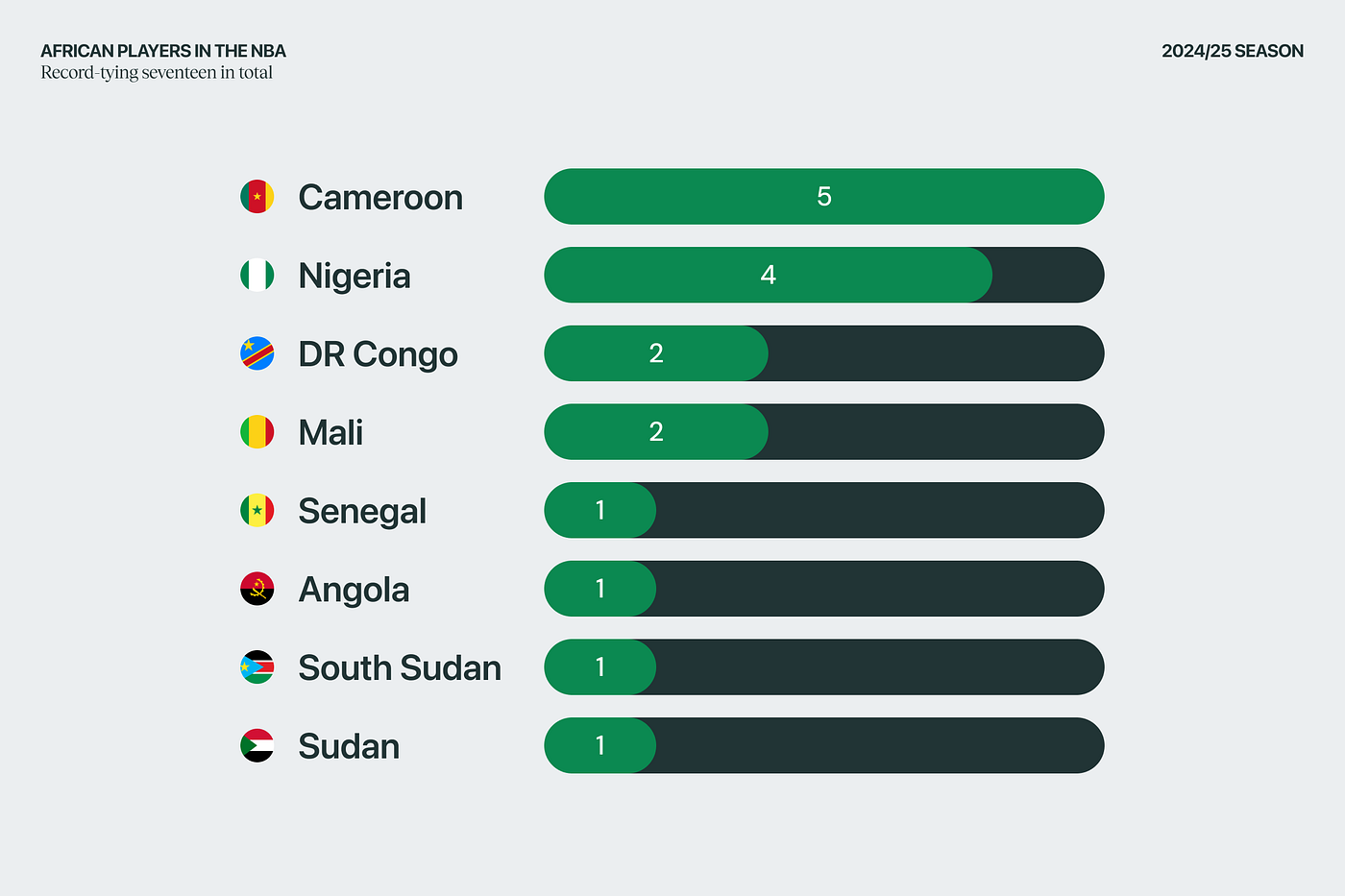
Seventeen players born on African soil opened the 2024-25 NBA season on opening-night rosters, a record-tying figure, and more than 35 others carried at least one African parent into the league. Those numbers would have been unthinkable to the teenager who stepped off a plane in Houston in 1980 with no one waiting to greet him. Hakeem Olajuwon arrived from Lagos as a raw soccer goalkeeper who had picked up a basketball only a few years earlier. Four decades on, the pipeline he cracked open has widened into a steady current, and the NBA Draft has become one of the clearest places to watch it flow.
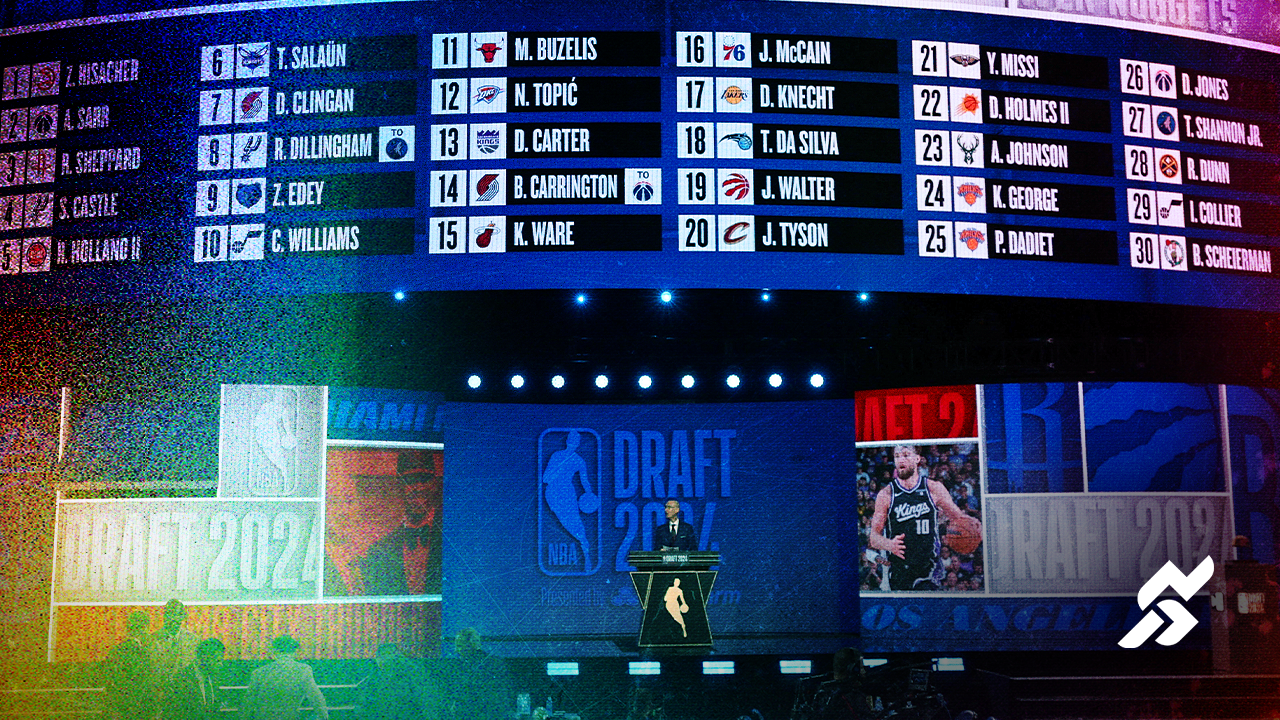
The draft stage on June 23 and 24, 2026, carries that story forward. African basketball no longer sends one prodigy a generation. It sends classes, develops them on the continent through purpose-built academies, and feeds a diaspora spread across Europe and North America that increasingly claims its roots out loud.
Draft Night as a Measuring Stick
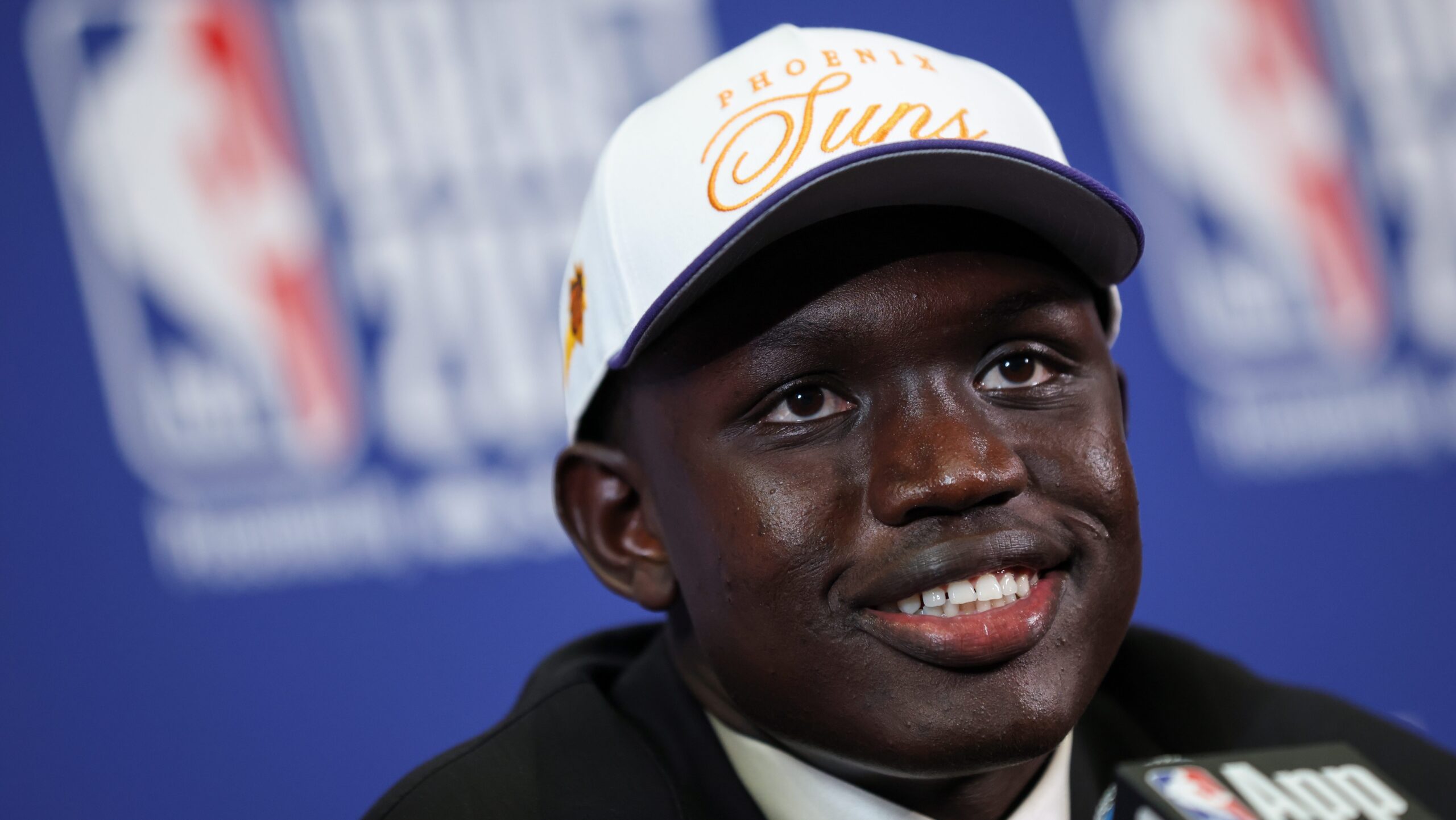
Every June, the draft offers a snapshot of where the talent is coming from, and the African line on that ledger has grown harder to ignore. In 2025, two African-born players heard their names called. South Sudan’s Khaman Maluach went 10th overall, selected by the Houston Rockets before his draft rights moved to the Phoenix Suns as part of the Kevin Durant trade finalized that July. Senegal’s Saliou Niang went 58th to the Cleveland Cavaliers, a 6-foot-8 forward who had been playing professionally in Italy with Dolomiti Energia Trento and projected as a draft-and-stash project.
Maluach’s selection mattered beyond the number. At 7-foot-2, he became the highest-drafted player ever to come through both NBA Academy Africa and the Basketball Africa League, a path that did not exist when he was born. He spent a season at Duke, anchoring the Blue Devils alongside Cooper Flagg and reaching the Final Four, averaging 8.6 points, 6.6 rebounds and 1.3 blocks on 71.2 percent shooting across 39 games before declaring. He is, by the league’s own framing, a testament to what the continent’s infrastructure can now produce.
The 2026 class brings its own headline name from West Africa. Tounde Yessoufou grew up in Benin and moved to California at 15 to play high school basketball. As a Baylor freshman in 2025-26, he set the program’s single-season freshman records for points, with 605, and field goals made, with 226, ranked seventh in the Big 12 in scoring at 17.8 points per game and third in steals at 2.0. Mock drafts moved him from a second-round projection toward the late first round over the course of the season. If a team takes him, Yessoufou would become the first player born in Benin ever drafted into the NBA, a first that says as much about how far the map has stretched as about the player himself. He has been blunt about what he wants the selection to mean. “I want to be a role model for the whole continent,” he told Andscape, “not just for my country, but for all the African kids out there.”
The Pioneers Who Opened the Door
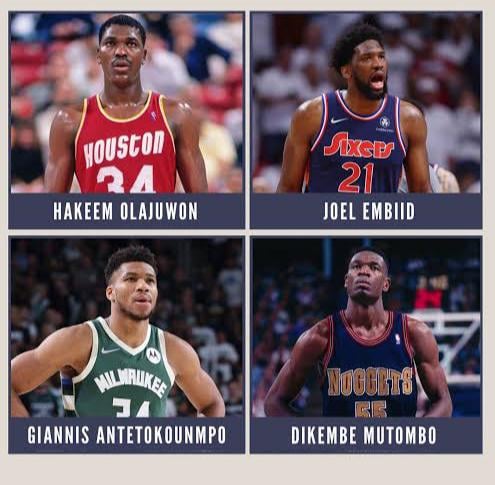
Before there was a pipeline, there were individuals who arrived almost by accident and refused to be footnotes. Olajuwon set the template. Born in Lagos in 1963, he played for the University of Houston, then went first overall in the 1984 draft, the same legendary class that produced Michael Jordan, Charles Barkley and John Stockton. He won back-to-back championships with the Rockets in 1994 and 1995 and entered the Naismith Memorial Basketball Hall of Fame in 2008. A generation of African big men, Joel Embiid among them, grew up modeling their footwork on his.
Two other early icons gave the continent its defensive identity. Dikembe Mutombo left the Democratic Republic of the Congo at 21 to attend Georgetown, planning to become a doctor before basketball intervened. The 7-foot-2 center became a four-time Defensive Player of the Year, an eight-time All-Star and one of the greatest shot-blockers the league has seen, finishing second on the all-time blocks list and famously wagging his finger at anyone who dared challenge him at the rim. He was inducted into the Hall of Fame in 2015 and remained one of basketball’s great humanitarians until his death in 2024. Manute Bol, who stood near 7-foot-7 and came from what was then Sudan, led the NBA in blocks in 1986 and 1989 and turned his improbable frame into both a basketball curiosity and a symbol of how far the game could reach.
These men were exceptions, discovered through chance encounters and missionary networks rather than any system. What changed everything was the decision to build the system.
The Modern Development Pipeline
The story of the current surge is largely a story of infrastructure laid down over the past two decades. It started in Senegal. The SEED Project launched its academy in 2002 as the first basketball student-athlete academy in Africa, a nongovernmental organization that uses the game to develop leaders and serves roughly 2,000 young people a year. Its first alumnus to reach the NBA, Mouhamed Saer Sene, was drafted by the Seattle SuperSonics in 2006, and Gorgui Dieng followed as a more durable success story. SEED also moved early on gender equality, launching a girls academy in 2013 with the support of NBA champion Boris Diaw.
The NBA formalized the effort in 2017, opening NBA Academy Africa in Senegal as the league’s first elite training center of its kind on the continent and its sixth worldwide. The academy scouts and houses the most promising teenagers from across Africa, pairing high-level coaching with education. Maluach, the South Sudanese center, became its highest-drafted graduate in 2025, and he was the 12th academy alumnus to be drafted or sign with an NBA team. The academy keeps feeding the system, with prospects like 7-foot-1 South Sudanese center Matong Muorwel, born in 2008, among its newer arrivals.
Ad SpaceIn-Article - 300x250
Advertisement
The third pillar is the Basketball Africa League. Co-organized by NBA Africa and FIBA, the BAL was announced in 2019 and played its first season in 2021 after pandemic delays. It runs from March to June with 12 teams competing across conferences and playoffs, drawing from countries chosen for their basketball history and market size, including Angola, Egypt, Tunisia, Morocco, Nigeria and Rwanda. Roster rules require at least eight players per team to be citizens of the team’s country and cap non-African roster spots at two, ensuring the league showcases African talent rather than imported veterans. For a prospect like Maluach, the BAL was a real-game proving ground before he ever set foot on a college campus. Together, SEED, the academy and the BAL form a development chain that lets a gifted teenager in Tonj or Dakar be found, trained and tested without first having to emigrate.
Country by Country
The map of African basketball is not evenly drawn, and each nation tells a slightly different story. Nigeria, the country that produced Olajuwon, remains the continent’s deepest reservoir, both through native-born players and a sprawling diaspora. Its presence in the draft has been inconsistent at the top end, though. In 2025, Nigeria’s Clifford Omoruyi was widely tipped to be selected and went undrafted, a reminder that projection and reality often diverge.
Senegal has arguably been the most systematic producer, the natural result of being home to both SEED and the NBA academy. From Sene and Dieng to Niang’s 2025 selection, the country has supplied a steady stream of long, defensively gifted forwards and centers. Cameroon has become a powerhouse out of proportion to its basketball history, anchored by Embiid and Pascal Siakam and boosted to a record five Cameroonian players on 2024-25 opening-night rosters. South Sudan, one of the world’s youngest nations, has emerged as a center factory, with Maluach its brightest current draft success and a national team that stunned observers at the Paris Olympics. The Democratic Republic of the Congo, the country that gave the game Mutombo, continues to surface tall, mobile athletes both at home and across its large diaspora in Belgium and France.
The Diaspora Question
Not every player with African blood was born in Africa, and the most complicated, fascinating part of this story lives in that gap. More than 35 players on recent NBA rosters have at least one African parent without having been born on the continent. Giannis Antetokounmpo is the defining figure here. Born in Athens to Nigerian immigrants from Lagos, his father Yoruba and his mother Igbo, he was effectively stateless for the first 18 years of his life before receiving Greek citizenship in 2013, weeks before the draft. He has said plainly that home for him is Nigerian culture, even as he plays as a Greek international, and he led Milwaukee to the 2021 title as Finals MVP. Bam Adebayo, born in New Jersey to a Nigerian Yoruba father, carries the same dual thread.
Victor Wembanyama belongs in this conversation too, but carefully. The San Antonio phenomenon was born in France and represents France internationally; his connection to the Democratic Republic of the Congo runs through his heritage, not his birthplace. The league itself lists him among players with ties to an African country rather than among the African-born, and that distinction matters. The diaspora dimension is real and worth celebrating, but it is not the same as the academy-to-draft pipeline rising on the continent. One is about identity and roots that reach across oceans. The other is about teenagers being developed in Dakar and Saly and drafted straight out of that environment. Both are reshaping the league, and conflating them flattens two very different achievements.
What’s Fueling the Surge
Several forces are converging at once. The infrastructure is the obvious one, but money and visibility matter just as much. NBA Africa exists as a business entity, the BAL has television deals and corporate backers, and the league has staged exhibition games on the continent that put stars in front of local crowds. Discovery has also become deliberate rather than accidental. Programs like Basketball Without Borders, the camp where Siakam was first spotted in 2012 alongside future pros, function as scouting nets across the continent.
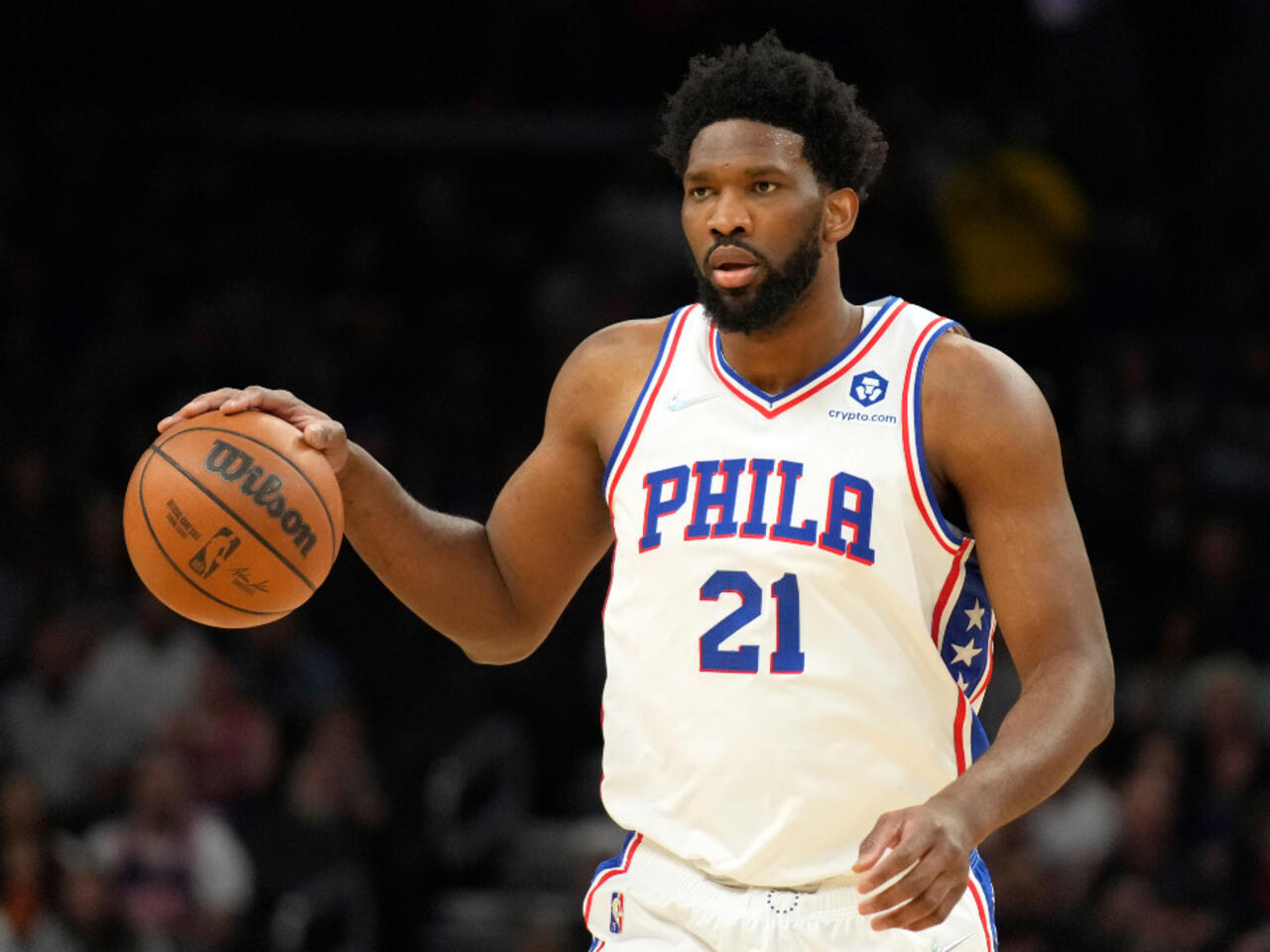
There is also the simple power of proof. Embiid’s 2023 MVP, the first for an African-born player, told every tall kid in Yaoundé that the ceiling was the ceiling for anyone. Siakam’s rise from a 27th overall pick in 2016 to Most Improved Player and a 2019 champion showed that the path did not require being a top-five talent at 18. Mentorship has compounded the effect: Luc Mbah a Moute, himself from Yaoundé, discovered Embiid at a camp and brought him to the United States at 16. Each success now actively recruits the next one.
The Obstacles That Remain
For all the momentum, the picture has hard edges. The 2025 draft, with only two African-born selections and a high-profile snub in Omoruyi, was a reminder that the surge is uneven year to year. Facilities, coaching depth and competitive leagues remain thin across much of the continent compared to the United States or Europe. Many of the brightest prospects still leave as teenagers, which raises uncomfortable questions about whether the continent is developing players or simply exporting them before they mature. Niang being parked in Italy as a draft-and-stash, rather than stepping straight into an NBA rotation, shows how often African prospects are treated as long-term projects rather than ready contributors. The diaspora’s prominence can also obscure how much work remains in building genuine domestic pathways, since it is easier to celebrate a Giannis raised in Athens than to fund a gym in Juba.
A Continent on the Clock
On the night of June 23, 2026, when commissioner Adam Silver reads names at the podium, the cameras will likely find Tounde Yessoufou waiting, a kid from Benin who set freshman records at Baylor and wants to carry a continent’s expectations on a single handshake. A year earlier it was Khaman Maluach pulling on a cap at the same lectern, the academy graduate who reached the Final Four. Behind both of them sits a 7-foot-1 teenager named Matong Muorwel learning the game in Senegal, and a record number of African-born players already drawing paychecks across all 30 teams. The path Olajuwon walked alone in 1980 now has lights on it, signposts, and a line of players forming behind the rope.
Ad SpaceIn-Article - 300x250
Advertisement
Share
Get the recap
Loved this story? Get more like it.
Join readers who get our weekly entertainment recap - the stories worth your time, delivered every Friday.
No spam. Unsubscribe anytime. By signing up you agree to our Privacy Policy.