Why African Artists Still Struggle to Sell Out on Ticketmaster - and What It Means for the Afrobeats Live Economy
Jalen Ross··10 min read
Ad SpaceArticle Top - 728x90
Advertisement
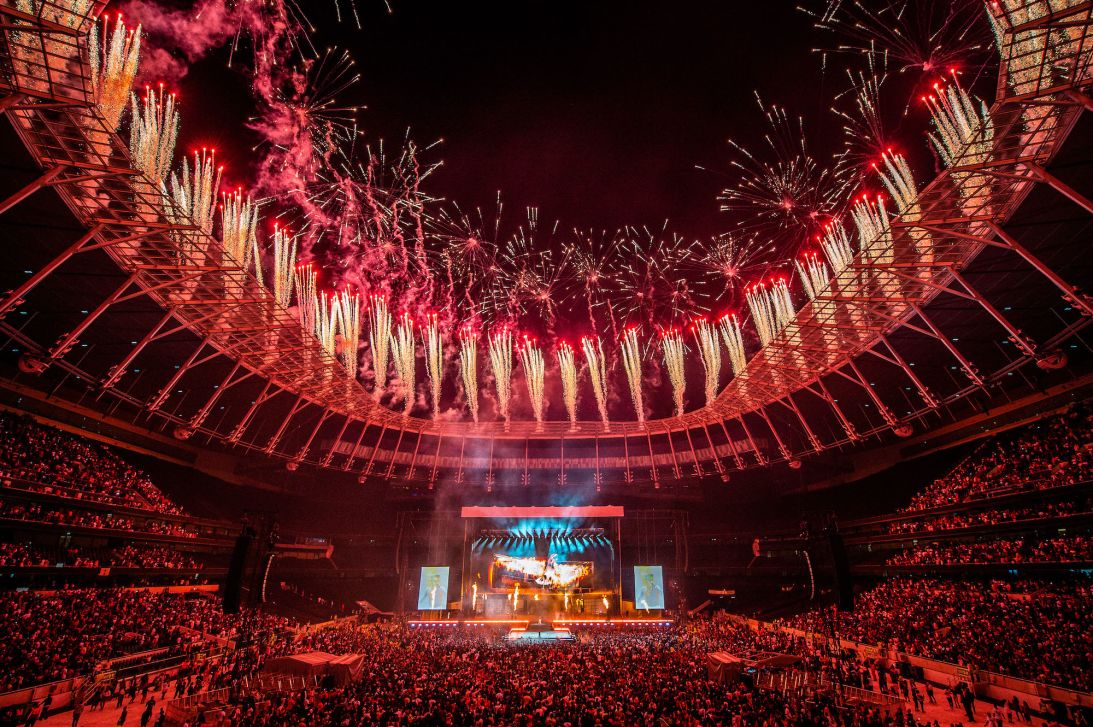
Sixty thousand people filled London Stadium to watch a Nigerian headliner, and the world treated it as proof that Afrobeats had finally arrived. The image was real, and so was the scale. Yet the same genre that fills an English football ground in one city can move slowly toward half-empty rows in a Midwestern arena two weeks later on the very same tour. That gap, between the cities where African artists are gods and the cities where they are an unknown name in a Ticketmaster search bar, is the part of the story the celebration tends to skip. The live business is not one market. It is dozens of small, scattered ones, and the dominant ticketing machine in the West was never built to find them.
The headline numbers point one way. The harder truth points another. Afrobeats is one of the fastest-growing live categories on earth, and it is also one of the most uneven. Understanding why African artists still wrestle with the platforms that sell most Western concert tickets means looking past the sold-out trophy shows and into the structural plumbing of how a ticket reaches a buyer, what it costs by the time it gets there, and who the system is designed to serve.
The Sold-Out Story Is Real, But It Hides the Uneven Map
There is no denying the arc. Burna Boy became the first African artist to headline a sold-out London Stadium, performing to a crowd reported around 60,000, and his I Told Them tour was described as the highest-grossing tour ever by an African act, with figures cited in the region of $30 million across roughly twenty-two shows. Wizkid and Davido have each sold out London’s O2 Arena more than once. Asake took the Lungu Boy run through Madison Square Garden, the Barclays Center and the O2 in the same campaign. Rema followed with the Heis tour, headlining Madison Square Garden and stops across Europe. Industry trackers reported that the US show count for Afrobeats jumped sharply year-on-year in early 2024, a swing large enough that promoters started treating the genre as a real touring vertical rather than a novelty booking.
So the ceiling is high. The problem is the floor and everything in between. A genuine sell-out at the O2 or MSG sits inside a tour that also routes through secondary and tertiary markets where the diaspora is thinner, the local promoter is less invested, and the demand is far harder to predict. The marquee dates are the ones that get photographed and quoted. The soft-selling Tuesday shows in cities without a dense Nigerian or Ghanaian population rarely make a press release. When people say African artists “struggle to sell out on Ticketmaster,” they are usually pointing at this invisible majority of dates, not the trophy nights that dominate the timeline. The genre has elite peaks and a long, fragile tail, and ticketing platforms surface both with the same blunt tools.
Diaspora Demand Is Dense, But It Does Not Spread Evenly
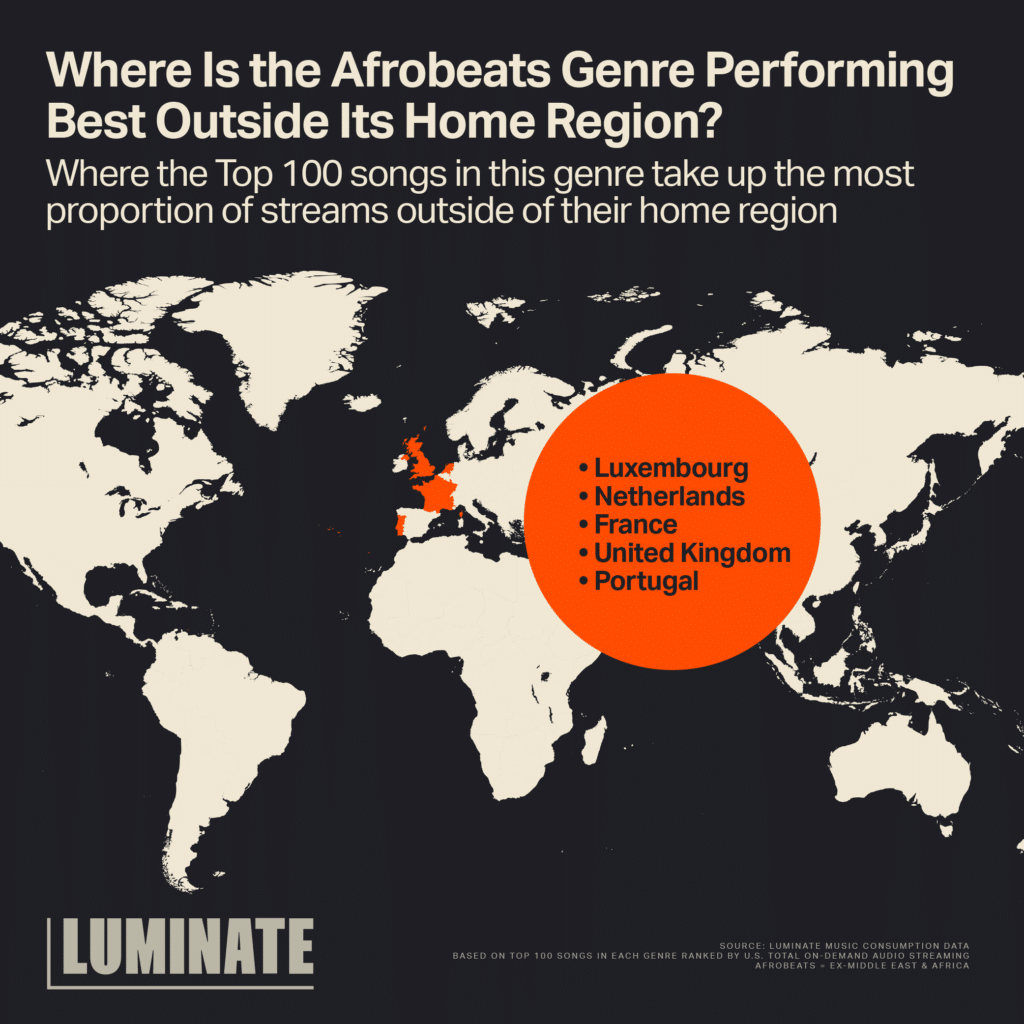
The engine of Afrobeats touring in the West is the African diaspora, and that engine is geographically lumpy in a way pop and hip-hop are not. London works because it holds a deep Nigerian and Ghanaian population layered on top of dedicated radio, club nights and an industry infrastructure that has spent a decade building African music into the city’s nightlife. Toronto, New York, Atlanta, Houston, Paris, Amsterdam and a handful of others carry their own versions of that density. Outside those nodes, demand thins out fast.
Ticketmaster’s discovery model assumes a buyer who is already searching for the artist by name. That model works beautifully for an act with broad, evenly distributed national fame and works poorly for an act whose fans are concentrated in specific postcodes and immigrant neighborhoods. A platform that ranks and recommends based on aggregate national interest will systematically underweight a Lagos-born star who is enormous in three boroughs and invisible in the suburbs forty minutes away. The audience exists. It is simply not where the algorithm expects mainstream demand to live, and the platform offers little to bridge that gap. The result is that the same artist can trigger a verified-fan stampede in one metro and barely register in another, and the ticketing system treats both as routine inventory rather than recognizing that it is selling into a network, not a market.
This fragmentation also distorts pricing logic. Dynamic and tiered pricing tools are tuned to read a surge of early demand as a signal to push prices up. In a dense diaspora city that signal is accurate. In a thin one, the same tooling can leave prices set for a demand curve that never materializes, and a show that might have filled at a friendlier price ends up looking like a flop. The platform’s intelligence is built on assumptions that the diaspora audience quietly breaks.
Dynamic Pricing and Fees Hit Diaspora Buyers Where It Stings
The pricing controversy around Ticketmaster and its parent Live Nation is not specific to African music, but African audiences sit squarely in its blast radius. Regulators have come down hard. In late 2025 the Federal Trade Commission and several states sued Live Nation and Ticketmaster, alleging the company concealed the true cost of tickets by displaying prices that excluded mandatory fees, fees that consumer advocates have estimated can add somewhere in the range of a quarter to nearly half again on top of the face price. Separate findings have put the broader market share of Ticketmaster and Live Nation across primary ticketing and venues at well over two-thirds, and a federal jury has weighed in on the competition question. A settlement in one jurisdiction ran into the millions over deceptive pricing practices.
For a casual buyer this is an annoyance. For a diaspora concertgoer it can be a deal-breaker, and the reasons are worth naming plainly. Diaspora audiences often buy in groups, families and friend clusters traveling together to what functions as a cultural homecoming rather than a single night out. Stack a fee structure that can inflate a ticket by a third or more across four, six or eight tickets, and the marginal buyer simply walks. Add surge-style pricing that punishes the early enthusiasm of the most committed fans, the ones who would have anchored the room, and the platform ends up taxing exactly the buyers an African artist most needs to convert. The genre’s core audience is price-sensitive in aggregate even where it is passionate, and a pricing model optimized to extract maximum yield from inelastic Western pop demand reads that sensitivity as weakness rather than as a market to be served.
Ad SpaceIn-Article - 300x250
Advertisement
There is a reputational cost too. When fans feel gouged on fees and burned by surge pricing, the resentment does not attach to Ticketmaster alone. It bleeds onto the artist, who gets blamed for a price they often did not set and a fee structure they do not control. For an act still building trust with a Western live audience, that misdirected blame is a quiet, recurring tax on the relationship.
Venue Access and Promoter Risk Quietly Set the Ceiling
Before a single ticket goes on sale, two gatekeepers have already shaped the outcome: the venue and the promoter. Ticketmaster’s strength is bound to venue exclusivity, and the most desirable rooms in major Western cities tend to be locked into the Live Nation and Ticketmaster ecosystem. Getting an African artist into the right-sized room, on the right night, at the right time of year, is a negotiation that favors acts with a long, legible touring history in that market. A Western pop star arrives with a decade of box-office data that lets a venue and a promoter price the risk with confidence. A rising Afrobeats act often arrives with a sensational streaming story, viral moments and a thin or non-existent local box-office track record, which is precisely the data a venue uses to commit.
That uncertainty pushes promoters toward caution. They may book a smaller room than the artist’s ceiling, hedging against a soft night, which then caps the upside and can make a genuinely strong show look merely fine. Or they overreach into an arena on the strength of streaming hype and diaspora buzz, and the thin-market dates underperform against an inflated capacity. Neither outcome is a failure of the music. Both are failures of forecasting in a system that has very little historical signal to forecast from. The Detty December phenomenon in Lagos, which has been credited with driving tens of millions of dollars into the local economy in a single end-of-year window, proves the live demand is enormous when the home advantage is total. Exporting that demand to a Western touring grid, routed through venues and promoters who price by precedent, is a far less certain business, and the precedent simply does not exist yet for most of the roster.
Marketing Reach Stops Where the Algorithm Stops
Selling a concert is a marketing problem as much as a ticketing one, and here the structural disadvantage compounds. Western live marketing leans on radio, playlisting, press and platform-native promotion that all skew toward established mainstream genres. Afrobeats has far less dedicated radio infrastructure in the West than pop, hip-hop or even Latin music, which means one of the most reliable old-school tools for filling a regional room is largely missing. The genre has thrived through streaming, social virality and diaspora word-of-mouth, channels that are powerful but harder to point at a specific date in a specific city with a specific number of seats to fill by a specific Friday.
Ticketmaster’s own promotional surfaces, its recommendation feeds and marketing reach, are calibrated to push inventory toward the audiences it can already see. An African artist whose fanbase lives partly on platforms and in communities the ticketing giant does not index well gets less of that built-in lift. The marketing that actually moves Afrobeats tickets, diaspora WhatsApp groups, community influencers, culturally specific media and on-the-ground promoters who know which neighborhoods to flyer, happens almost entirely outside the ticketing platform’s machinery. So the act ends up doing two jobs at once: filling the room through grassroots channels the platform cannot replicate, while still paying into a system that captures the fees and claims a slice of the sale it did relatively little to drive. The platform monetizes the transaction without owning the demand generation, and for African artists that imbalance is starkest of all.
African Ticketing Platforms Are Building the Workaround in Real Time
The most interesting response to all of this is not a complaint. It is infrastructure. A wave of African-built ticketing platforms has emerged to serve exactly the market the dominant Western system handles badly. Tix Africa, a Lagos startup that traces back to 2017, has built a mobile-first stack combining ticketing, payments, admissions and analytics, charging a transparent per-ticket fee and reporting that it crossed billions of naira in sales within Nigeria alone before setting its sights on Ghana, South Africa and a UK expansion aimed squarely at the diaspora. Platforms like DigiTicket pitch continent-wide reach across dozens of African countries, while South African operators such as Tixsa and Webtickets have long served their home market on their own terms.
These platforms matter for reasons that go beyond lower fees, though the fee transparency is itself a pointed contrast to the model regulators are now suing over. They are built mobile-first for buyers who live on their phones, they integrate local payment rails that Western systems handle clumsily or not at all, and crucially, the UK-facing expansions are a direct play for diaspora demand, the precise audience Ticketmaster surfaces poorly. The strategic prize is ownership of the relationship: the data on who actually buys, the ability to market into communities the incumbents cannot reach, and a flywheel where African artists and African platforms grow the live economy together rather than renting it from a system optimized for someone else’s audience. For now these challengers operate mostly on the African continent and at its diaspora edges, not yet at the scale of a Madison Square Garden on-sale. But the direction is unmistakable. The genre that grew by routing around gatekeepers is starting to build its own gate.
What the Ticket Stub Actually Says About the Live Economy Right Now
A sold-out arena in London and a half-filled room in a thin diaspora city are both true at the same moment, and the live economy lives in the tension between them. Afrobeats has the demand, the stars and the cultural pull to fill the biggest rooms in the world on the right night. What it does not yet fully have is a ticketing layer in the West that understands the audience is a scattered network rather than an evenly spread mainstream, that prices for a community that buys in groups and feels every fee, and that markets into the channels where this music actually moves. The dominant platform sells the transaction efficiently and captures its cut, but it was never engineered to find these fans, and that gap is the real friction, not the talent and not the demand.
The African-built challengers are the clearest read on where this goes next, because they exist precisely to close that gap from the audience side rather than the algorithm side. The trophy shows will keep happening, and they will keep getting framed as the whole story. The more honest measure of the Afrobeats live economy is the unglamorous middle of the tour, the regional dates, the fee math on a family’s four tickets, the room that was booked too big or too small because nobody had the data to know. That is where the structural barriers actually bite, and it is where the next phase of this economy is quietly being built, one transparent per-ticket fee and one diaspora-first platform at a time.
Ad SpaceIn-Article - 300x250
Advertisement
Share
Get the recap
Loved this story? Get more like it.
Join readers who get our weekly entertainment recap - the stories worth your time, delivered every Friday.
No spam. Unsubscribe anytime. By signing up you agree to our Privacy Policy.