South Africa at the World Cup - Bafana Bafana's Journey, the Stars Behind the Team, and What It Means for African Football
Tristan Melo··10 min read
Ad SpaceArticle Top - 728x90
Advertisement
A goal that ended sixteen years of waiting
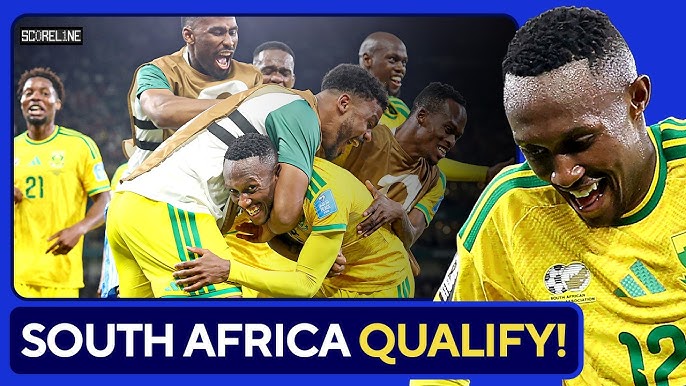
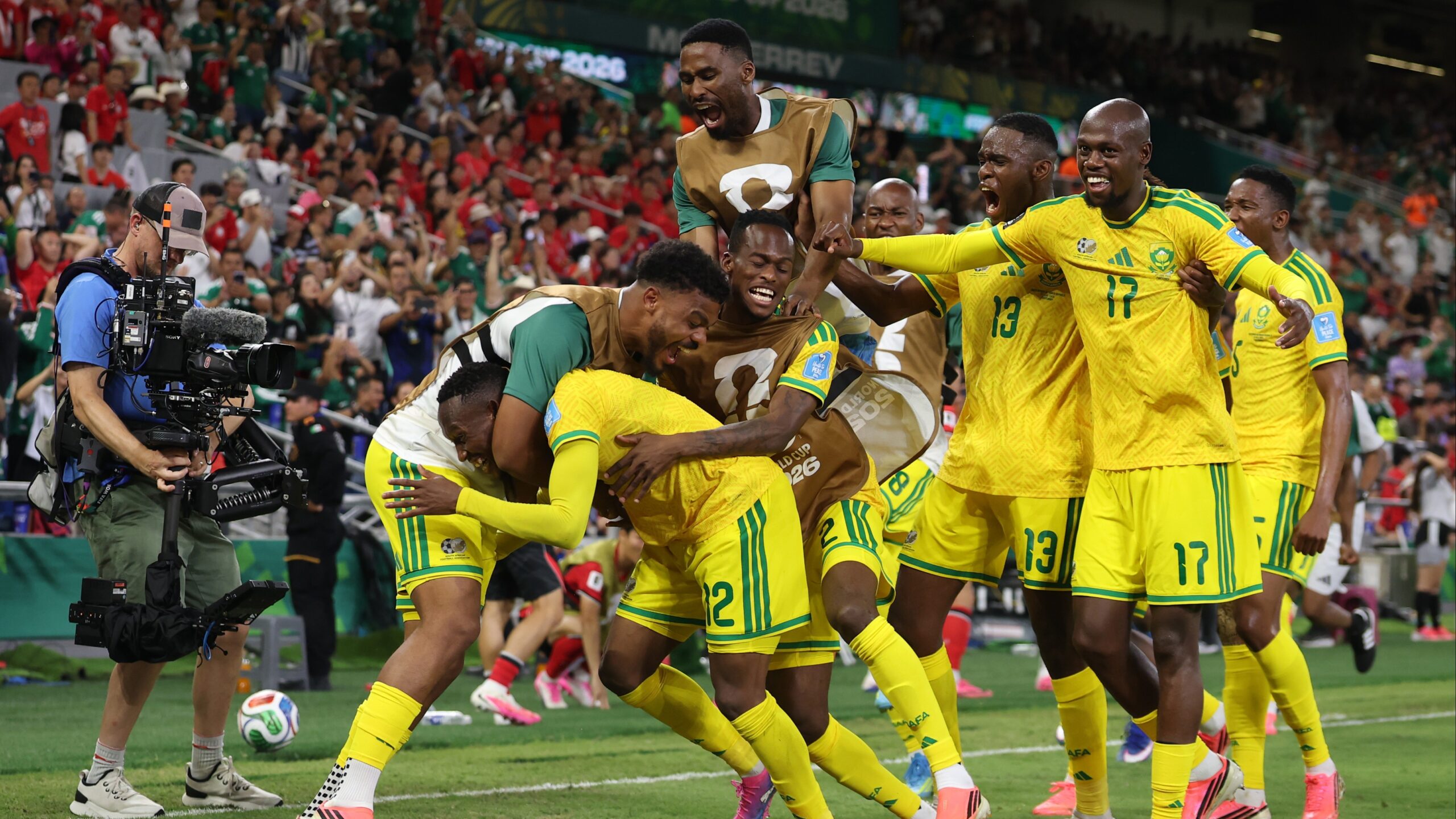
Sixty-three minutes had ticked by at Monterrey Stadium in Guadalupe on the night of 24 June 2026, and the ball finally sat where every South African in the building had begged it to sit for the better part of a generation. Tshepang Moremi swung a cross in from the flank, Thapelo Maseko gathered it, steadied himself, and finished. One nil to Bafana Bafana over South Korea. The bench emptied. Grown men in green and gold tracksuits sprinted toward the corner flag. Somewhere in that pile of bodies was a player who, eighteen months earlier, had wondered out loud on social media whether the fire inside him had gone out for good.
That single strike did more than win a football match. It carried South Africa into the knockout rounds of a FIFA World Cup for the first time in the country’s history, in only their fourth appearance at the tournament. For a nation whose last World Cup memory was hosting the world in 2010 and then bowing out in the group stage on home soil, the moment landed like a release of breath held far too long. Bafana Bafana finished second in Group A on four points, behind a Mexico side that swept through with nine, and booked a date with Canada in the round of 32. The story of how they got there runs deeper than one Tuesday night in Mexico.
The long road back from 2010
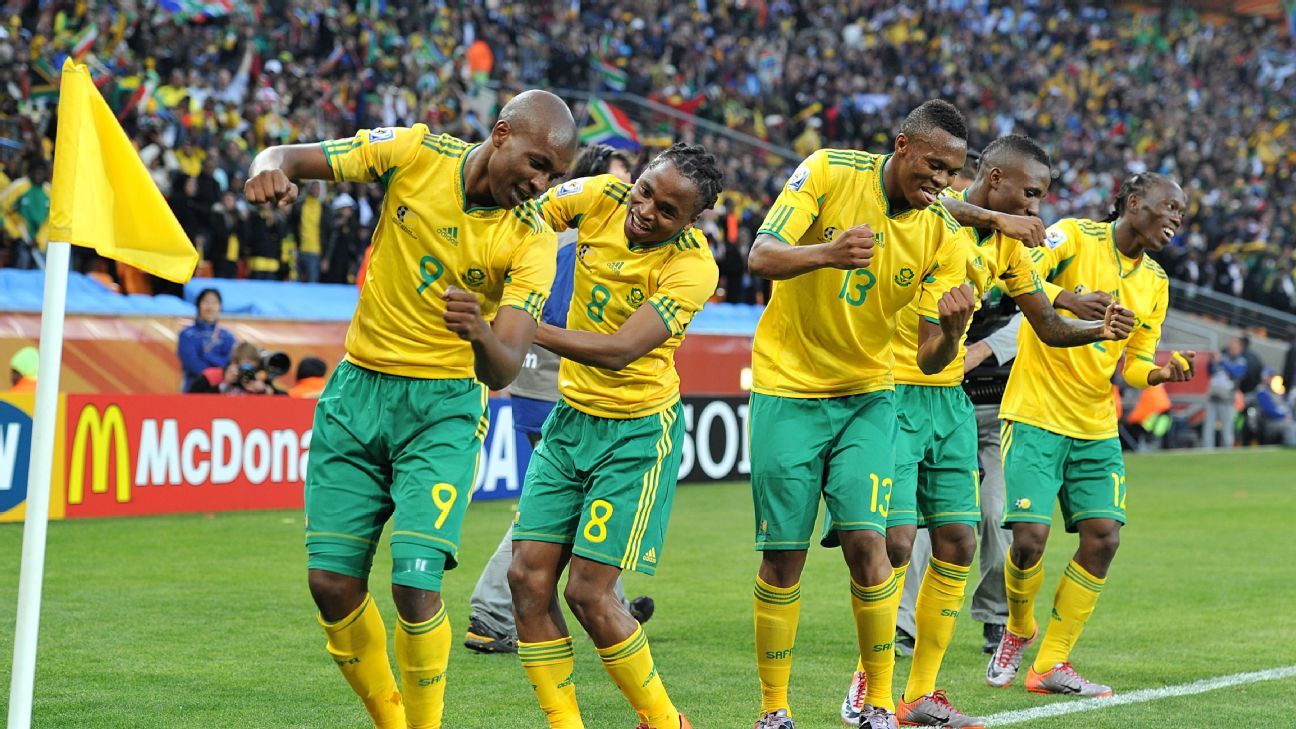
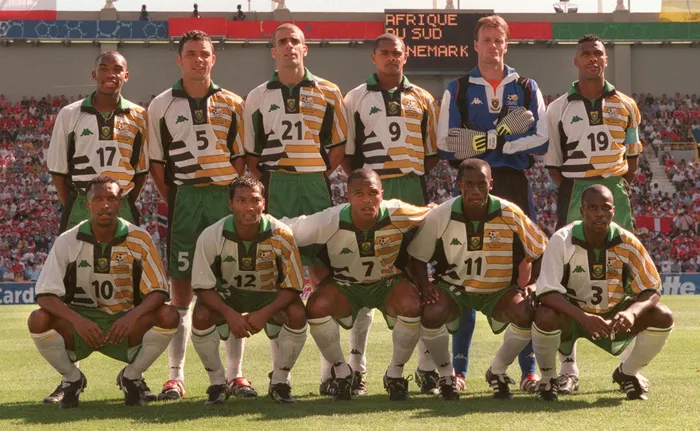
To understand why Maseko’s goal meant so much, you have to sit with the sixteen years that came before it. South Africa last graced the World Cup in 2010, and they did so as hosts, handed an automatic berth rather than one earned through the brutal grind of African qualifying. That tournament gave the world the vuvuzela, Siphiwe Tshabalala’s thunderbolt against Mexico in the opening match, and a fanbase that turned every stadium into a wall of sound. It also ended in heartbreak. Bafana became the first host nation in World Cup history to fail to reach the second round, eliminated despite beating France in their final group game.
What followed was a long, frustrating wilderness. South Africa missed out on 2014, 2018, and 2022, and the misses were rarely clean. There were qualifying campaigns undone by single results, by administrative chaos, and by a sense that the golden generation of the 1990s, the side that won the 1996 Africa Cup of Nations on home turf, had never been properly replaced. The country that produced Lucas Radebe, Mark Fish, and Benni McCarthy spent the better part of two decades watching the World Cup on television. For a football-mad nation, that absence was a quiet, accumulating ache.
The qualifying route to 2026 was not without its own drama either. South Africa navigated a competitive African group, and the campaign demanded the kind of consistency that had eluded earlier sides. By the time the final whistles blew across the continent’s qualifying matches, Bafana had done what no South African team had managed since the host-nation shortcut of 2010. They had earned their place. The distinction matters to South Africans. This time, nobody handed them anything.
Hugo Broos and the side he built
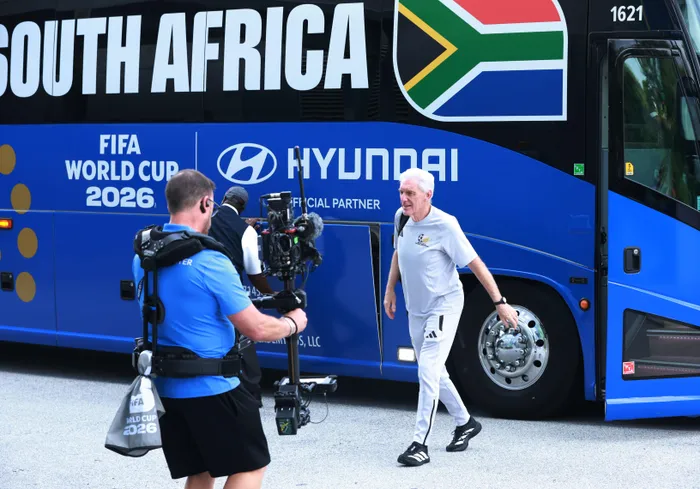
The man at the centre of the turnaround is a 73-year-old Belgian who has heard plenty of doubt in his career and answered most of it with silverware. Hugo Broos arrived in the South African job in 2021 carrying a reputation that opened doors across the continent. In 2017 he had taken charge of a Cameroon side written off before the tournament began and guided them to the Africa Cup of Nations title, beating Egypt 2-1 in the final. That run made him the first European coach to win the AFCON, and it announced him as a manager who could read African football rather than simply impose a foreign template on it.
When Broos took the Bafana job, he did something that unsettled a lot of established names. He cleared out the comfortable seniors and bet on youth. Players who had assumed their international careers were secure found themselves left out, and the public grumbled. The early results were uneven, and the criticism was loud. Broos held his nerve. His method was unglamorous and clear: build a defensive structure that holds, trust young legs to run, and let a small number of experienced heads steady the rest. He has spoken openly about how much the South Africa project means to him, going as far as to suggest the job ranks alongside his Cameroon triumph in personal significance.
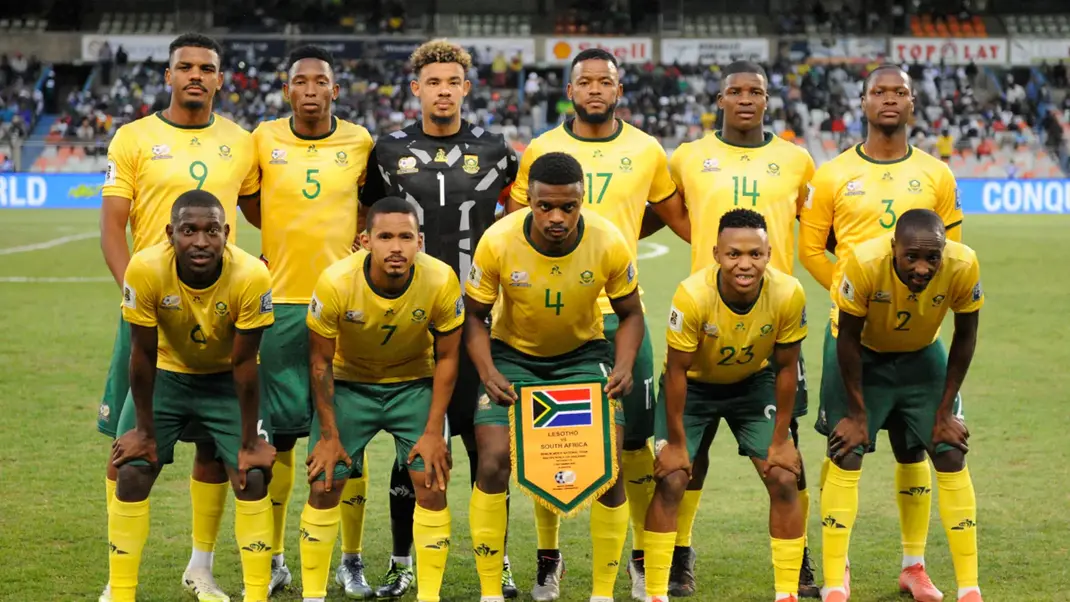
His squad selection for 2026 leaned heavily on the domestic league, a choice that doubled as a statement about the health of South African club football. Mamelodi Sundowns and Orlando Pirates between them supplied the spine of the group, with each club contributing a cluster of players who already knew one another’s movements from week-to-week competition. Broos named his final 26 on 27 May 2026 in Pretoria, and the list confirmed what observers had suspected for months. This was a team built on chemistry and continuity rather than on a scattering of imported stars. At the tournament itself, Broos showed he could adapt too. For the decisive South Korea match he abandoned his usual three-man central midfield, pushed forward with intent, and handed a young playmaker the keys to the game. The bet paid off.
The stars to know
Every successful tournament side has a few names that travel beyond the dedicated fanbase, and this Bafana team is no different.
Ronwen Williams is the heartbeat. The goalkeeper and captain has become something close to a folk hero in South Africa, a reputation cemented at the 2023 Africa Cup of Nations where his penalty heroics carried Bafana to a bronze medal. He is the calm voice in the dressing room and the last line behind a young defence, and Broos has built the side’s identity around the security he provides. Against South Korea, his goal stayed untouched in a way that told its own story about how far this team has come defensively.
Lyle Foster carries the attack. At 25, the Burnley striker is one of the few squad members plying his trade in Europe, and he offers the physical focal point a side like this needs. Foster spent the 2025 to 2026 season in the English top flight, and his presence gives Bafana a target who can hold up play and bring runners into the game. His finish in the 1-1 draw with Czechia kept South Africa’s hopes alive when the tournament was hanging in the balance.
Ad SpaceIn-Article - 300x250
Advertisement
Percy Tau brings the experience. A winger who spent years testing himself at a high level in Europe, Tau is among the most travelled players in the group, and his reading of the game gives a young team a senior reference point. Alongside him, Teboho Mokoena anchors the midfield with a technical quality that has drawn admiring glances from coaches at the tournament, while veteran Themba Zwane offers the kind of guile that only comes from years at the top of the domestic game.
Then there is the new wave. Relebohile Mofokeng, the playmaker handed a starting role against South Korea, repaid Broos with a performance that pulled the strings and tormented the Korean defence. And Thapelo Maseko, the man whose goal made history, carries perhaps the most human story of all. He won bronze with Bafana at the 2023 AFCON, then watched an injury stall his career so badly that he lost his place at Sundowns and dropped to the reserves. A loan move to AEL Limassol in Cyprus in early 2026 gave him a competitive start for the first time in nearly two years. He counted the days himself, 662 of them without a start, and spoke about learning patience and humility in the wilderness. Then he scored the goal that put his country into the knockouts. Football rarely writes its scripts that neatly.
How the group unfolded
Bafana’s path through Group A was a study in resilience rather than dominance, and that is worth stating plainly because it makes the achievement more honest, not less. South Africa opened against Mexico and lost 2-0, a sobering start against the tournament co-hosts that left little margin for error. The second match, against the Czech Republic, was where the campaign could have collapsed. Instead, Foster’s strike earned a 1-1 draw that kept qualification mathematically alive heading into the final round.
That set up the showdown with South Korea, a side that came into the match unbeaten across a long and impressive qualifying run and that needed only a draw to be confident of progressing. South Africa needed to win outright. Broos sent his team out with more attacking ambition than they had shown all tournament, and the numbers told the tale of a side that finally took the game to a strong opponent. Bafana piled up eleven shots in the first half alone, weathered the introduction of South Korea’s talisman Son Heung-min after the break, and found the decisive moment through Maseko on 63 minutes. Mexico, for their part, topped the group with a perfect nine points after dispatching the Czechs 3-0 in the parallel fixture. South Africa’s four points were enough for second, and second was enough for a place in the round of 32 against Canada.
A note of care is worth sounding here. As this piece goes out, the knockout fixture against Canada is still to be played, so nothing about that result is settled. What is settled, and what the records already confirm, is that South Africa have travelled further at a World Cup than any Bafana side before them.
What it means for African football at a 48-team World Cup
Zoom out from the South African story and a larger shift comes into focus. The 2026 tournament is the first to expand to 48 teams, and that expansion handed Africa its biggest-ever World Cup presence, with nine guaranteed slots plus a path to a tenth through the intercontinental playoff. For a continent that spent decades arguing it was underrepresented on the game’s grandest stage, the maths has finally moved in its favour, and the early results suggest African sides intend to make the extra places count rather than simply make up the numbers.
South Africa’s breakthrough fits a broader pattern in which African teams are no longer treated as romantic underdogs but as genuine threats. The memory of Morocco reaching the semi-finals in 2022 reset expectations for the entire continent, and 2026 has carried that momentum forward. When a side like Bafana, built almost entirely on home-based players and a couple of European-based stars, can finish above a well-drilled South Korea and march into the knockouts, it sends a message to every federation on the continent. A strong domestic league, a clear-eyed coach, and patience with young players can be enough.
For Nigerian football fans in particular, there is a familiar ache wrapped inside the celebration. The Super Eagles missed this World Cup, and watching a southern African neighbour break new ground is a complicated feeling for anyone who remembers Nigeria’s own World Cup nights. But there is also pride to be taken in the continental story. Every African side that goes deep raises the ceiling for the next campaign, strengthens the case for those expanded slots, and gives young players across the continent another set of heroes to study. African football has always produced talent. What the 48-team format offers is more room for that talent to be seen on the biggest stage, by the widest audience, when it matters most.
A team that earned its place
It is easy, in the rush of a historic result, to reach for grand pronouncements. Bafana Bafana have not won anything yet, and Broos himself is set to step down after the tournament, which gives the whole adventure the feel of a final dance for a coach who rebuilt a national team in his own patient image. The honest summary is simpler and more grounded than any trophy talk. A South African side reached a World Cup on merit for the first time in sixteen years, then went one better than every team that came before it by reaching the knockout rounds.
The image that lingers is the one from Monterrey: Maseko, 662 days removed from his last competitive start, wheeling away after the goal that rewrote his country’s record books, his teammates burying him under green and gold. A goalkeeper-captain who turned penalty saves into national folklore. A Burnley striker holding the line in Europe. A roster stocked with players from Sundowns and Pirates who carried their domestic league onto the world stage and refused to look out of place. Whatever Canada brings next, the men who pulled on the Bafana shirt in June 2026 have already done something no South African team had managed before. They made the country watch the World Cup not as hosts, not as hopefuls, but as a team still standing when the group stage was done.
Ad SpaceIn-Article - 300x250
Advertisement
Share
Get the recap
Loved this story? Get more like it.
Join readers who get our weekly entertainment recap - the stories worth your time, delivered every Friday.
No spam. Unsubscribe anytime. By signing up you agree to our Privacy Policy.