
![Police ranks in Nigeria; police salary in Nigeria [Plus latest on new police salary]](https://cms.sidomexentertainment.com/wp-content/uploads/2020/12/Untitled-design-16-1-1.jpg)
Before we discuss the police salary structure in Nigeria or how much a police officer earns in Nigeria including the proposed new salary structure of police officers in Nigeria, it is important to understand the Nigeria Police Force (NPF) how it came to be, the structure, functions and the various ranks in the NPF.
The Nigeria Police: A brief History
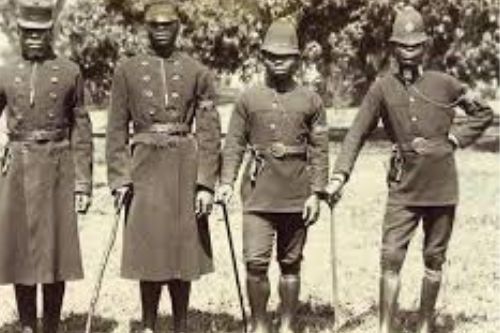
The Nigeria Police Force predates the Constitution of the Federal Republic of Nigeria. However, the Nigeria Police was formally established in 1820.
In 1879, a 1200 member armed paramilitary Hausa Constabulary was formed.
In 1896, the Lagos Police was established.
A similar force, the Niger Coast Constabulary was formed in Calabar in 1894 under the newly proclaimed Niger Coast Protectorate.
In the north, the Royal Niger Company set up the Royal Niger Company Constabulary in 1888. Many reasons accounted for this. The key ones include:
- To protect the British commercial interest
- To deal with uncompromising local chiefs and traditional rulers
- To safeguard trade routes and stop the slave trade.
When the protectorates of Northern and Southern Nigeria were proclaimed in the early 1900s, part of the Royal Niger Company Constabulary became the Northern Nigeria Police and part of the Niger Coast Constabulary became the Southern Nigeria Police. The northern and southern regional police forces were later merged in 1930, to form the Colony’s first national police - the Nigeria Police Force (NPF).
In the 1960s, under the First Republic, these forces were originally regionalised and then nationalised.
https://youtu.be/4gpjVw6Nmqs
The Nigeria Police
The Nigeria Police Force is the principal law enforcement agency in Nigeria. It is part of the executive arm of government. The Nigeria Police Force is charged with maintaining peace and order and protecting the lives and property of the citizens. The Force also executes some governmental policies. It is headed by the inspector general of police.
Section 214 of the 1999 Nigerian Constitution codifies the establishment of the Nigeria Police Force. It states: “There shall be a Police Force for Nigeria, which shall be known as the Nigeria Police Force, and subject to the provision of this section no other Police Force shall be established for the Federation or any part thereof.”
Structure of the Nigeria Police
For administrative purpose and better organisation of the Nigeria Police, the police is divided into three structural units
1. Command unit
This features the heads of various departments. It shows the chain of command from the lowest-ranked officer - the police recruit - to the highest-ranked officer - the Inspector general of police.
The command/authority system shows the chain of command (who answers to who) in the police force, for better accountability and organisation. For example, we have the inspector general of police, deputy inspector general of police, assistant Inspector general of police, etc.
2. Administrative unit
This features the various departments through which the police force is divided and organised. Departments here are numbered from A-G with the administrative unit being the first department headed by the Inspector general of police.
The administrative department oversees other departments of the police force such as the logistics department that is in charge of the budget and operating costs, discharge of uniforms and operational tools. The ICT department controls technology, communications and monitoring. The Department of Intelligence and investigation handles crime investigation, Interpol, forensic matters, etc.
3. Organisational unit
Here, the police are structured in terms of operational units, which consist of command centres set up in various states and zones. Thus, we have the force headquarters, zonal headquarters, state commands headed by the commissioners of police, divisional police headquarters and police stations.
Duties of the Nigeria Police Force
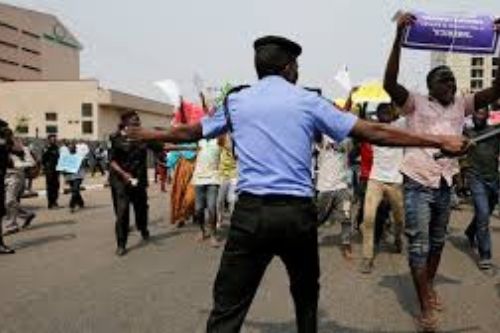
Below is a list of the top 10 duties of the police force as provided by the constitution of the federal republic of Nigeria as well as the Police Act:
- The prevention of crime
- The apprehension of offenders
- The preservation of law and order
- The protection of life
- The protection of property
- Crime detection
- The execution of governmental policies
- Military duties
- The prosecution of offenders
- The identification of persons
1. Prevention of crime
This is the primary function of the police force. The country will be in a state of anarchy if police functions exist solely in the realm of arrest and prosecution of offenders. For example, a situation where there was an ongoing robbery and the police were called, and they came after the crime had been committed, for example, the house owner killed and the house looted. This defeats one of the purposes of setting up the police force. Thus, this important duty refers to the police’s ability to detect crime and nip it in the bud before it is carried out. This is done by proper policing, monitoring and patrolling of communities with a high tendency of crime. Hence, the new police salary approved by the president will go a long way to make policing easier and effective.
2. The apprehension of offenders
Those who commit a crime, do we just leave them to roam the streets still? To keep on committing a crime? No! The apprehension of offenders happens to be one of the most important duties of the police.
This duty provides that the police should take criminals off the street so that their victims and the state can get justice. Keeping criminals off the street or apprehending them offers two important signals, viz:
- It deters prospective offenders who will now be wary that their actions will get them arrested.
- It also offers citizens a sense of security and peace especially when notorious criminals have been put behind bars.
3. The preservation of law and order
Imagine a situation where people or citizens resolve issues by themselves, which most often than not results in fights and blood spillage. Alternatively, imagine conflicts between communities over land or oil or even between private individuals over land, which most often than not results in threat, violence and death.
In Nigeria, squabbles over land have contributed immensely to the death rate. However, the police, whose morale is boosted with the new police salary, will be adequately equipped to maintain peace and order when threatened by conflicts.
4. The protection of life
This is one of the top functions of the police force. The lives of every citizen matters. It is left to the Nigeria Police to ensure the citizens are safe and that they can carry on with lawful daily activities without any sense of fear. The police do this by patrolling communities, swinging to action whenever a threat to life has been reported, signing of undertaking by possible offenders. Fortunately, with the approval of the new police salary, lives will be better protected.
5. The protection of property
By the provision of the constitution of the Federal Republic of Nigeria, every citizen has a right to own movable and immovable property anywhere in the country. However, what good is it to own property when that property cannot be protected by law and is at the mercy of vandals, looters and thieves? Hence, another primary function of the police is to protect the property of private citizens and when stolen, assist to recover the stolen property.
6. Crime detection
Similar to crime prevention is crime detection. While crime prevention involves a situation where the crime has already started to take place but not completed, crime detection involves a situation where the crime has taken place. Thus, one of the primary functions of the police is to be able to investigate and detect crime after it has been committed. They do this by conducting searches, profiling of individuals, etc. An example is when conducting road searches and the police discover guns and ammunition. They will apprehend such persons resulting in nipping a potential crime in the bud or in some cases, use forensics to determine whether the guns had been used in committing a crime. In any case, it is an offence in Nigeria to be in possession of unlicensed firearms.
7. The execution of governmental policies
As an executive arm of the government, it is a primary function of the police to ensure that government instructions are carried out and obeyed. Thus, when the government, for example, issued a lockdown directive to curtail the spread of a disease like the Covid-19 pandemic or to curtail civil unrest like the #EndSARS protests, it becomes the duty of the police to enforce these instructions.
8. Military duties
The police from time to time can be assigned to perform military duties, which are to defend the country at all times against hostilities, protect the lives and properties of citizens and to maintain the sovereign nature of the country.
9. The prosecution of offenders
The job of the police does not just end at apprehending offenders, it continues to ensure that such offenders are tried by a competent court of law to ascertain the guilt of offenders and to punish them if found guilty.
10. Identification of offenders
By maintaining proper records of offenders, for example, by taking their passports numbers and fingerprints, the police can solve crimes better and faster by running fingerprints across their records to ascertain the identity of an offender.
Police ranks in Nigeria
Below is the command chain or ranks of the police officers in the Nigeria Police Force.
The lowest police rank in the police constable while the highest police rank is the inspector general of police, who is in charge of the entire police force.
- The inspector general of police
- The deputy inspector general of police
- The assistant inspector general of police
- The commissioner of police (in-charge of contingents in a state)
- The deputy commissioner of police
- The assistant commissioner of police
- The chief superintendent of police
- The superintendent of police
- The deputy superintendent of police
- The assistant superintendent of police
- The inspector of police
- sergeant-major
- Sergeant
- Corporal
- Constable
- Recruit
Police salary in Nigeria according to ranks
Below, you will find out how much each police officer rank earns as of 2021. Note that the police salaries quoted are based on the current salary structure of Nigerian police officers. Thereafter, we also discussed the new salary structure for the Nigerian police officers.
1. The inspector general of police salary

The inspector general of police (IGP) is the highest-ranking officer in Nigeria. He is the head of police and reports directly to the president. He is also appointed by the president. The tenure of the inspector general of police is four years unless dismissed from office or re-appointed and as such may span up to eight years.
Being the highest rank, there is only one serving inspector general of police at a time in the nation. As the highest-ranking officer, the IGP earns the highest salary in the police force. The salary of the inspector general of police is shown below:
- Inspector general of police salary per month: NGN711,450.00
- Inspector general of police salary per year: NGN8,537,980.00
2. The deputy inspector general of police salary

The deputy inspector general (DIG) of police is next in rank to the IGP. There may be more than one deputy inspector general of police at a time. He or she is the second in command of the Nigeria Police Force and directly to the IGP. Every other rank below the DIG takes orders of command from the DIG in the performance of their lawful duties. The salary of a deputy inspector general of police is as follows:
- Salary per month: NGN546,572.80
- Salary per year: NGN5,997,022.50
3. The assistant inspector general of police salary

The assistant inspector general (AIG) of police is next to the DIG and the third-highest rank in the Nigeria Police Force.
The salary of an assistant inspector of police is as follows:
- Salary per month: NGN499,751.90
- Salary per year: NGN5,997,022.50
4. The commissioner of police salary

Commissioner of Police (CP) is the fourth highest rank in the Nigeria Police Force. The commissioner of police is in charge of the state command. He is the number one police officer in the state. The structure of the salary of a commissioner of police is as follows:
Commissioner of police on grade 15 (step 6)
- Salary per month: NGN302,970.50
- Salary per year: NGN3,635,645.70
Commissioner of police on grade 15 (step 1)
- Salary per month: NGN266,777.79
- Salary per year: NGN3,201,333.48
5. The deputy commissioner of police salary

The deputy commissioner of police (DCP) is the second in command in a state and takes over the command in the absence of the state commissioner. The deputy commissioner of police supervises the assistant commissioner of police in the running of the state command.
The salary of a deputy commissioner of police is as follows:
Deputy commissioner of police on grade 14 (step 7)
- Salary per month: NGN278,852.80
- Salary per year: NGN3,346,233.50
Deputy commissioner of police on grade 14 (step 1)