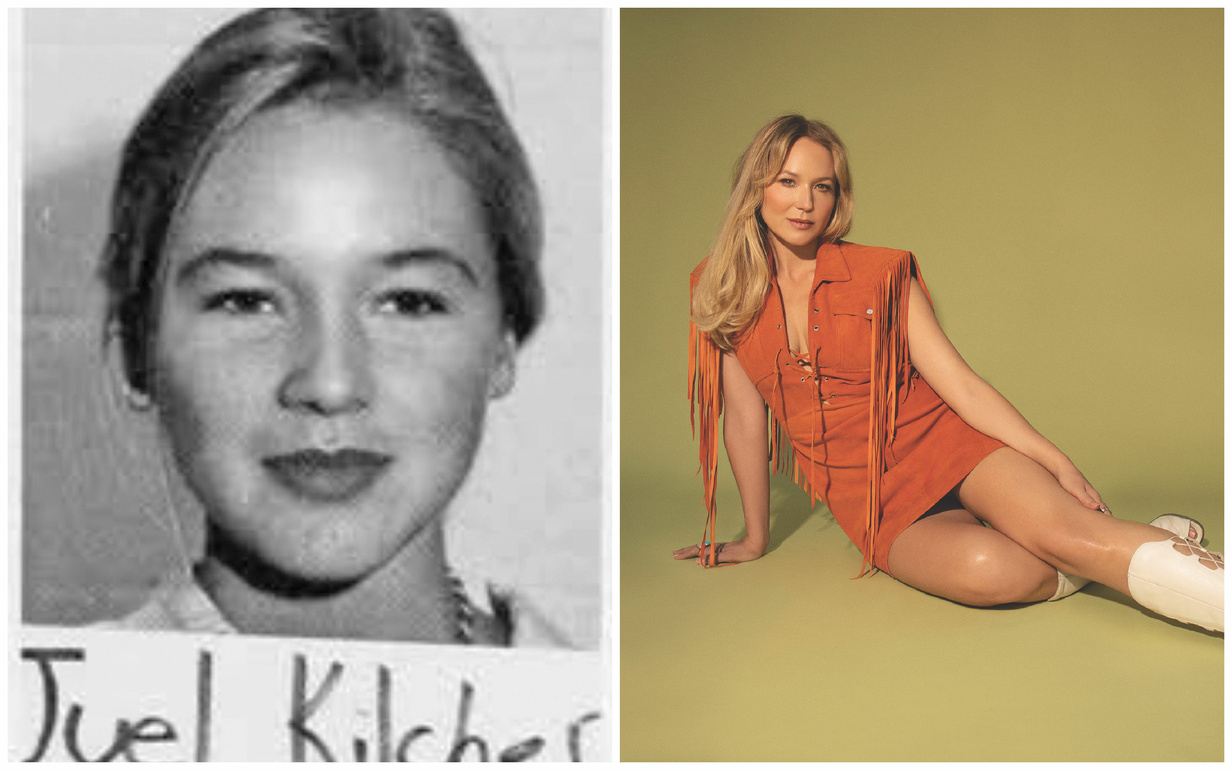


Jewel Opens Up About Her Secret Shoplifting Addiction During Her Years of Homelessness
Celebrities

Jewel Opens Up About Her Secret Shoplifting Addiction During Her Years of Homelessness

Miki AndersonMiki Anderson··6 min read
Advertisement

Table of Contents

The Confession That Changes How We See Her Story

Jewel - The Confession That Changes How We See Her Story

Most people know Jewel Kilcher simply as Jewel – the soft-voiced folk singer from Alaska who burst onto the global music scene in the mid-1990s with her debut album Pieces of You and went on to sell over 30 million records worldwide. Her story has always carried a certain mythology to it: a young woman who lived out of her car, survived on peanut butter, busked on street corners, and somehow made it all the way to the Grammy stage. It is a story that has inspired millions. But in a candid new revelation, Jewel is peeling back another layer of that narrative – one that is far more complicated, far more human, and far more difficult to share. She has admitted that during her homeless years, she developed a serious, compulsive addiction to shoplifting, one that she describes as something she genuinely could not control.

Jewel Kilcher speaking candidly in a recent interview
Image: ELLE

This is not the kind of confession that celebrities make casually. Shoplifting carries a criminal stigma that most public figures go out of their way to avoid associating themselves with, even when the circumstances are deeply sympathetic. For Jewel to come forward and speak openly about this part of her past takes a particular kind of courage – and it also adds important texture to a story that has sometimes been packaged a little too neatly as a feel-good Hollywood redemption arc. The truth, as Jewel is now telling it, is messier, darker, and ultimately more relatable than the sanitized version many of us have grown up hearing.

Jewel’s Homeless Years: What Really Happened

Jewel - Jewel's Homeless Years: What Really Happened

To understand what Jewel is describing, it helps to go back to the early 1990s, when she was living in San Diego, California, as a teenager and young woman struggling to make ends meet. After a kidney infection left her unable to work and after a landlord refused to cash her paycheck, she found herself without housing, sleeping in her car and later busking at local coffee shops to survive. This was not homelessness as a temporary inconvenience – it was grinding, daily deprivation that left her malnourished, emotionally vulnerable, and fighting just to get through each week. She has spoken in previous interviews and in her memoir Never Broken, published in 2015, about stealing carrots from a nearby field to eat. The picture she paints is one of genuine desperation.

Jewel's memoir Never Broken book cover
Image: Amazon.com

What is remarkable about that period, in hindsight, is how young she was navigating all of it. Born in 1974 and raised in Homer, Alaska, Jewel had already dealt with a difficult childhood – her parents divorced when she was eight, and she largely grew up on the road performing with her father, Atz Kilcher, in small venues across the state. That kind of upbringing builds resilience, but it also leaves gaps. When she landed in San Diego with no safety net, no consistent support system, and no real understanding of how to navigate urban poverty, she was essentially improvising her survival. It is within that context that the shoplifting habit began – not as an act of rebellion or moral failure, but as a response to real, physical need.

When Survival Becomes Compulsion

Jewel - When Survival Becomes Compulsion

Here is where Jewel’s story takes its most revealing and psychologically complex turn. What started as stealing food out of hunger gradually evolved into something else entirely – something she has now described in her own words as a true addiction. She has spoken about the behavior becoming compulsive, something that took on a life of its own beyond the original motivation of survival. Even when the immediate need was no longer there, the impulse remained. This is a pattern that addiction specialists and mental health professionals have long documented: behaviors that begin as coping mechanisms can rewire the brain’s reward system in ways that make them extraordinarily difficult to stop, even when the original trigger has passed.


Advertisement
Jewel performing live on stage during a concert
Image: YouTube

What makes her account particularly striking is her willingness to use the word “addiction” without deflection. She is not framing it as just “something she had to do to get by” or softening it with qualifications. She is describing a loss of control – a compulsive cycle that she recognizes, in retrospect, as something that could have seriously derailed her life. The distinction matters because it reframes the conversation from one about poverty and desperation into one about mental health and the long psychological shadow that trauma and deprivation can cast. Many people who experience homelessness develop compulsive behaviors as a form of emotional regulation, and rarely do we get to hear someone with Jewel’s platform talk about that experience with such unflinching honesty.

The Turning Point and the Road Back

Jewel - The Turning Point and the Road Back

Jewel has said that the turning point came when she was caught shoplifting a pair of boots. Rather than simply accepting the shame and moving on, she took the moment as a confrontation with herself – a chance to examine what she was actually doing and why. By her own account, she made a decision to stop, and that decision became tied to a larger personal commitment to integrity and self-awareness that she has described as foundational to everything she built afterward. It was not a clean break – these things rarely are – but it marked the beginning of a different relationship with herself and with the coping mechanisms she had been relying on.

Jewel Kilcher early in her music career in the 1990s
Image: The Ticker

It was around this time that a local coffee shop owner, recognizing her talent after watching her perform, began allowing her to play regular sets in exchange for tips. That small act of opportunity changed the trajectory of everything. She built a following, caught the attention of a manager, and eventually signed with Atlantic Records – leading to the release of Pieces of You in 1994, which became one of the best-selling debut albums in music history after an unusually long buildup on the charts. The song Who Will Save Your Soul became her breakthrough single, followed by the iconic You Were Meant for Me. By 1997, she was one of the biggest-selling artists in the world. But she carried those years with her, and it seems she always knew that the full story had not yet been told.

Jewel’s Legacy Beyond the Headlines

Jewel - Jewel's Legacy Beyond the Headlines

What is important to recognize is that Jewel sharing this part of her story is not simply a celebrity confession designed to generate headlines or promote a project. It fits squarely within a broader conversation she has been part of for years about mental health, trauma, emotional resilience, and the ways that difficult childhoods shape adult behavior. She founded the Inspiring Children Foundation, an organization focused on helping at-risk youth develop emotional and social tools to navigate adversity. She has spoken publicly about meditation, mindfulness, and the work she has done to understand and manage her own psychological wellbeing. This latest revelation is an extension of that ongoing commitment to honesty – not just in her art, but in her public life.

Jewel at a recent public event or appearance
Image: Billboard

For fans, especially those who came of age listening to Pieces of You in the late 1990s, this revelation adds depth rather than damage to the image of an artist they have long admired. If anything, it makes her story more powerful – because it replaces the clean, inspirational version with something that actually reflects the jagged, nonlinear reality of surviving poverty and rebuilding a life from scratch. It is also, frankly, a reminder that addiction does not always look the way we expect it to. It does not always involve substances. It can take root in behavior, in desperation, in the neurological grooves carved by prolonged stress and fear. Jewel naming it clearly, calling it what it was, is a genuinely brave thing to do. And in an entertainment landscape that too often rewards performance over vulnerability, that kind of honesty still stands out.

Advertisement
Share
Get the recap

Loved this story? Get more like it.

Join readers who get our weekly entertainment recap - the stories worth your time, delivered every Friday.

No spam. Unsubscribe anytime. By signing up you agree to our Privacy Policy.

Jewel Opens Up About Her Secret... | Sidomex Entertainment