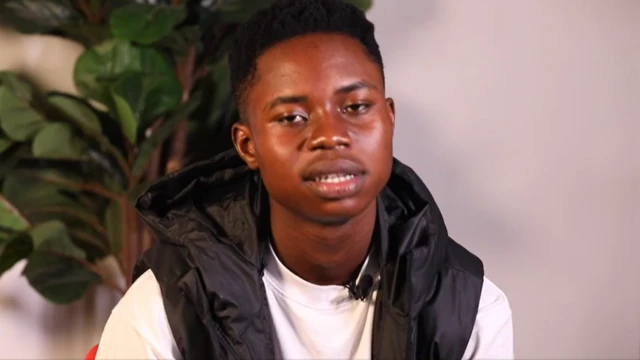
Who Is Peller - Inside the Rise of Nigeria's Biggest Gen-Z Content Creator
Miki Anderson··10 min read
Ad SpaceArticle Top - 728x90
Advertisement
On the night of 30 October 2024, more than 164,000 people were watching the same TikTok live stream at the same moment. By the time it ended, the broadcast had pulled in roughly 389,800 viewers in total, the most-watched live session in African TikTok history at the time. Davido was on the call, the kind of Afrobeats name that fills stadiums. But the room belonged to a teenager from Ikorodu who, three years earlier, had been talking into a phone to almost nobody. The streamer running that broadcast goes by one word, and across Nigerian Gen-Z timelines it needs no surname.
That one word is Peller. The numbers attached to him are the kind that used to belong only to musicians and footballers. The lane he runs in did not exist in Nigeria in any serious form five years ago. To understand how a 19-year-old hit those figures, you have to understand what changed about fame itself.
Who He Actually Is
His name is Habeeb Hamzat, born in 2005 in Ikorodu, a working-class suburb on the eastern edge of Lagos State. He is an adult now, in his early twenties, though much of his climb happened while he was still a teenager. He grew up in a modest Muslim household and attended Providence Primary School before moving on to Frontrunner Academy for secondary education. There was nothing in that background that pointed at national fame. There rarely is, with this kind of story.
What separates Peller from the crowd of young Nigerians chasing a phone camera is timing and temperament. He arrived early to live streaming as a format, before most of the country’s creators understood it was a format at all. And his on-camera personality, dry, sarcastic, half-reluctant, sometimes openly bored, cut against the grain of an entertainment culture built on high energy and big performance. He was not trying to be likeable in the conventional way, and that turned out to be the appeal.
In 2025 he publicly announced his conversion from Islam to Christianity, attributing the decision partly to childhood experiences at a traditional Quranic school. It was the kind of personal disclosure that, for most public figures, would be handled carefully behind closed doors. For Peller, whose entire career is built on broadcasting his life, it became another widely covered moment in a feed that rarely goes quiet.
The Come-Up
Peller launched his content-creation efforts around 2021, when he was about sixteen. By his own telling and the accounts of those who watched it happen, the early days were unremarkable. The streams went up and very few people came. He has cited American streamers as his reference points, naming Kai Cenat, Fanum, IShowSpeed and a creator known as Duke among his inspirations. Those are the architects of the modern Western streaming boom, and Peller was effectively trying to import their template into a Nigerian context that had no equivalent.
What he could not import was their infrastructure: the Twitch ecosystem, the established donation culture, the audiences already trained to sit through hours of live content. He had to build that demand in a market that did not know it wanted it yet. So he kept showing up. The persistence is the unglamorous part of every overnight-success story, and his took a couple of years of low numbers before the curve bent.
The bend came through co-signs. When the Nigerian-Canadian rapper Dax appeared on one of his live streams in early 2024, the resulting clips, billed online as one of the more chaotic conversations of the year, spread fast. Then came the bigger one: Olamide, one of the most respected figures in Afrobeats, joined his live sessions and reportedly gifted him a million naira on air. When an artist of Olamide’s standing publicly validates an unknown teenager, the Nigerian internet pays attention. After that, the trajectory stopped being gradual.
What His Content Actually Is
Strip away the celebrity guest appearances and the core of Peller’s output is deceptively simple. He talks. He reacts. He runs his mouth in a blend of Yoruba and Nigerian Pidgin, dropping sarcastic one-liners and social commentary about ordinary Nigerian life. There is no elaborate script, no production crew engineering punchlines, no skit format with a setup and a payoff. It is closer to hanging out with a quick-witted friend who happens to be on camera for hours at a stretch.
That looseness is the product, not a shortcut. Scripted comedy, the format that made earlier Nigerian internet stars famous, asks the audience to watch a finished thing. Live streaming asks them to be present for an unfinished one. The appeal is the sense that anything can happen, that the creator is genuinely improvising, that you are watching a real moment rather than a polished one.
In 2024 he extended the brand into a comedy series, Peller’s Palava, blending satire, skits and social commentary. It pushed him beyond pure streaming and showed he could work in produced formats too, widening the audience that first found him live. But the live broadcast remains the engine. It is where the records get set and where the income is generated.
The Peller-Jarvis Dynamic
No account of Peller’s rise is complete without Jadrolita, the creator known online as Jarvis, whose real name is reported as Amadou Elizabeth Aminata and who is a few years older than him. She first went viral for a robotic, almost mechanical performance style, and when the two began collaborating in 2024, the pairing became one of the most-watched ongoing stories on Nigerian social media.
Their on-and-off relationship turned into content in itself, a running serial that audiences followed the way they once followed soap operas. The collaboration boosted both careers. It also generated a steady stream of drama. By April 2025, Peller hinted on a live session that the romance had cooled, calling their love “fake,” which read to many fans as a soft public breakup. Tensions escalated through the year. In November 2025, Jarvis’s management publicly demanded an apology over money-laundering allegations Peller reportedly made during a live session, allegations her camp described as false and unsupported, and threatened legal action. The two confirmed a split by late December 2025, after which Peller said they remained friends.
The Peller-Jarvis saga is a case study in how blurred the line has become between a creator’s real life and their content. When your relationship is itself a revenue stream, the audience treats every argument as an episode, and the personal cost of that arrangement is rarely visible on screen.
Ad SpaceIn-Article - 300x250
Advertisement
Why Gen-Z Nigeria Connects With Him
For decades, Nigerian fame ran through two main pipelines: Nollywood and the music industry. Both required gatekeepers. You needed a director to cast you, a label to sign you, a producer to believe in you, a budget to make you. Fame was something granted by institutions to people the public then discovered after the fact.
Peller represents a complete inversion of that order. Nobody discovered him. He built an audience first, directly, with no gatekeeper standing between his phone and the viewer. For a generation of young Nigerians who watched that happen in real time, the lesson landed hard: the establishment is optional. You do not need Nollywood’s permission or a record deal to become one of the most-watched people in the country.
His persona reinforces the connection. He is not performing aspiration the way a polished pop star does. He sounds like the guy on your street, speaks the languages of the street, reacts to the absurdities of Nigerian daily life the way his viewers do. The sarcasm and the occasional boredom read as authenticity rather than distance. In a media culture often accused of being out of touch with ordinary struggle, a teenager from Ikorodu who got rich by being himself on a free app is a powerful symbol. He is proof, to millions of young people, that the door is no longer locked.
The Business Behind the Fame
This is where the story gets harder to pin down, and where honesty matters more than a clean number. The economics of being a live-stream creator are real, but they are also opaque, and the figures attached to Peller should be treated with caution.
The core income mechanism is TikTok’s gifting system. Viewers buy virtual coins and send digital gifts during live broadcasts, which the creator converts to cash. On his record-setting streams, the gift totals have been enormous: during one battle he reportedly received 4.1 million TikTok coins even in a session he technically lost, and the Davido stream drew hundreds of expensive “lion” gifts. On top of gifting sit brand endorsements, sponsored appearances and ambassador deals. He has been associated with several brands in the travel, gadget and betting spaces, and Nigerian media report endorsement fees running into tens of millions of naira per deal, though those specific figures come from celebrity-news outlets rather than Peller or the companies directly.
Net worth is the shakiest figure of all. Estimates circulating in 2025 ranged wildly, from roughly 100,000 to 150,000 US dollars on the conservative end, up to figures equivalent to several hundred thousand dollars or more on the high end. That is not a measurement. It is a guess, and the enormous spread between estimates is itself the most honest data point. No verified financial disclosure exists. Anyone citing a precise net worth for Peller is, at best, extrapolating from visible gifts and rumoured deals. Treat every naira figure attached to his name as an estimate built on incomplete information, because that is exactly what it is.
What is not in doubt is the scale of the platform. His TikTok following has been reported in the range of 14 million, a base large enough to make the underlying economics serious regardless of where the precise wealth figure lands.
The Criticism
Peller is not universally adored, and the case against him is worth stating plainly. He is frequently accused of arrogance and of reckless online behaviour, and the loose, unscripted format that fuels his appeal is the same format that produces his lowest moments. When there is no script, there is no editor catching the line that should not have gone out. The money-laundering allegation against Jarvis, which her camp called baseless and threatened to litigate, is one example of how a live broadcast can turn into a legal exposure in seconds.
There is also the broader unease about what his model rewards. A career built on perpetual broadcasting incentivises drama, oversharing and conflict, because conflict drives the gifts. Critics argue that creators like Peller are pushed by the economics of the platform toward turning their personal lives, relationships and grievances into content, with little regard for the consequences once the stream ends. His fanbase, by most accounts, remains fiercely loyal through all of it. But loyalty is not the same as the criticism being wrong.
What His Story Reveals About Modern Nigerian Celebrity
Step back from the individual and Peller becomes a marker of a structural shift. Nigerian celebrity used to be a finished product handed down by institutions. It is now, increasingly, something built live and in public by people the institutions never selected. The gatekeepers have not disappeared, but they have lost their monopoly on who gets to be famous.
The clearest sign of that shift is who now seeks whom. Olamide co-signing an unknown teenager, Davido joining his stream, established stars treating a young streamer as a destination rather than a beneficiary: that is the old order acknowledging the new one. Afrobeats artists understand that a Peller live session reaches an audience their own channels sometimes cannot, an audience that lives on TikTok and treats traditional media as background noise. The validation, in other words, now flows in both directions.
The vulnerability in this new model is just as real. A career with no institutional structure has no institutional protection. When a relationship that doubles as content collapses, the fallout is public and immediate. When a reckless on-air comment becomes a legal threat, there is no studio legal team that vetted it first. The same directness that built the fame leaves the person exposed in a way a managed celebrity never is. That exposure was on full display in January 2026, when the American superstar streamer IShowSpeed toured Lagos. Peller, one of his self-cited inspirations, tried repeatedly to reach him, was intercepted by a bodyguard, and at one point chased the convoy on horseback only to be ignored. Nigerian commentators were split between mockery and admiration for the sheer persistence. It was a snapshot of the whole proposition: enormous reach at home, and a young man still hustling, in public, for the next moment of attention.
What Peller’s rise actually signals
Strip away the records and the rumoured millions and what remains is a young man from Ikorodu who understood, earlier than almost anyone around him, that a phone and a steady presence could replace a record label and a casting director. He did not wait for permission. He built the audience first and let the establishment catch up, and it did.
The figures attached to him will keep getting debated, inflated, disputed, because no verified ledger exists to settle them. The followers are real, the records are documented, the influence is measurable in the calibre of people who now want a seat on his live stream. A teenager talking into a camera in a Lagos suburb turned that into one of the most-watched seats in African entertainment. The lane he runs in was empty when he found it. It is crowded now, and he got there first.
Ad SpaceIn-Article - 300x250
Advertisement
Share
Get the recap
Loved this story? Get more like it.
Join readers who get our weekly entertainment recap - the stories worth your time, delivered every Friday.
No spam. Unsubscribe anytime. By signing up you agree to our Privacy Policy.