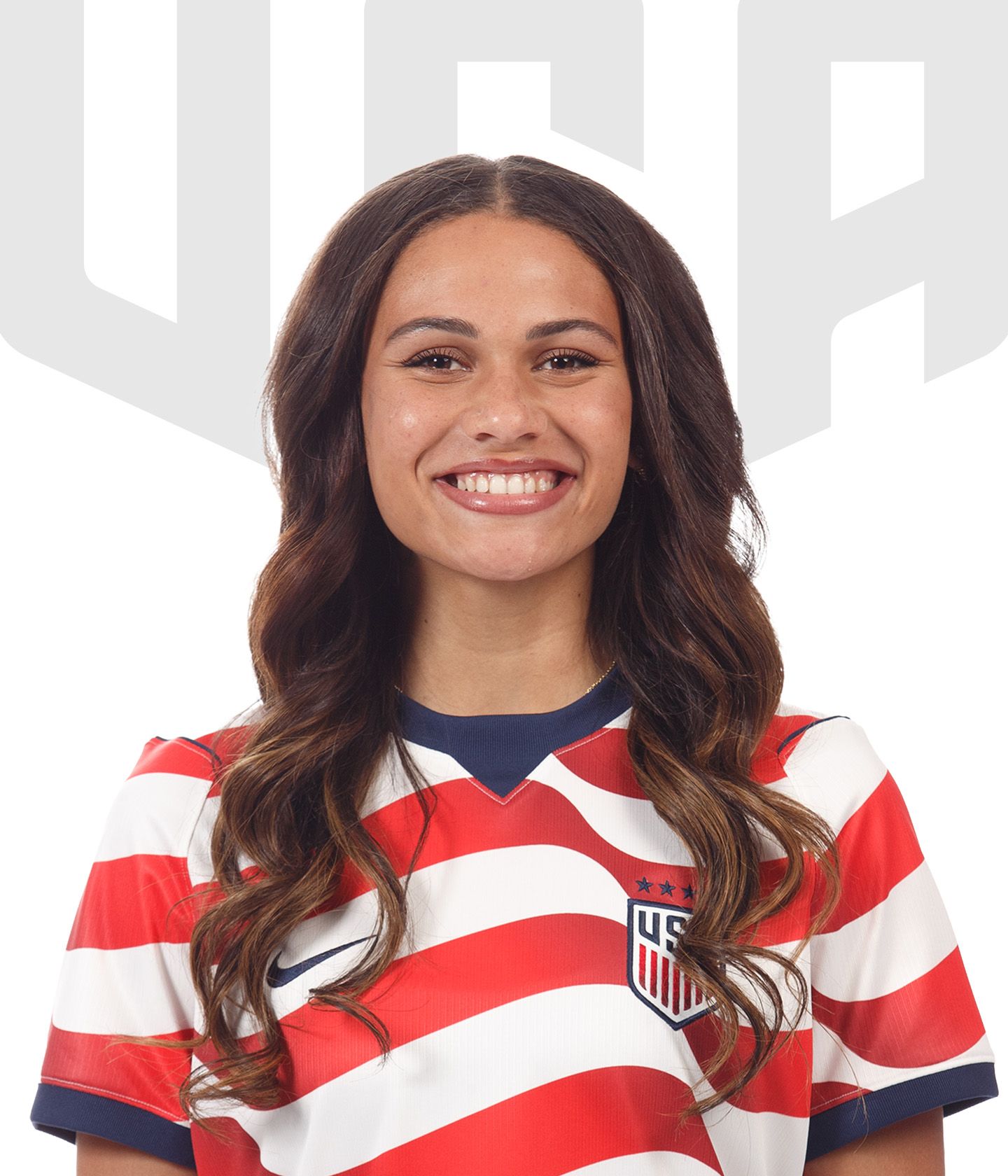
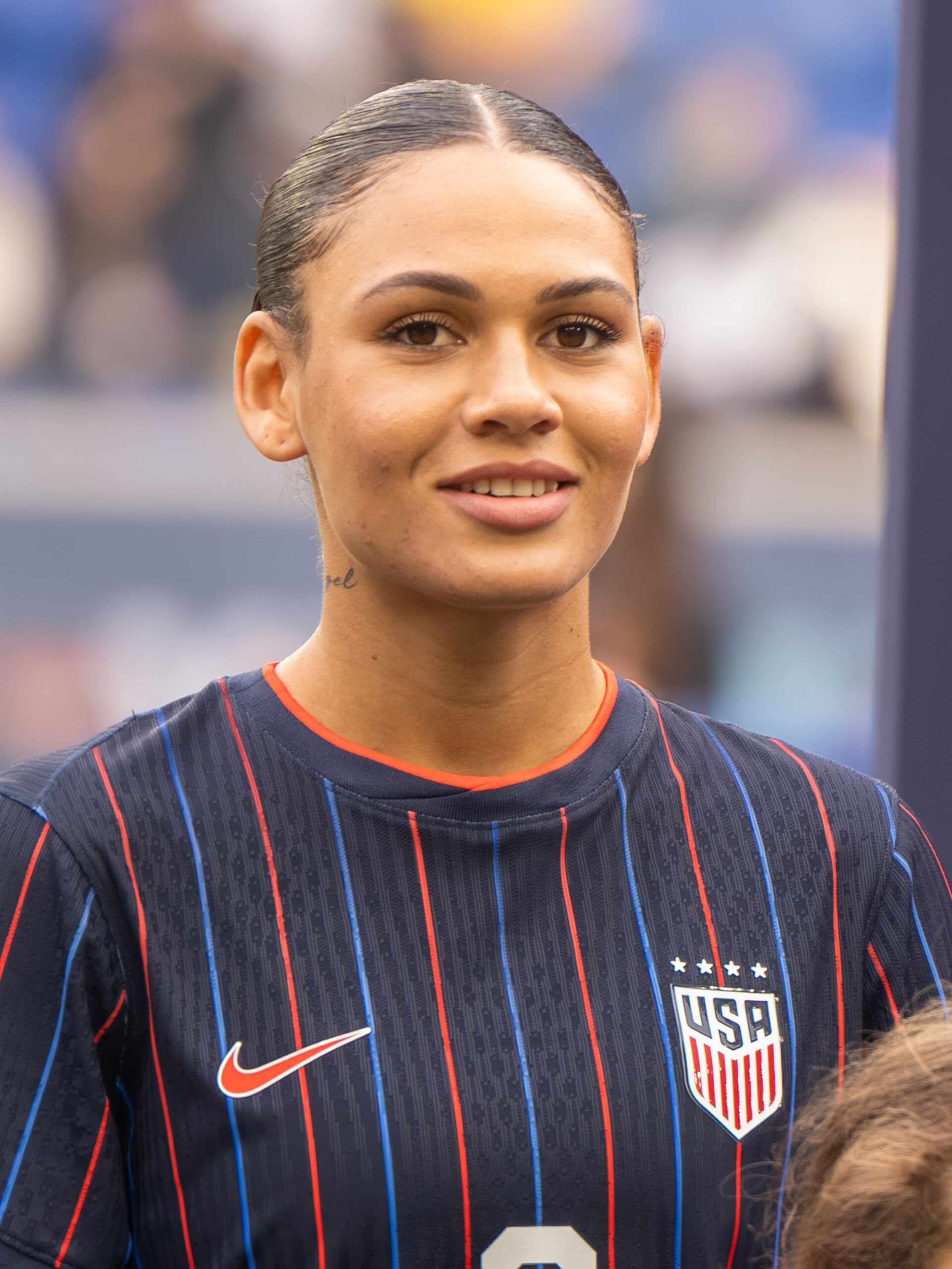
Trinity Rodman: The Athlete Who Built Her Own Legacy Beyond Dennis Rodman
Miki Anderson··10 min read
Ad SpaceArticle Top - 728x90
Advertisement
The clock at Parc des Princes had run past 105 minutes, and the United States and Japan were still locked at nil. Then a ball squirted loose on the right flank, Crystal Dunn slid it forward, and a 22-year-old in red, white and blue collected it, cut hard inside her marker, and lashed a shot that bent into the far top corner before the goalkeeper could move her feet. The net rippled. Teammates buried her under a pile of bodies on the grass. That goal, in the 106th minute of a 2024 Paris Olympics quarterfinal, did more than send the Americans into the semifinals. It announced, to anyone still hung up on her last name, that Trinity Rodman had arrived entirely on her own.
For most of her life, that last name has come with baggage. To a generation of basketball fans, Rodman means rebounds, tattoos, neon hair, Madonna, Kim Jong-un and a Hall of Fame career stitched together with chaos. To Trinity, it has meant something more complicated and far more personal. She has spent her twenties turning the name into a footnote rather than a headline, building a soccer career so distinct that the introductions have flipped. These days, plenty of people meet Trinity first and learn about her father second.
The kid who grew up around, and apart from, a legend
Trinity Rodman was born in 2002, the daughter of NBA Hall of Famer Dennis Rodman and Michelle Moyer. By the time she was old enough to understand who her father was, he was already more of a public spectacle than a parent. The story she has chosen to tell about that relationship is unflinching but measured, delivered in her own words rather than through tabloid speculation.
Speaking on the “Call Her Daddy” podcast in December 2024, she described the bond plainly. “He’s not a dad. Maybe by blood, but nothing else,” she said. She recalled a childhood marked by his absence after her parents divorced, and a period so difficult that the family briefly lived out of a car. She did not frame this as a plea for sympathy. She framed it as the truth she had made peace with, telling the host she believed her father to be a deeply selfish person for whom everything centered on himself.
What gives the account its weight is the restraint around it. She has said she still answers when he calls. She has pointed to a moment in 2021, when he appeared briefly at one of her games and then vanished again, as the point where she stopped hoping he would become the father she once wanted. Dennis Rodman, for his part, responded publicly on social media, apologizing for not being the dad she needed and saying he would keep trying. Trinity has not relitigated any of it on the field. The person who raised her, by her own telling, was her mother, and the discipline that turned her into a professional athlete came from that household rather than from the famous man whose surname she shares.
Washington State and the leap to the pros
Long before the Olympic heroics, Rodman was a prospect who scrambled the usual development map. She committed to play college soccer at Washington State, but the timing could not have been stranger. The COVID-19 pandemic shut down the 2020 season, and by the time she might have suited up properly, the world of women’s soccer had a different idea about where she belonged.
In January 2021, the Washington Spirit selected her second overall in the NWSL Draft. She had played essentially no college matches. She was 18 going on 19, and the pick made her the youngest player ever chosen in the history of the draft to that point, a teenager leaping from a paused college program straight into a professional league. It was a gamble on raw ability and instinct, the kind of bet that can define a front office for years if it lands.
It landed almost immediately.
The rookie season that rewrote expectations
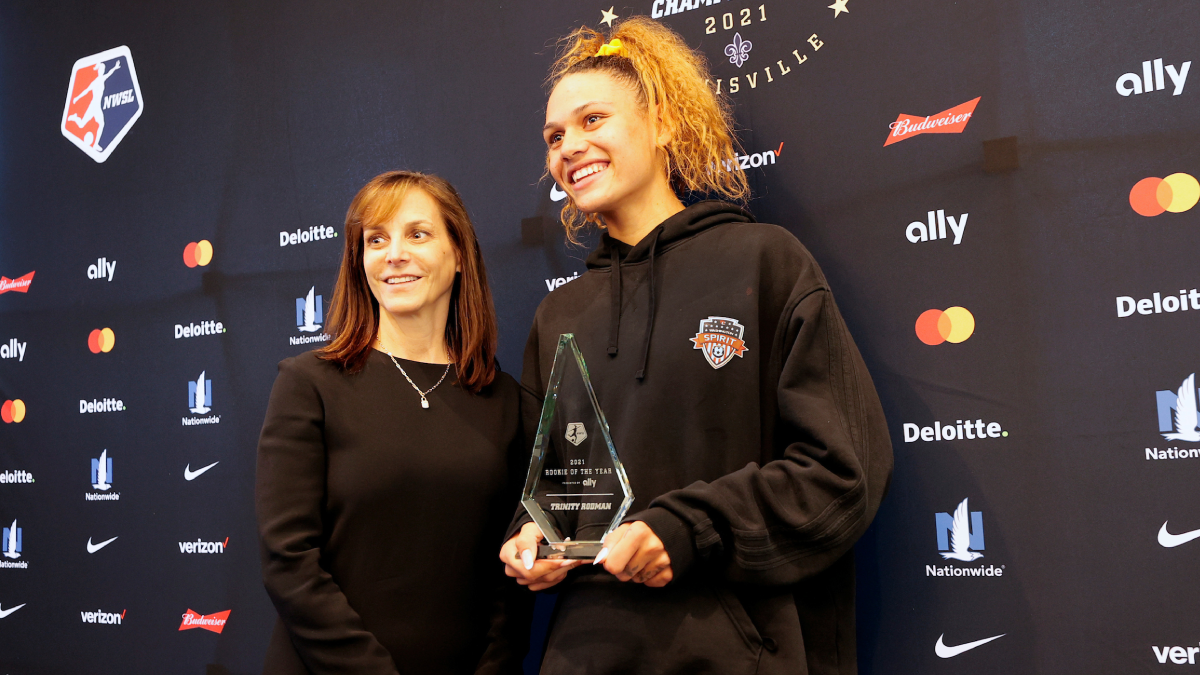
Rodman did not ease into the professional game. She started earning real minutes, and the numbers stacked up fast: six goals and five assists in the regular season, production that would have been notable for a veteran and was startling for a rookie barely out of her teens. She was voted onto the NWSL Best XI First Team and won U.S. Soccer’s Young Female Player of the Year.
The defining moment of that first year came in the championship. In the 97th minute of the 2021 NWSL final against the Chicago Red Stars, with the match tied in extra time, Rodman whipped a cross into the box and found Kelley O’Hara, who finished to win the title. It was the assist that delivered the Washington Spirit their first championship in club history, and it made Rodman the youngest player to ever record a playoff assist in the league. She closed her rookie campaign as NWSL Rookie of the Year, a champion, and the most talked-about young player in American soccer.
The recognition translated into money in a way the league had rarely seen. Off the back of that season, the Spirit signed her to a record contract reported at roughly $1.1 million over four years, making her at the time the highest-paid player in the NWSL. For a teenager who had played a handful of college games, it was a staggering vote of confidence, and it set a marker for what marketable young stars could command in a league still fighting for its financial footing.
The USWNT rise and Olympic gold
The national team came calling early. Rodman made her senior debut for the United States and worked her way into the picture across the next few years, featuring at the 2023 FIFA Women’s World Cup as part of a squad in transition. The tournament was a difficult one for the Americans, but it sharpened Rodman’s standing as a forward who could change a game with a single burst of pace and a single moment of decision.
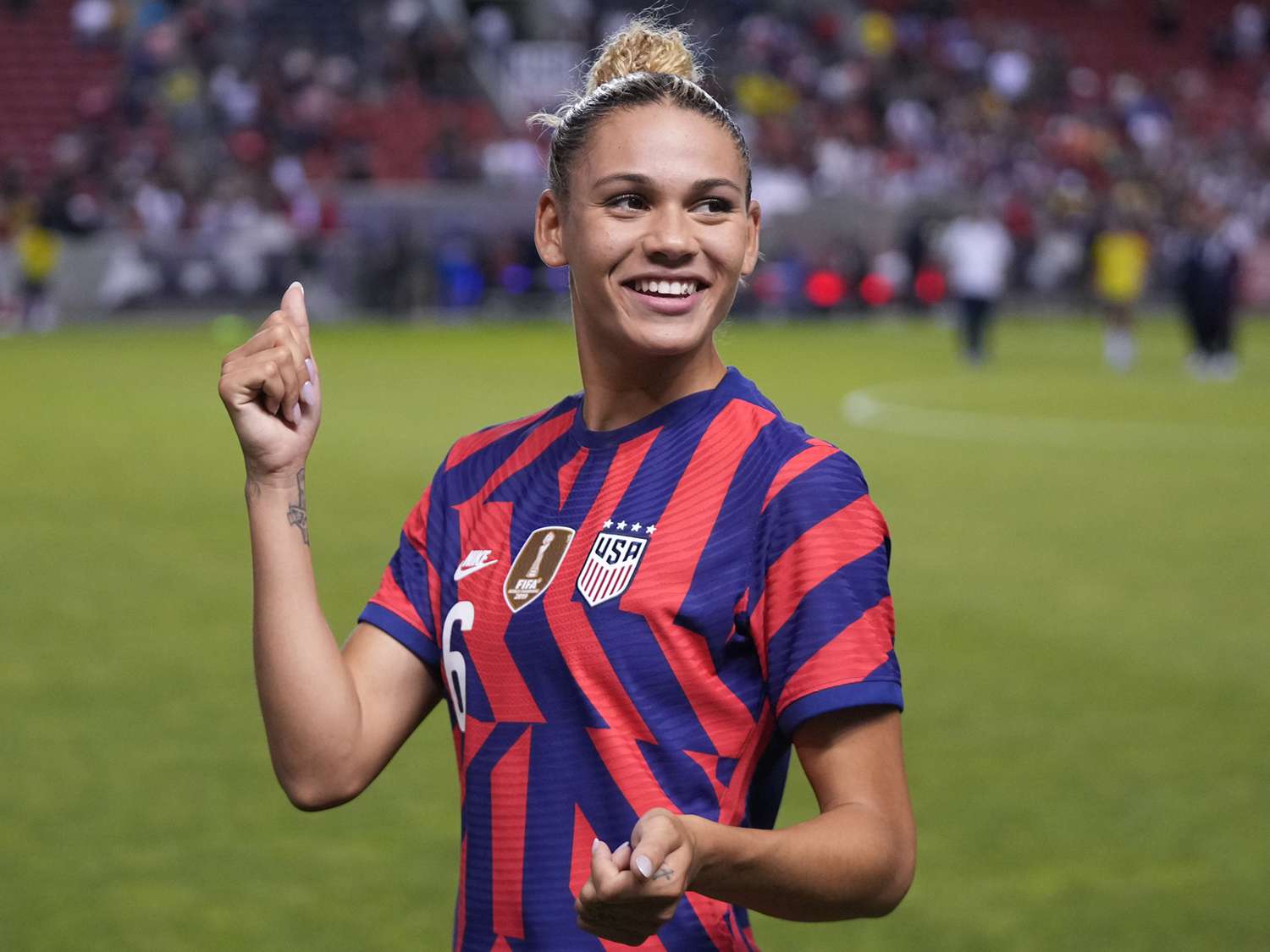
Paris 2024 was where it all crystallized. Under a new era for the program, Rodman became one of the most dangerous attackers in the competition, and her quarterfinal winner against Japan, struck from a tight angle in extra time, became one of the signature images of the Games. With it, she became the youngest American to score in an Olympic knockout match in two decades. The United States went on to win gold, and Rodman left France with a medal, a viral goal, and a reputation that no longer needed any qualifying explanation about her father.
Ad SpaceIn-Article - 300x250
Advertisement
That stretch also cemented her individual standing in the global game. She has been a two-time finalist for the Ballon d’Or Féminin, the sport’s most prestigious individual prize, and a finalist for NWSL MVP, the kind of accolades that place her in conversations reserved for the very best players in the world.
Her game, and what makes her different
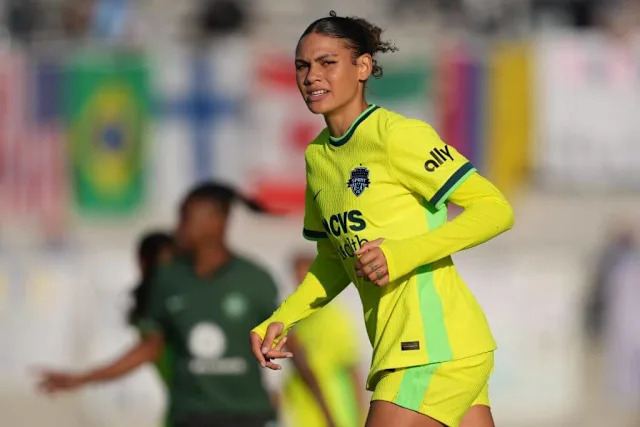
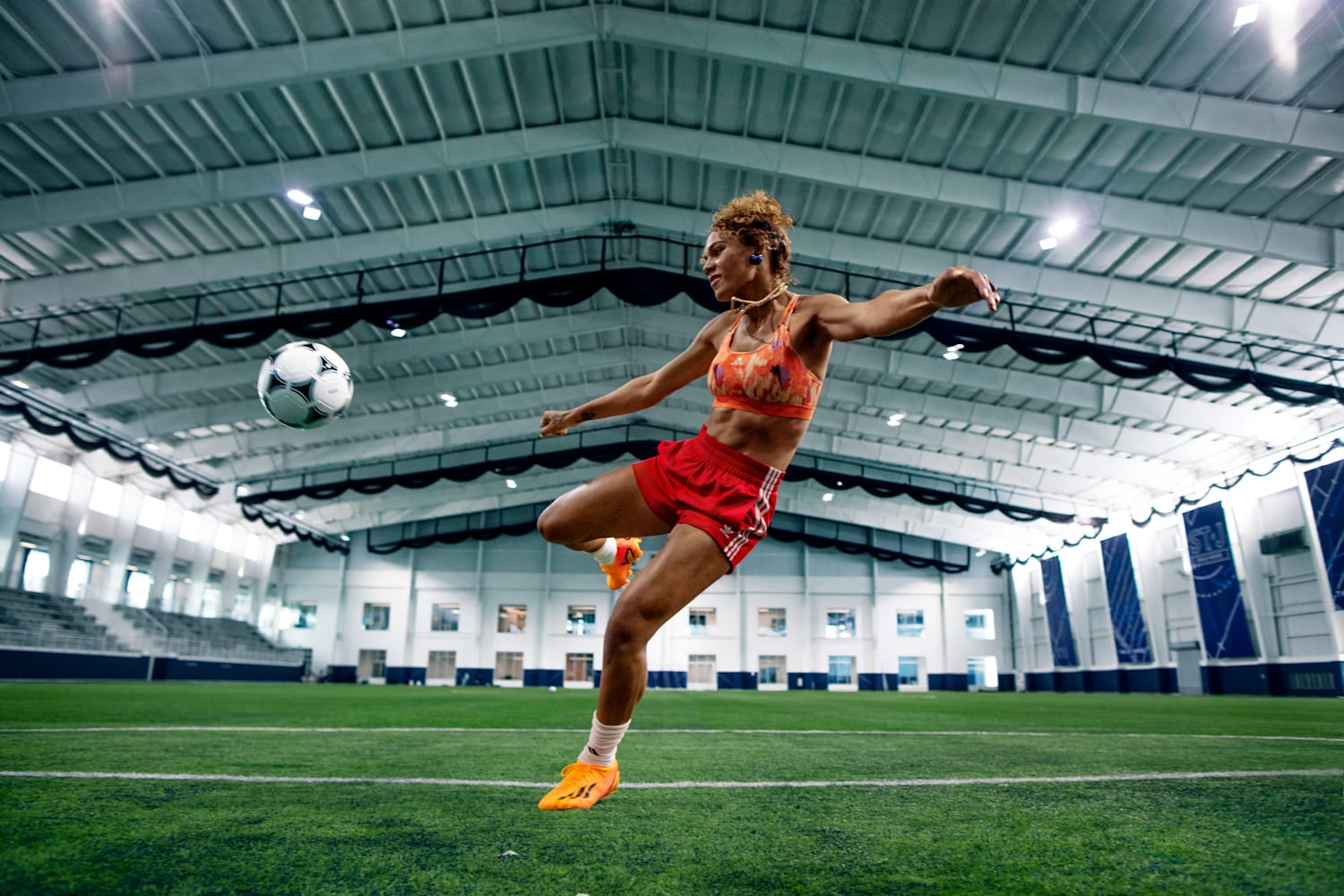
Strip away the celebrity and the storylines, and Rodman is, at her core, a problem defenders cannot solve cleanly. She plays wide and attacks the goal directly, combining genuine top-end speed with a low center of gravity that lets her change direction without losing momentum. Defenders who give her a half-step of space watch her accelerate into it. Defenders who crowd her watch her cut back inside and shoot.
Her finishing, as the Japan goal showed, is not the tidy tap-in variety. She is at her most dangerous arriving at speed and striking across her body into the far corner, the sort of goal that does not depend on a perfect setup. She is also a creator, comfortable putting the ball into dangerous areas for teammates, which is why her assist totals have always matched her scoring. That combination of explosiveness and end product is rare, and it is the reason coaches have leaned on her to be a difference-maker rather than merely a contributor.
The name she carries and the one she made
The contrast between father and daughter has become its own kind of story, and Rodman has handled it with a maturity that outpaces her years. Dennis Rodman built his legend on disruption, on being the most unpredictable man in any room. Trinity built hers on the opposite: discipline, consistency, and the willingness to show up across a long professional season and a brutal international calendar.
The clearest sign that she has eclipsed the association came in early 2026, when the Washington Spirit and Rodman reached a landmark agreement. In January 2026, she signed a three-year contract running through 2028, reported to be worth more than two million dollars annually including bonuses. According to her representation, the deal made her the highest-paid player in NWSL history and the highest-paid female soccer player in the world, surpassing the figures previously associated with Spain’s Ballon d’Or winner Aitana Bonmatí.
The path to that signature was not smooth. Rodman and the Spirit initially agreed to terms in late 2025, but NWSL commissioner Jessica Berman vetoed the original structure over concerns about a sliding pay scale tied to the league’s media-rights timeline. The two sides reworked it in January 2026, and the league later introduced what became known informally as the “Rodman Rule,” a High Impact Player provision allowing clubs to spend up to one million dollars above the salary cap to keep marketable stars at home. A rule named after you, written because of your value, is about as clear a statement of legacy as a sport can offer. The recognition kept coming: in June 2026, she was named to the inaugural TIME100 Sports list, alongside Spirit owner Michele Kang, cited among the most influential figures shaping global sport.
The injury that tested her
The story has not been one long upward line. A back injury shadowed Rodman across much of the period after the Paris gold, keeping her away from the national team for roughly 13 months spread across several camps. She returned to the field, scored within minutes of a comeback appearance against Brazil at SoFi Stadium in April 2025, and then learned the hard way that adrenaline had masked unresolved problems in her back.
She has been candid that the recovery was longer and lonelier than the highlight reels suggest, a stretch of rehabilitation rather than glory. By late 2025 she was back in national-team camps, and by 2026 she was healthy and producing again. Through the first stretch of the 2026 NWSL season she started every match for the Spirit and shared the team lead in both goals and assists, and she earned call-ups to the USWNT for friendlies against Brazil. For an athlete whose value rests partly on explosiveness, returning from a back issue without losing that burst was its own kind of victory.
The relationship and the spotlight
Rodman’s profile expanded beyond soccer when her relationship with American tennis player Ben Shelton became public in March 2025, confirmed shortly after with a so-called hard launch on social media. The two have since become fixtures in each other’s worlds, with Rodman regularly spotted in Shelton’s player box at tournaments and Shelton crediting her presence with a run of good results, half-jokingly calling her his lucky charm. It is a high-wattage pairing of two young American athletes, and the couple have kept the public-facing version of it light and supportive rather than dramatic.
The brand beyond the pitch
The on-field success and the personal visibility have made Rodman one of the most marketable figures in women’s sport. Beyond her club salary, she has built an endorsement portfolio that reportedly draws in roughly an additional seven figures a year, with brand associations spanning major names in apparel, beverages, eyewear and travel. Estimates of her overall net worth in 2026 generally land somewhere in the low-to-mid single-digit millions, figures that will keep climbing as the record Spirit contract pays out.
She has also crossed comfortably into lifestyle and modeling spaces, the kind of crossover appeal that has historically been hard for women’s soccer players to access. The difference now is that the platform is hers. Where her father’s fame was built partly on spectacle and provocation, Rodman’s reach is anchored to performance first and personality second, a more durable foundation in an era when audiences can smell manufactured celebrity.
Where she goes next
The arc from here points toward the next major international cycle, with the Spirit contract keeping her in Washington through 2028 and her place in the United States attack secure when fit. The questions around her are no longer about potential or about her surname. They are the questions asked of any elite player: can she stay healthy, can she carry a national team in the biggest moments, and can she add the trophies that turn a great career into a defining one.
What is already settled is the part that once seemed least likely. A child who described having no real father, who lived through instability and watched a parent become a tabloid figure, turned the family name into something she could claim on her own terms. The goal in Paris, the record contract, the rule written in her honor, the place on a list of the world’s most influential athletes, these are not reflections of Dennis Rodman’s fame. They are receipts for a legacy Trinity built herself, one acceleration and one finish at a time.
Ad SpaceIn-Article - 300x250
Advertisement
Share
Get the recap
Loved this story? Get more like it.
Join readers who get our weekly entertainment recap - the stories worth your time, delivered every Friday.
No spam. Unsubscribe anytime. By signing up you agree to our Privacy Policy.