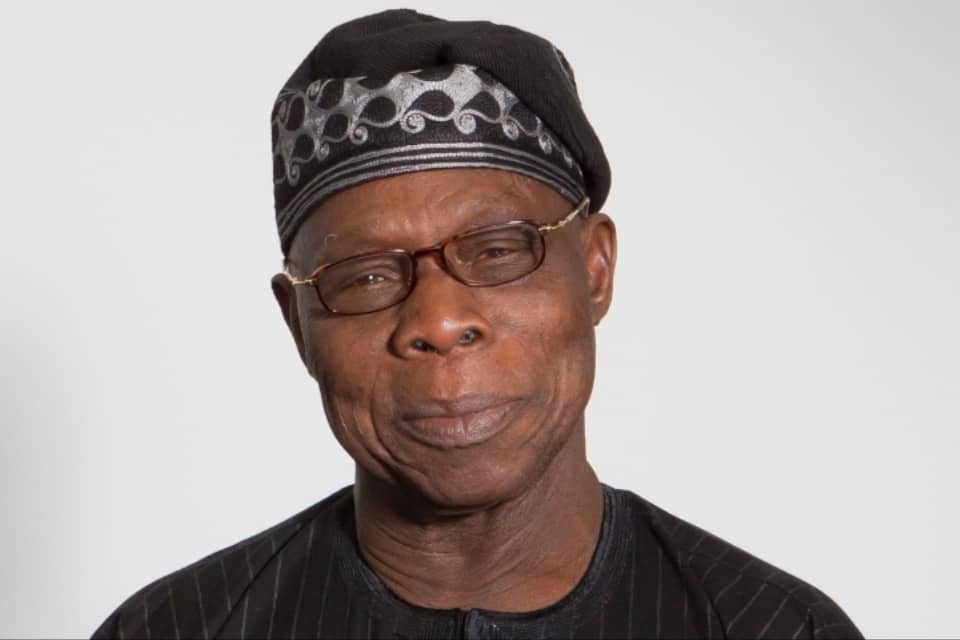
Chief Olusegun Obasanjo is a Nigerian politician who has served both as a military head of state and a civilian president in the past. This biography about the popular political leader, Obasanjo, will provide key facts and details about his public life.
There is rarely a discussion on the political history of Nigeria that does not require some mentions of the name of this icon, who has been nicknamed ‘Baba Africa’. His exploits during his time as a soldier are also worth exploring. This biography about Obasanjo will definitely leave no stone unturned.
Also, you will see details about Obasanjo’s ideologies and political stances in this article. To make it a better reading experience, we have earmarked the vital points and summarised them into 10 quick facts, which you can read in the next section of this article.
10 important facts about Obasanjo
- Obasanjo was born as Matthew Olusegun Aremu Obasanjo on 5th March 1937. He is, therefore, 83 years old in 2020.
- He sponsored himself through secondary school by doing menial jobs like farming, firewood collection and fishing.
- Obasanjo joined the officer cadet army training in the Nigerian Army to pursue his dream of becoming a Civil Engineer because he could not afford the fees required to study at the University of Ibadan.
- When Yakubu Gowon chose Olusegun Obasanjo to replace Colonel Benjamin Adekunle in May 1969 during the Biafran war, he had no experience in combat.
- Obasanjo was instrumental in ending the Nigerian Civil War within nine months of taking over the command of the Nigerian Army.
- He took over as the military head of state from General Murtala Mohammed in 1976.
- Obasanjo notably established the Nigerian Labour Congress (NLC), Nigerian National Petroleum Corporation (NNPC), Land Use Decree, Education Act and so on during his time as a military head of state.
- He was critical of the government during Sani Abacha’s time and was jailed by the dictator from 1994 to 1998.
- Obasanjo was the subject of major criticism by popular Nigerian activist and musician, Fela Kuti.
- Olusegun Obasanjo was democratically elected as president of Nigeria in 1999 and 2003 under the umbrella of the Peoples Democratic Party (PDP).
Also read: Abba Kyari Biography: Early life, career, personal life, death & legacy
Olusegun Obasanjo Biography: Early life and education
Obasanjo’s given name at birth was Matthew Olusegun Aremu Obasanjo. He was born in the village of Ibogun-Olaogun in Abeokuta, Ogun State, southwest Nigeria. According to his passport, Obasanjo was born on 5th March 1937. This is a source of contention as many claim that his original date of birth is unknown and that the official date is an estimate.
Obasanjo’s father was Amos Adigun Obaluayesanjo ‘Obasanjo’ Bankole and his mother was Bernice Ashabi Bankole. They raised him as a Baptist Christian in the only church in their village set up by US missionaries of the Southern Baptist Church.
He was the first child of the family and his parents will go on to birth eight more children. Seven of them did not survive childhood and only Obasanjo and his sister saw adulthood. He began primary school at the age of 11 in his village and then moved on to Baptist Day School in Abeokuta in 1951. A year later, he joined Baptist Boys’ High School.
According to sources, during his secondary school days, Obasanjo rejected his Christian name “Matthew” as a sign of anti-colonialism. At the time, his father had left the family. Since his mother had to engage in trading to feed him and his sister, he started menial jobs like farming, firewood collection and fishing to pay his school fees.
When he wanted to take his secondary school exams in 1956, Obasanjo had to borrow funds. During this time, he was already dating his first wife, Oluremi Akinlawon. The couple got engaged to marry in 1958. That same year, he moved to Ibadan and got a teaching job. He then sat for the entrance examination at the University of Ibadan but after passing, he found that he could not afford the fees.
Thus, he decided to become a civil engineer and joined the officer cadet army training in the Nigerian Army. Several years later after his retirement, Obasanjo got a PhD in theology from the National Open University of Nigeria.
Olusegun Obasanjo Biography: Military career (1958 - 1966)
Obasanjo joined the Nigerian Army in 1958 without the knowledge of his family because he believed they would not have supported his decision. At the time he joined the army, the British were about to relinquish control to Nigerians in preparation for the country’s independence. The move required more locals to take higher positions and more responsibilities in the army.
Thus, Obasanjo and others were sent to a Regular Officers’ Training School at Teshie in Ghana. In September 1958, he was chosen to attend further training at Mons Officer Cadet School, a former military training ground in Aldershot, southern England. While he was abroad, he stayed in touch with Oluremi Akinlawon, his fiancé via letters and presents. His parents died within a year of each other during the duration of his foreign training.
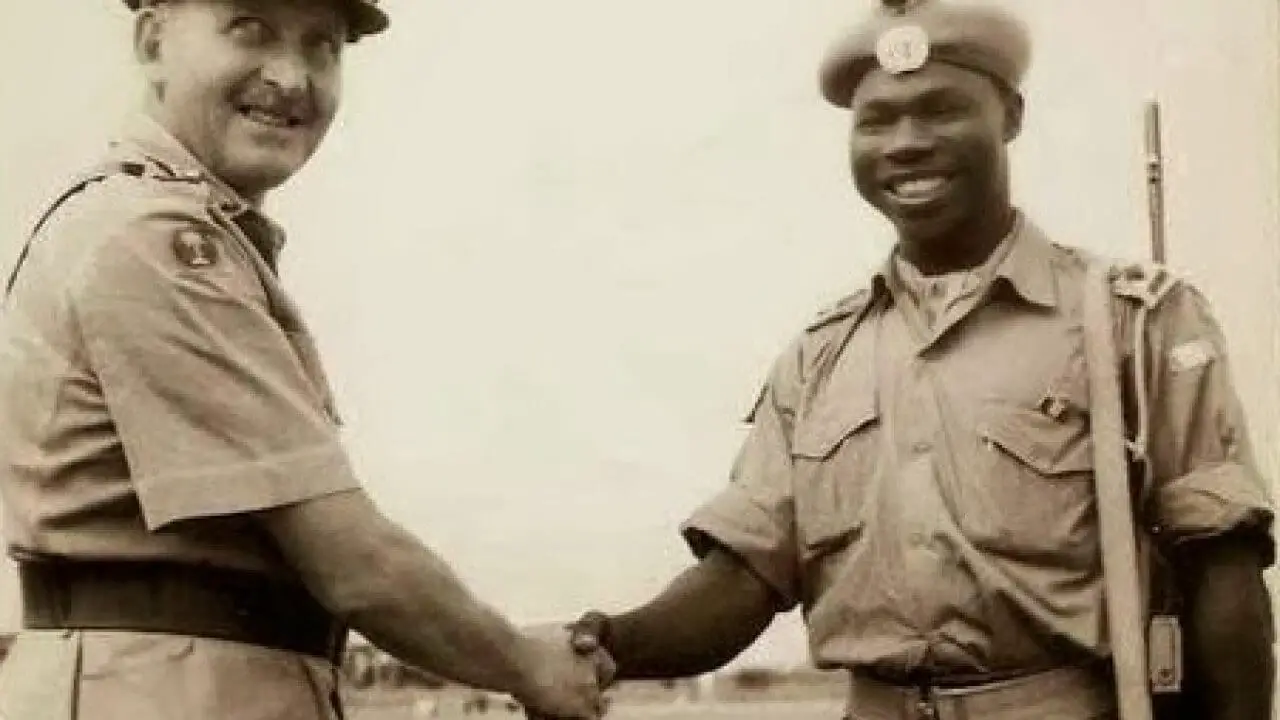
On his return to Nigeria in 1959, Obasanjo was first posted to Kaduna and after Nigeria’s independence in 1960, he was part of the Fifth Battalion sent to the Congo as part of a UN peacekeeping mission. While he was protecting the lives of civilians, he was captured by Soldiers who had mutinied against Patrice Lumumba’s government. They had thoughts of executing him but had to release him due to orders.
Obasanjo returned with the men in 1961 and he acquired a car. He then joined the Army Engineering Corps on transfer and was stationed at the Royal College of Military Engineering in England. On graduation, he was described as the best Commonwealth student ever.
The Nigerian Army ordered him to return in 1963 and he took command of the Field Engineering Squadron based at Kaduna. Obasanjo became a major in 1965 after steadily rising through the ranks in the army. At the same time, he was making more and more money and was buying land and property in Ibadan, Kaduna, and Lagos.
In 1965, the authorities sent Obasanjo to India where he studied at the Defence Services Staff College in Wellington and then the School of Engineering in Poona.
Olusegun Obasanjo Biography: Military career (1966 - 1970)
On returning to Nigeria from India in January 1966, the first military coup led by Major Emmanuel Ifeajuna against the Prime Minister Abubakar Tafawa Balewa’s administration was already underway. The coup was popularly called ‘an Igbo plot’, although conspirators included non-Igbos, some coup targets were Igbos, and General Ironsi, who prevented the coup was himself an Igbo.
Obasanjo was among those who warned that the country’s situation could degenerate into a civil war. Not long after, the second coup led by Yakubu Gowon took place. It involved the killing of about 200 Igbo soldiers. Olusegun Obasanjo was in Kaduna at the time and northern soldiers from the Third Battalion tortured and killed Igbo soldiers.
He fled to Maiduguri with his wife under the protection of Governor of Northern Nigeria, Hassan Katsina. After some time, he sent his wife to Lagos and returned to Kaduna until January 1967. He had been the most senior Yoruba officer in the northern part of the country until he was posted to Lagos as the Chief Army Engineer.
In May 1967, Odumegwu Ojukwu declared the independence of the Igbo-majority areas in the southeast and named it the Republic of Biafra. In July of the same year, two months after the Biafran secession, Obasanjo was posted to Ibadan as commander of the Western State.
Obasanjo’s contributions to the Nigerian Civil War
On 6th July 1967, a civil war broke out between the Nigerian Army and the Biafran Army. One part of the Biafran Army tried to cross the Niger Bridge but Obasanjo had already blocked their progress. The column of the Biafran Army was led by Victor Banjo, a Yoruba military officer, but he could not persuade Obasanjo to let them cross.
He was then posted to serve as the rear commander of Murtala Mohammed’s Second Division that operated in the Midwest. Obasanjo was based in Ibadan at the time and he ensured supplies got to the Second Division while also teaching a course in military science at the University of Ibadan. He resigned from the Western State Executive Council due to unrest which later led to a riot that saw soldiers kill ten rioters. Obasanjo notably ordered a court inquiry into the killings.
Despite not having prior combat experience, Yakubu Gowon chose Olusegun Obasanjo to replace Colonel Benjamin Adekunle in May 1969, who had been leading the attack on Biafra up until then. Obasanjo took charge of the about 40,000 troops and began repelling the Biafran attack on Aba from his base in Port Harcourt.
You may also like: Revisiting history from the perspective of British 1948 ‘Challenges in Nigeria’ documentary [VIDEO]
He gained the confidence of his men by regularly showing up at the front of the battle lines despite being injured at some point. He also carried out Operation Finishing Touch, which involved his men attacking Umuahia in December 1969. They took the city, one of the opposition’s strongholds on 25th December 1969.
With not much fight left, Obasanjo launched the Operation Tail Wind in January 1970 and captured the indigenous airstrip in Uli, Anambra State. This led to the Biafran leaders surrendering. He met with the Biafran military commander Philip Effiong the next day after the surrender and urged some leaders of the secessionist group to go to Lagos to surrender to Yakubu Gowon while asking the soldiers to drop their weapons.
Also, he ordered his men to remain in their barracks to prevent them from carrying out reprisal attacks on unarmed citizens. The Third Division of the Nigerian Army carried out some attacks and Obasanjo was tough on them. He allegedly ordered the soldiers who looted to be flogged while those who raped were shot.
He was in charge of bringing the secessionist States back into Nigeria. His first move was to restore water supply to all of them and by May 1970, all major towns were reconnected to water supply according to sources.
Olusegun Obasanjo Biography: Post-civil war
After the civil war, Obasanjo was posted to Lagos where he was on the board of the decommissioning committee that sought to reduce the troop numbers in the Nigerian Army. In January 1975, he was appointed as Commissioner for Works and Housing. Gowon had said he would hand power over to a civilian administration by 1976 but the ban on political parties saw that he did not make much progress on that front.
By July 1972, Shehu Musa Yar’Adua and Joseph Garba carried out a coup that removed Gowon from power. According to reports, the plotters had not informed Obasanjo about this because he was popular for not supporting coups. However, they recognised his ability and potential. Thus, the 1975 Nigerian coup plotters chose him to be the second in command to General Murtala Muhammed, who will serve as head of state. While Danjuma would be the third.
This new government was to have its decisions vetoed by a Supreme Military Council. The government introduced strategies that curbed inflation, formed an investigation bureau for corruption, replaced military governors with new officers that reported to them, and fired 11,000 officials from the civil service.
In October 1975, the government announced that there would be an election in 1979 and that a civilian government would take over. Obasanjo was responsible for selecting the 49 committee members to draft a new constitution. This is popularly called the Irikefe Commission and it led to the formation of new states, one of which was Ogun State with Abeokuta as its capital. Obasanjo and Danjuma were promoted to the rank of Lieutenant-General.
Obasanjo was popular for his Pan-African views. He had supported the MPLA government of Angola because its rivals, FNLA and UNITA, were backed by the white majority government in South Africa. He even led the Nigerian delegation that attended an MPLA anniversary in Luanda in February 1976.
In February 1976, Colonel Buka Suka Dimka launched a coup and assassinated General Murtala Mohammed. According to reports, an attempt was made on Obasanjo’s life but he survived. Dimka’s coup eventually failed as he was not popular among other military officers and he eventually fled from the country.
Olusegun Obasanjo Biography: Military head of state (1976 - 1979)
The Supreme Military Council urged Obasanjo to replace Murtala as the head of state while he expressed his desire to resign from the government. He eventually conceded and as the military head of state, 39 people who were accused to have taken part in Dimka’s coup were executed.
To garner support from the North, Obasanjo made General Shehu Yar’Adua second-in-command and Chief of Staff while General Theophilus Danjuma was his third-in-command and Chief of Army Staff. Despite running a military government, he encouraged debate and consensus among the Supreme Military Council.
In his 1976 budget, Obasanjo tried once again to stem inflation. He cut government spending on expensive projects and instead spent more on education, health, housing and agriculture. However, he engineered the borrowing of about $5.9 billion from the World Bank and International Monetary Fund. Also, his government had no population control policy and the country’s population continued to grow exponentially.
Notably, the Obasanjo regime defined most major industries as essential services and he banned strikes within them by authorising the arrest of erring leaders. Additionally, in 1978, he formed the Nigerian Labour Congress by merging all 42 unions in the country.
Also, during his time as military head of state, Olusegun Obasanjo carried out major irrigation schemes in northern Nigeria. He launched two new hydroelectric projects and a thermal plant to meet electricity challenges. He merged the Ministry of Petroleum Resources with the Nigerian National Oil Corporation to form the Nigerian National Petroleum Corporation (NNPC).
He popularised food importation instead of growing them locally, a practice that would pose problems for the country later in the future. But, popularly, Obasanjo will be remembered for issuing the 1978 Land Use Decree that gave the state property rights over all land. The decree stopped land hoarding but hurt the feelings of land-owners.
During his time as a military head of state, Obasanjo introduced a free but voluntary Primary Education Act and free secondary education in technical subjects. His decision to stop issuing loans to university students caused protests across the country. It led to fatal shootings in Lagos and Zaira and Obasanjo had to close down many universities while banning student political activities and associations like the National Union of Nigerian Students.