Mauricio Pochettino: The Coach Who Took On the US Soccer Challenge
Tristan Melo··10 min read
Ad SpaceArticle Top - 728x90
Advertisement
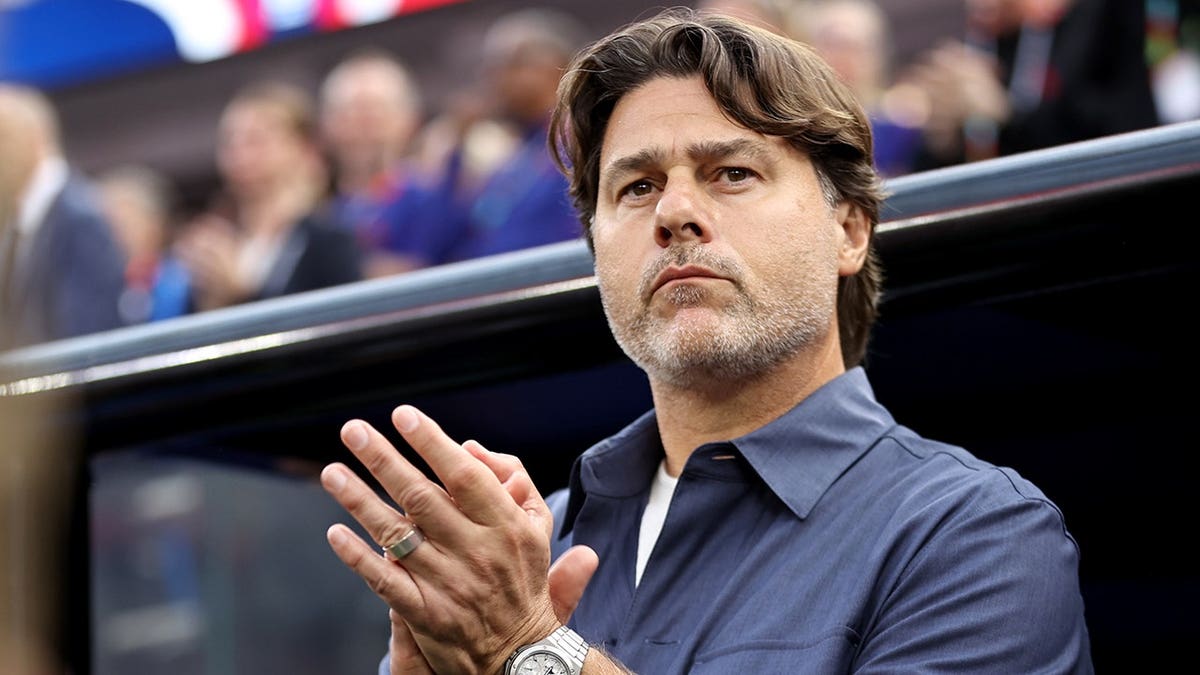
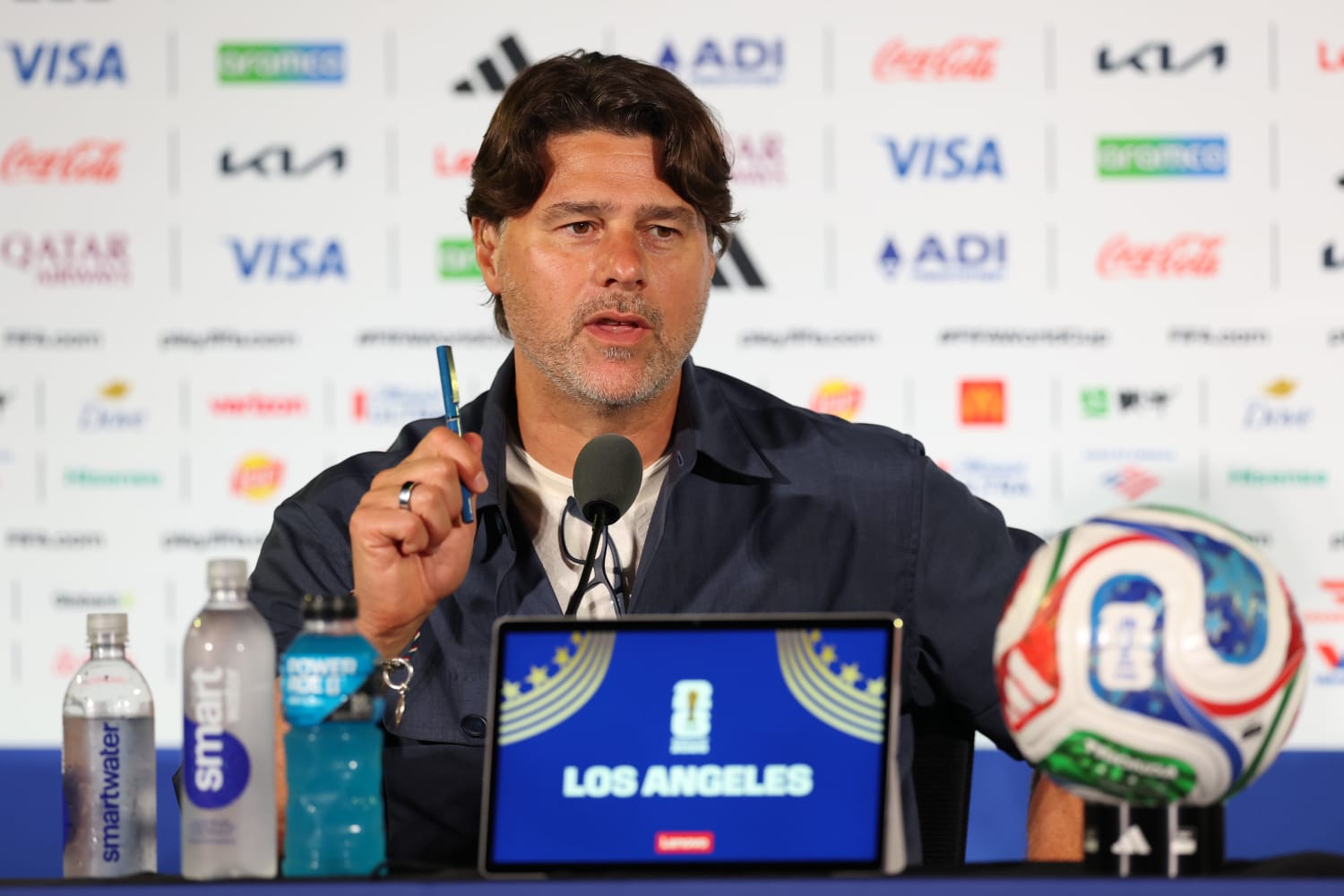
Every job in international football carries pressure, but few carry a weight quite like steering the host nation. The home crowd is a gift and a trap at the same time. Fill a stadium with believers and the noise can lift a team beyond its talent, yet that same noise turns into a verdict the moment a pass goes astray. A coach who fails abroad can fade quietly into the next appointment. A coach who fails at home, in front of a country that was promised something, becomes part of the national memory. That is the bargain Mauricio Pochettino accepted when he agreed to lead the United States men’s national team into a World Cup played on American soil.
The Argentine took the role knowing exactly what he was walking into. He had managed in the goldfish bowl of London, where every Tottenham result was dissected in real time. He had sat in the dugout at Paris Saint-Germain, where winning the league still left supporters unsatisfied. None of that, though, is quite like the strange responsibility of representing a host nation at a global tournament. The stage is larger, the expectation broader, and the patience thinner. For a man who has spent his whole career chasing a defining trophy, it is the kind of challenge that either crowns a reputation or complicates it.
An Argentine grounding that never left him
Pochettino was born in 1972 in Murphy, a small farming town in Argentina’s Santa Fe province, and the values of that upbringing have shaped how he talks about football ever since. He came up through Newell’s Old Boys, the Rosario club famous for producing thinkers as much as players, and won a league title there before his twentieth birthday. A central defender by trade, he was tall, combative, and intelligent about space, the kind of player who organised those around him rather than relying on raw athleticism.
His move to Europe took him to Espanyol in Barcelona in 1994, and the Catalan club became the emotional centre of his playing life. He helped Espanyol win the Copa del Rey in 2000, the club’s first major trophy in six decades, a victory that bonded him to the city in a way that would matter later. He also spent time at Paris Saint-Germain and Bordeaux in France, broadening a footballing education that crossed three countries and several languages. Internationally, he earned twenty caps for Argentina, featuring at the 1999 Copa América and the 2002 World Cup. That tournament gave him an unwanted footnote, a penalty conceded against England that David Beckham converted, a reminder that the margins at a World Cup can follow a player for a lifetime.
What carried through from those years was a worldview. Pochettino has always spoken about football as something built on relationships, trust, and emotional connection rather than spreadsheets alone. The discipline of the Argentine game and the artistry of the Spanish one both live in his coaching, and they explain why players so often describe playing for him as feeling personally invested in his success.
From Espanyol to Southampton, a manager takes shape
Management arrived almost by accident. In 2009, Espanyol turned to Pochettino, then a club legend rather than a proven coach, to rescue a struggling side, and he kept them up against the odds. That escape act announced a method. His teams pressed high, hunted the ball in packs, and refused to sit back and protect leads. It was demanding, physically and mentally, and it required players who bought into a level of intensity that not every squad could sustain.
England came calling in 2013 when Southampton hired him, a bold appointment given he spoke little English at the time. What he delivered silenced the doubters. Southampton played some of the most attractive, aggressive football in the Premier League, and young players visibly improved under his guidance. The wider football world took notice, and within a year a bigger club had seen enough.
The Tottenham peak and the night in Madrid
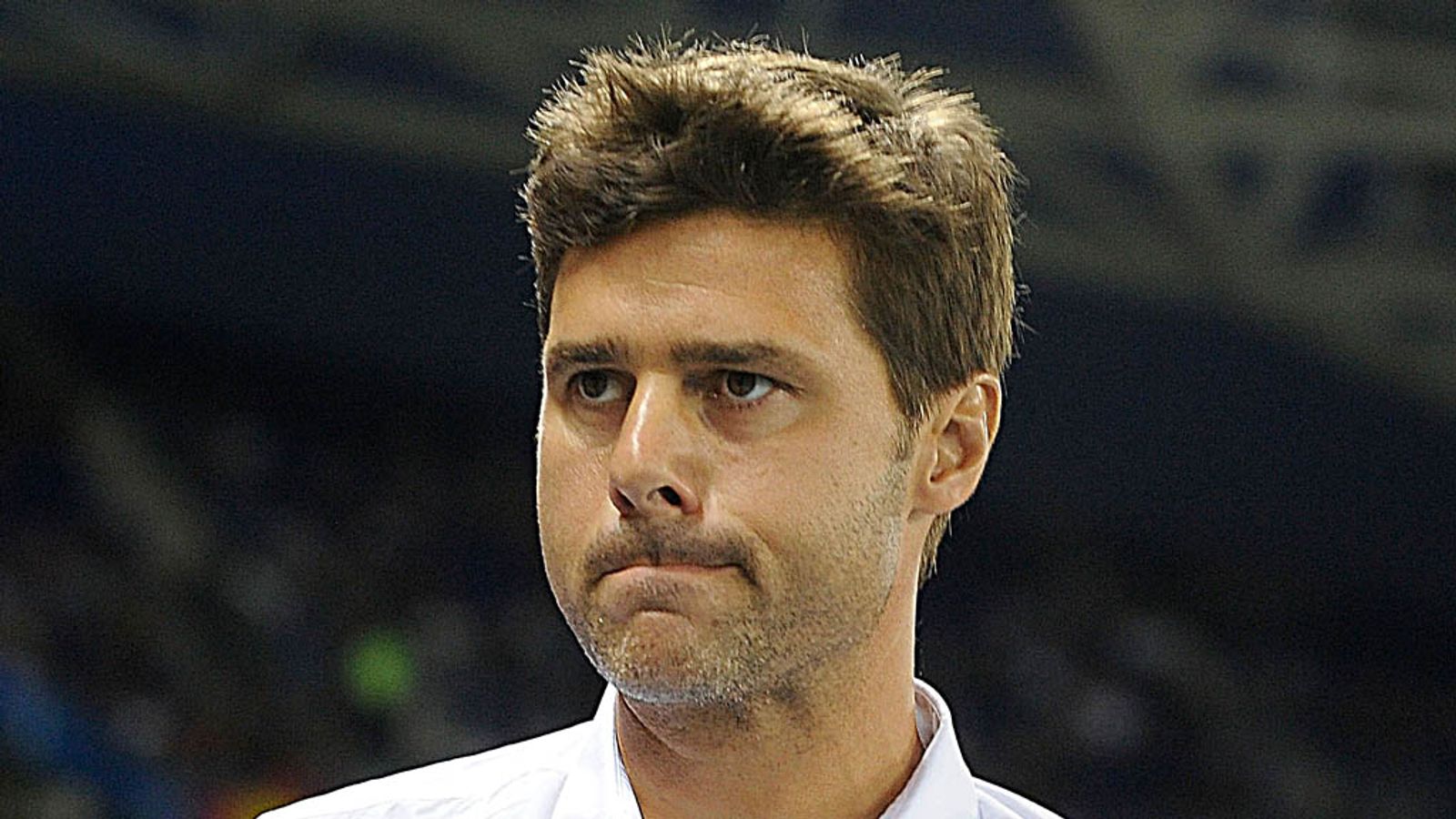
The move to Tottenham Hotspur in 2014 turned Pochettino from a promising coach into one of the most admired managers in Europe. Over five years he built a team in his own image, energetic, fearless, and capable of challenging the established giants without their resources. He developed Harry Kane into one of the world’s most lethal strikers and turned Son Heung-min into a global star, and the partnership between them defined an era at the club. Spurs finished as high as second in the Premier League and became regular Champions League participants, all while operating on a tighter budget than their rivals and moving into a brand new stadium.
The defining run came in the 2018-19 Champions League. Tottenham survived a group stage they nearly exited, then produced one of the great comebacks in the competition’s history against Ajax in the semi-final, scoring a last-gasp goal to reach the final. That match against Liverpool in Madrid ended in a 2-0 defeat, and Spurs fell short of the trophy that would have validated everything. It remains the closest Pochettino has come to a major continental prize. He was dismissed in November 2019 with the team struggling in the league, but the affection for what he had built never really faded. Many supporters still regard that side as the best version of the club in the modern era.
The PSG and Chelsea chapters
His next stops were among the biggest names in the game, though neither delivered the legacy of his Tottenham years. Pochettino took over at Paris Saint-Germain in early 2021, inheriting a squad stacked with superstars including Kylian Mbappé and, soon after, Lionel Messi. He won the French league title and a domestic cup, yet in a club judged almost entirely on Champions League success, league trophies were treated as the bare minimum. Managing a dressing room of that size and ego is its own particular art, and his time in Paris was ultimately seen as a near miss rather than a triumph.
A return to England followed with Chelsea for the 2023-24 season, a club in upheaval after heavy spending on a young, unsettled squad. Pochettino steadied the ship and the team improved as the campaign went on, but he and the club parted ways at the end of the season. By the time the United States came looking for a coach, he was a free agent with an elite résumé and an obvious hunger to prove there was a defining chapter still to be written.
Ad SpaceIn-Article - 300x250
Advertisement
Why US Soccer wanted him
The appointment, confirmed in the autumn of 2024, was a statement of ambition. The United States Soccer Federation had spent years building its programme around a homegrown coaching philosophy, and the decision to hire a manager of Pochettino’s pedigree marked a clear shift. His contract was reported to be worth around 6 million dollars a year, which according to reporting at the time made him the highest-paid coach in the history of the US men’s programme. That reporting also noted the salary was funded in significant part by philanthropic gifts from wealthy backers including hedge fund figure Kenneth Griffin, which itself said something about how seriously the federation was treating the home World Cup.
The logic was straightforward. A host nation gets one chance to make a generational impression on its own sport, and the federation wanted a coach who had operated at the very top, who understood elite players, and who could handle the glare of a tournament spotlight. Pochettino brought all of that, along with a track record of improving young talent, which mattered given the youth of the American pool. The bet was that his experience and his man-management could squeeze the maximum out of a squad many felt was the most gifted in the country’s history.
The squad he inherited
That talent is real. The American player pool Pochettino took over is the deepest the country has produced, anchored by Christian Pulisic of AC Milan, whose career at the elite European level gives the team a genuine difference-maker. Around him sit Weston McKennie of Juventus, the combative Tyler Adams as the engine in midfield, and Folarin Balogun, the Monaco striker who chose to represent the United States and offers the kind of clinical finishing the team had long lacked. Tim Weah, Yunus Musah, and a generation of players competing at major European clubs round out a group that, on paper, can trouble anybody.
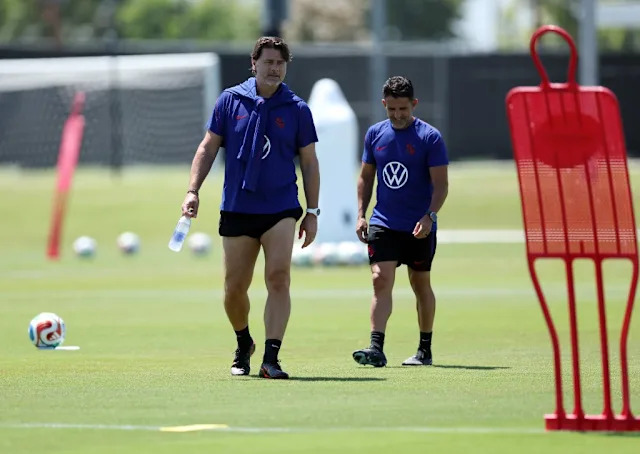
Pochettino’s job was never to assemble that talent, it was to weld it into a coherent, trusting unit under pressure. His first eighteen months brought a mixed picture. He guided the side to a fourth-place finish in the Concacaf Nations League in March 2025 and a runner-up showing at the Gold Cup in July 2025, results that flashed both promise and inconsistency. A pair of heavy friendly defeats in early 2026, a 5-2 loss to Belgium in March and a 2-0 defeat to Portugal that same month, prompted real anxiety about whether the team would peak in time. For the 26-man World Cup roster, he balanced thirteen players who had featured in Qatar in 2022 with thirteen tournament newcomers, a blend of experience and fresh energy.
The home World Cup mission
The tournament itself answered some of those early doubts. The United States opened its home World Cup with a 4-1 win over Paraguay, with Balogun scoring twice to settle nerves across the country. On 19 June 2026 the team beat Australia 2-0, managing the result even without Pulisic, who was carrying a calf injury. Combined with Paraguay’s win over Turkey the same day, that victory secured top spot in Group D, the first time the United States had won its group at a World Cup since 2010. For a team that had looked shaky in the spring, it was the strongest possible start, and it shifted the conversation from worry to genuine belief.
That swing in mood captures exactly why the host-nation job is so unforgiving and so rewarding at once. Two results turned the public temperature from doubt to excitement almost overnight. Pochettino now leads a side that has done the first part of its job, navigating the group stage as winners and earning a more favourable path into the knockout rounds. What comes next belongs to the matches still to be played, but the platform he has built is the one the federation hoped for when it hired him.
What success would mean
For the United States, a deep run on home soil would be transformative in a way that goes beyond results. Football still competes for attention in a crowded American sporting landscape, and a host nation that captures the public imagination during a World Cup can accelerate the game’s growth by years. The 1994 World Cup, the last one staged in the country, helped birth the modern domestic league. A memorable 2026, led by a recognisable and respected coach, could do something similar for a new generation of fans and players.
For Pochettino personally, the stakes are just as high. He has been one of the most respected coaches of his era without ever lifting a trophy that the wider public considers a true crown. A strong World Cup as the architect of a host nation’s run would rewrite that narrative entirely, turning the nearly man of Madrid into a coach who delivered on the biggest stage of all. The opportunity is rare, and he knows it.
What his hire says about the global game
There is a bigger story sitting underneath all of this. A decade ago, the idea of an Argentine who built his reputation in London and Paris leading the United States at its own World Cup would have seemed unusual. Now it reads as a natural consequence of how thoroughly football has globalised. Coaching talent flows across borders as freely as players do, and federations increasingly look beyond their own shores for the expertise to compete at the highest level. The presence of an Argentine in the American dugout, a Spaniard or a German elsewhere, an Italian somewhere else again, reflects a sport that has become genuinely borderless at the elite level.
The American player pool tells the same story from a different angle. Pulisic at Milan, McKennie at Juventus, Balogun at Monaco, players who learned their trade in academies and leagues spread across continents, all converging under a coach shaped by Argentina, Spain, France, and England. That mix is the modern game in miniature. Pochettino’s appointment is not just a hire, it is a snapshot of where football has arrived, a world where the best ideas and the best people gather wherever the ambition is greatest. Right now, in a home World Cup summer, that ambition has gathered around a team in red, white, and blue, and around the Argentine who agreed to carry its weight.
Ad SpaceIn-Article - 300x250
Advertisement
Share
Get the recap
Loved this story? Get more like it.
Join readers who get our weekly entertainment recap - the stories worth your time, delivered every Friday.
No spam. Unsubscribe anytime. By signing up you agree to our Privacy Policy.