
When the lights came up at SoFi Stadium in Los Angeles on June 12, 2026, the official anthem of the FIFA World Cup did not sound like a single country. It sounded like three of them braided together. “Goals,” the track that opened the tournament, put Thai pop star Lisa, Brazilian icon Anitta and Nigeria’s own Rema on the same record, with production handled by a team that included the Brazilian duo Tropkillaz. The song layered fast K-pop energy, Brazilian funk pulse and Afrobeats percussion into one hook, and for a few minutes the loudest sound on the planet was a conversation between Lagos, Rio and Bangkok. Released on May 21, 2026, it became the soundtrack to a tournament hosted across three nations, and for Nigerian ears one detail stood out above the rest. The rhythm underneath Anitta’s verses and the rhythm underneath Rema’s were not strangers meeting for the first time. They were relatives reuniting after a very long time apart.
That reunion is the real story here, and it stretches back centuries before any stadium existed.
A World Cup Moment That Sounded Like Home

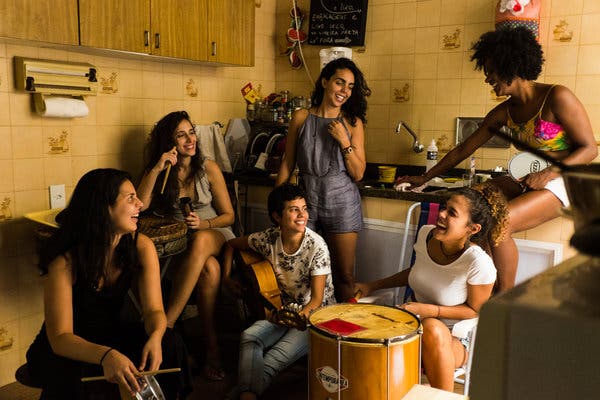
There is a reason a Brazilian funk groove can sit so comfortably beside an Afrobeats verse without either one feeling forced. The two rhythmic worlds were never separate to begin with. “Goals” works because Tropkillaz, a Brazilian production outfit fluent in the bounce of baile funk, were building on a percussive logic that an Afrobeats producer in Lagos already understands in his bones. The downbeats land in familiar places. The syncopation breathes the same way. When Rema steps onto a Brazilian-flavoured beat, he is not crossing a border so much as walking back into a house his ancestors helped build.
Football has always been a stage for this kind of cultural mirror. Brazil and Nigeria are two of the most football-obsessed nations on earth, and both pour their identity into the game and into the music that surrounds it. The 2026 anthem simply made the musical kinship audible to a mass audience. But the kinship itself was forged long before broadcasting existed, in the holds of slave ships and on the plantations of Bahia, where West African rhythm refused to die and instead became something new.
The Trans-Atlantic Roots: How Africa Shaped Samba
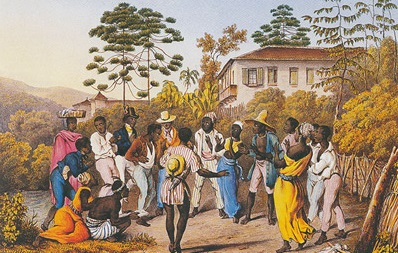
To understand why samba feels familiar to a Yoruba listener, you have to follow the people. Between the 1530s and the abolition of the trade in the nineteenth century, roughly four million enslaved Africans were transported to Brazil, more than to any other destination in the Americas. The earliest arrivals came largely from the Guinea coast. By the seventeenth century, populations from Angola and Congo had become dominant. Then, between roughly 1775 and 1850, a wave of Yoruba and Dahomean people arrived from the Gulf of Benin, from territories that are now Nigeria and Benin.
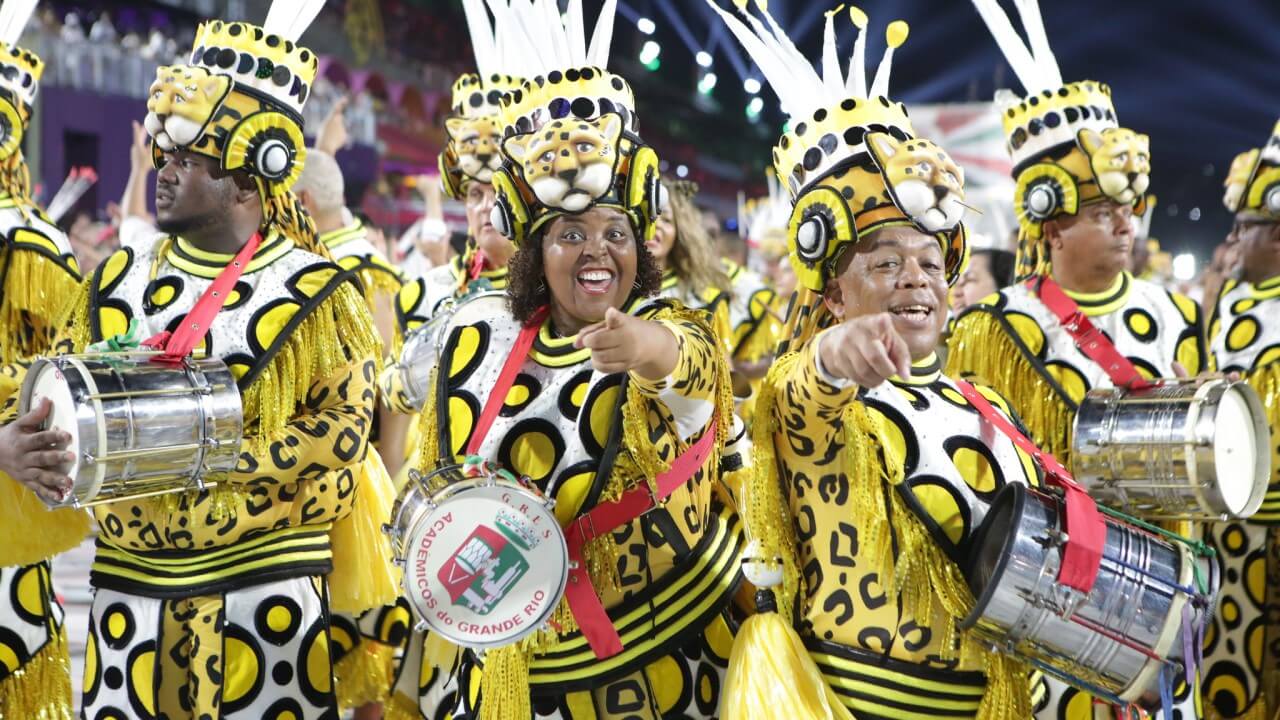
These people carried no possessions, but they carried rhythm, language and belief, and those proved impossible to confiscate. In the northeastern state of Bahia, where the largest share of enslaved Africans first disembarked, their drumming traditions, call-and-response singing and ceremonial dance survived and adapted. Out of that survival came Samba de Roda, the circle dance of Bahia widely recognised as the first form of samba. When Bahians later migrated south to Rio de Janeiro, they carried Samba de Roda with them, and it became the seed from which the carnival samba of Rio eventually grew.
The thread is unbroken. The samba that the world associates with Brazilian carnival did not appear from nowhere. It is a direct descendant of West and Central African musical practice, reshaped by the brutal conditions of slavery and the new world the enslaved were forced to inhabit. Strip samba down to its skeleton, the layered hand drums, the interlocking patterns, the bell that keeps time, and the African architecture is plain to see.
The Living Religion Inside the Rhythm
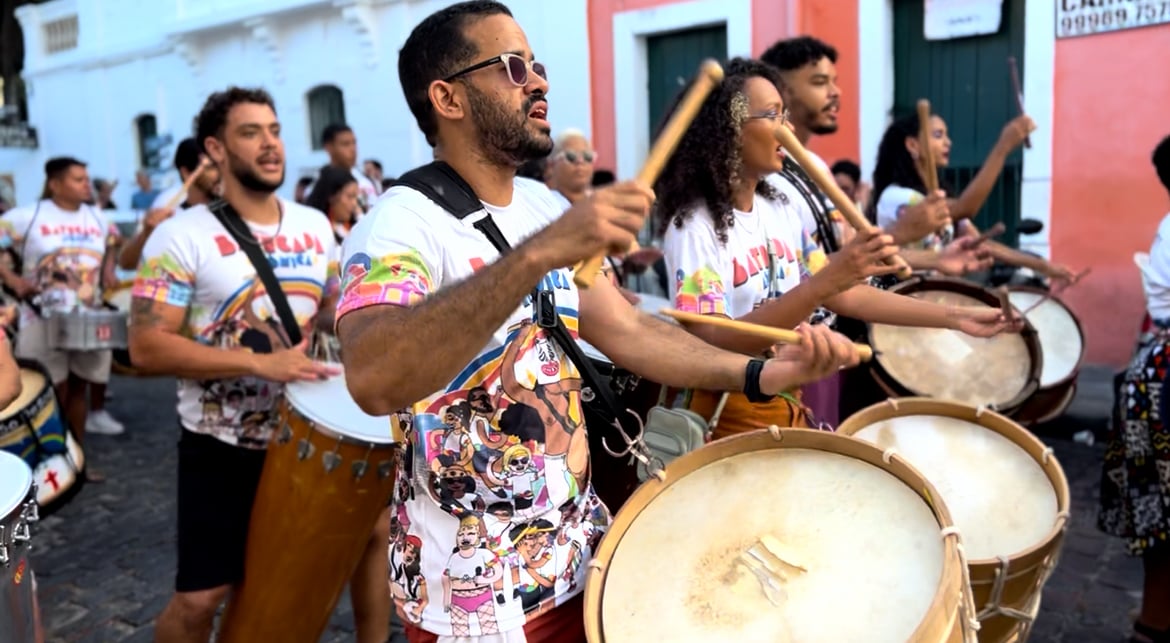
The clearest proof of this lineage is not in the dance halls but in the temples. Candomblé, the Afro-Brazilian religion that took root in Bahia, arose from the faiths brought by enslaved West and Central Africans, the majority of them Yoruba, Fon and Bantu. At its centre sits the worship of the orixás, the same divinities the Yoruba call orisha, honoured in Brazil under Yoruba names and in Yoruba language. Shango, Yemoja, Oshun and Ogun crossed the Atlantic in the memory of the enslaved and found a second home in Salvador.
That worship is built on drums. The core Candomblé ensemble uses three hand-played atabaque drums, the tall low-pitched rum, the mid-range rumpi and the small high-pitched lê, guided by a lead drummer who cues every change in energy. Alongside them rings the agogô, a metal bell whose very name is Yoruba, the same word and the same instrument family used in Yoruba ceremonial music in Nigeria. The polyrhythmic drumming, the call-and-response chants sung to the orixás, the way the rhythm builds toward an ecstatic peak, all of it is recognisably West African religious practice preserved across an ocean.
This matters for the music argument because secular Brazilian rhythm did not develop in a vacuum next to the sacred. The two fed each other. The percussive vocabulary that powers carnival, that powers afoxé processions, that eventually informs Brazilian popular music, was schooled in the same drum traditions that survived inside Candomblé. The bell pattern of the agogô and the conversation between high and low drums are the genetic material that connects a Bahian terreiro to a Lagos compound.
The Rhythmic Family Tree: Samba, Afrobeat and Amapiano
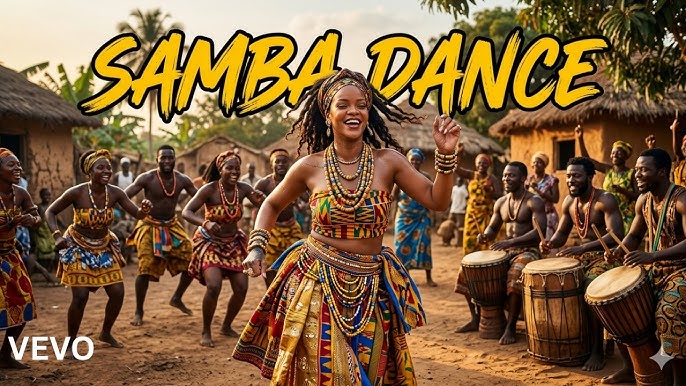
Place the genres side by side and the family resemblance sharpens. Afrobeat, the genre Fela Kuti pioneered in Nigeria in the 1960s, fused American funk and jazz with highlife and traditional Yoruba rhythm. Fela’s longtime drummer Tony Allen built grooves that gave funk its structure and jazz its freedom while the Yoruba foundation supplied call-and-response, melodic shape and communal drive. That same Yoruba rhythmic DNA, the layered percussion and the bell-anchored timekeeping, is the very thing that travelled to Bahia generations earlier and helped shape samba.
Modern Afrobeats, the streaming-era pop sound of Wizkid, Davido, Burna Boy, Rema and Ayra Starr, inherits that percussive sensibility and pairs it with sleek production. Amapiano, the South African genre born in Johannesburg townships, adds its hypnotic log-drum bass and shuffling hi-hats, and the hybrid form sometimes called Afropiano has become one of the most popular flavours of the African pop wave. What samba, Afrobeat, amapiano and Brazilian funk all share is a way of building music from interlocking rhythm rather than from chord changes alone, of letting percussion carry the melody and the message at once. They are different branches, but the root system is common ground.